
At a glance
- Three days in Kraków gives you enough time to include a nearby destination at a comfortable pace.
- Understand Warsaw as a city rebuilt after the war before you explore it.
- Auschwitz calls for a separate day and the right mindset.
- Use the train and bus information in the official Wieliczka Salt Mine “Map and access” guide. Check SKA1 trains from Kraków Główny to Wieliczka Rynek-Kopalnia and save the Daniłowicz Shaft entrance for the Tourist Route as your destination. The mine’s official visitor information says the Tourist Route takes about 2–3 hours and has around 800 steps, so leave at least half a day for travel, check-in, and a meal. Don’t assume the museum or another route has the same entrance.
- For Auschwitz, use the official online booking site, visit.auschwitz.org, to choose between general individual entry and a guided tour, then select the date, language, and entry time. Set the Auschwitz I entrance as your transport destination, and check the internal connection from Auschwitz I to Birkenau separately. Don’t combine it with the salt mine on the same day.
- For travel between cities, check Kraków Główny to Warszawa Centralna on PKP Intercity for your date and party size. Journey times and ticket conditions vary by train, including EIP and IC, so schedule Warsaw sightseeing only after the arrival time of your chosen service. Budget for the one-way ticket, round-trip transport to your chosen nearby site, an admission ticket for your selected tour language, and three nights in Kraków plus one in Warsaw. If you buy a guided package, check whether transport and admission are included so you don’t count them twice.
Day by day
Suggested itinerary
See each day's route, highlights, background and stay together in one place.
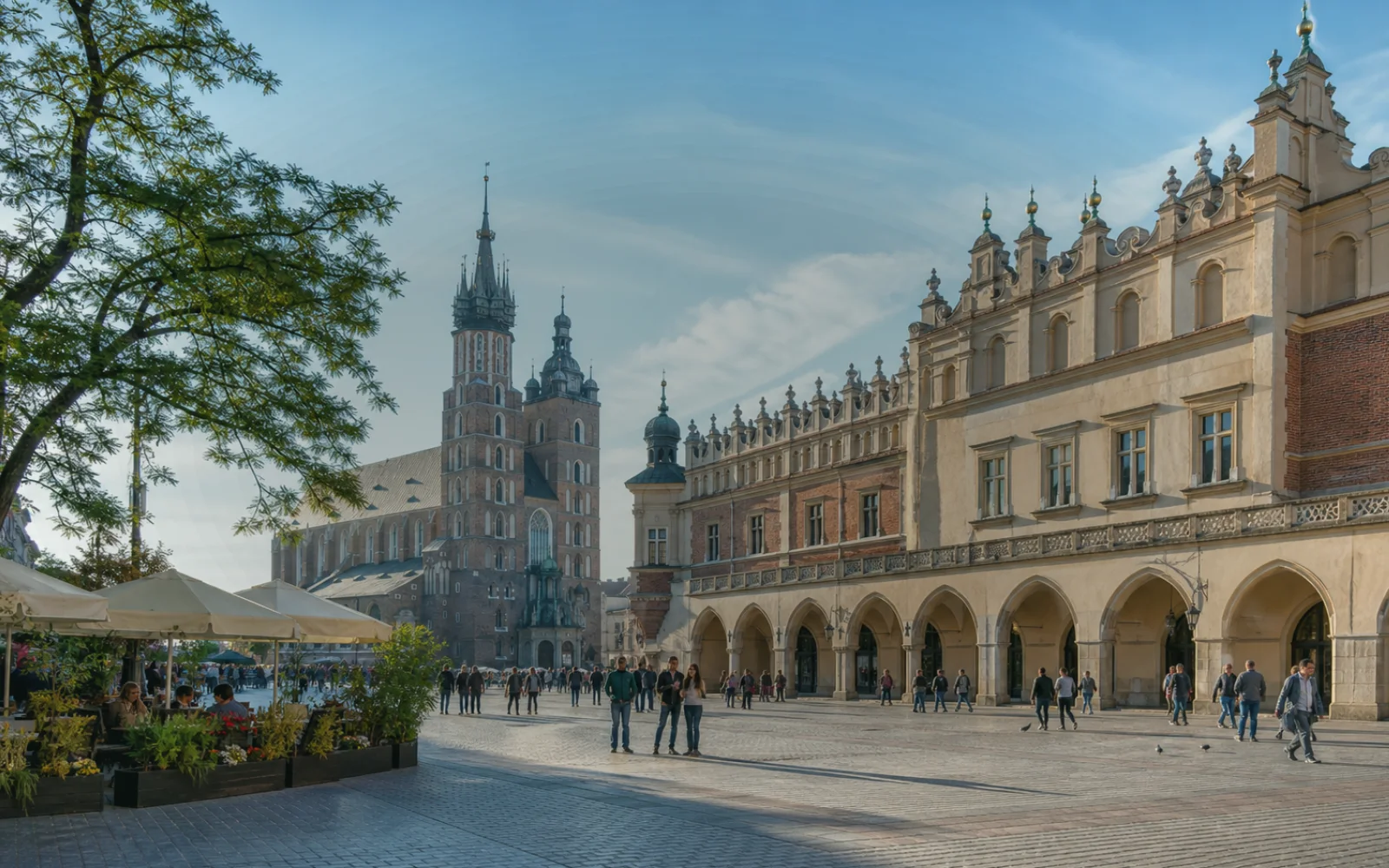
Take a short walk through the Old Town and spend your first night in Kraków.
Visit one bookable area of Wawel and walk through Kazimierz. Leave time to rest after a memorial visit.
Make a round trip for the day to just one destination with confirmed reservations: Auschwitz or Wieliczka. Return to Kraków for your third night.
Take the train from Kraków Główny to Warszawa Centralna and drop your bags at your accommodation. In the afternoon, take a short walk around Castle Square and the Old Town, then spend the night in Warsaw.
Visit the Warsaw Rising Museum only if it is open and you have enough time before your next connection. If you leave early, skip the museum and allow time to collect your bags and get to the station.
History and context
Wawel Castle shows the political and religious heart of the Polish Kingdom.
Warsaw Old Town is significant as a city rebuilt after the war.
Places and meals
The key site for exploring Kraków’s royal history.
Google MapsExplore the Jewish quarter’s history, cafés, and restaurants.
Google MapsA major underground heritage site near Kraków.
Google MapsWalking through the rebuilt Old Town feels different once you understand its history.
Google MapsFood and restaurants
- Mix pierogi, sour soup, meat dishes, and bakery meals.
- Keep your meal plans simple on days with a demanding history itinerary.
Keep the day simple by having pierogi for a quick lunch and saving sour soup and meat dishes for a sit-down dinner after sightseeing.
Wawel Castle · Main Market Square Google MapsCafés and restaurants share these streets. Pick a place while you walk, but avoid themed restaurants that treat the context of memorial and history visits as a novelty.
Jewish Quarter Google MapsOn a Warsaw Rising Museum day, eat between the museum and your accommodation to minimize travel. Choose pierogi after checking the menu and wait time.
Old Town · Museum Transfer Area Google MapsHow to fit it in
If you’re adding Poland to a Central European route, start with Kraków and consider Warsaw as an extension.
Reality check
For travel between cities, search PKP Intercity for a direct train from Kraków Główny to Warszawa Centralna. Keep the morning of Day 4 free for hotel checkout, travel to the station, the train, and storing your bags in Warsaw. Choose only one nearby destination, Auschwitz or Wieliczka, and arrange round-trip transport around your official timed entry.
Set aside a full day for a nearby destination such as Auschwitz or Wieliczka, with no other plans that day.
Prices in Poland are gentler than in Western Europe. Save on food with pierogi and market meals, and put the budget toward a nearby tour.
A day at a difficult historical site can be tiring emotionally and physically. Leave the evening open and get some rest.
If plans change
Don’t buy an unofficial tour; learn more about the history in Kraków’s Jewish quarter and at accredited museums.
Don’t add another memorial site. Rest by the Vistula River, in a park, or in a local neighborhood, and save other plans for the next day.
Small tip
It’s best not to pack other sightseeing into your Auschwitz visit day.
Final check before departure
- Check the ID requirements for timed-entry memorial sites.
- Check intercity seats and stations with Polish Railways (PKP).
- Read the rules for memorial spaces, including restrictions on photography and behavior.
- Starting in March 2026, individual Auschwitz entry tickets must be obtained in the visitor’s name through the official site, visit.auschwitz.org. Free entry also requires an online ticket; check the tour language and reservation time. Bring ID that matches the booking name and allow time for security screening.
- Plan a full day for the round trip to Auschwitz, including transport between Kraków and Oświęcim, travel from the station or bus stop to the museum entrance, visits to both Auschwitz I and Birkenau, and travel between the two sites. First check the official entry time and how long visits to both sites take, then choose a Kraków return trip that leaves plenty of time. Don’t treat arrival at the railway station as the start of your visit.
The first thing to check is a backup if memorial-site tickets sell out. Also calculate the day’s opening hours, whether reservations are available, and any added transport or lodging costs. Don’t buy an unofficial tour; learn more about the history in Kraków’s Jewish quarter and at accredited museums.
Information checked: 2026-10-03