
At a glance
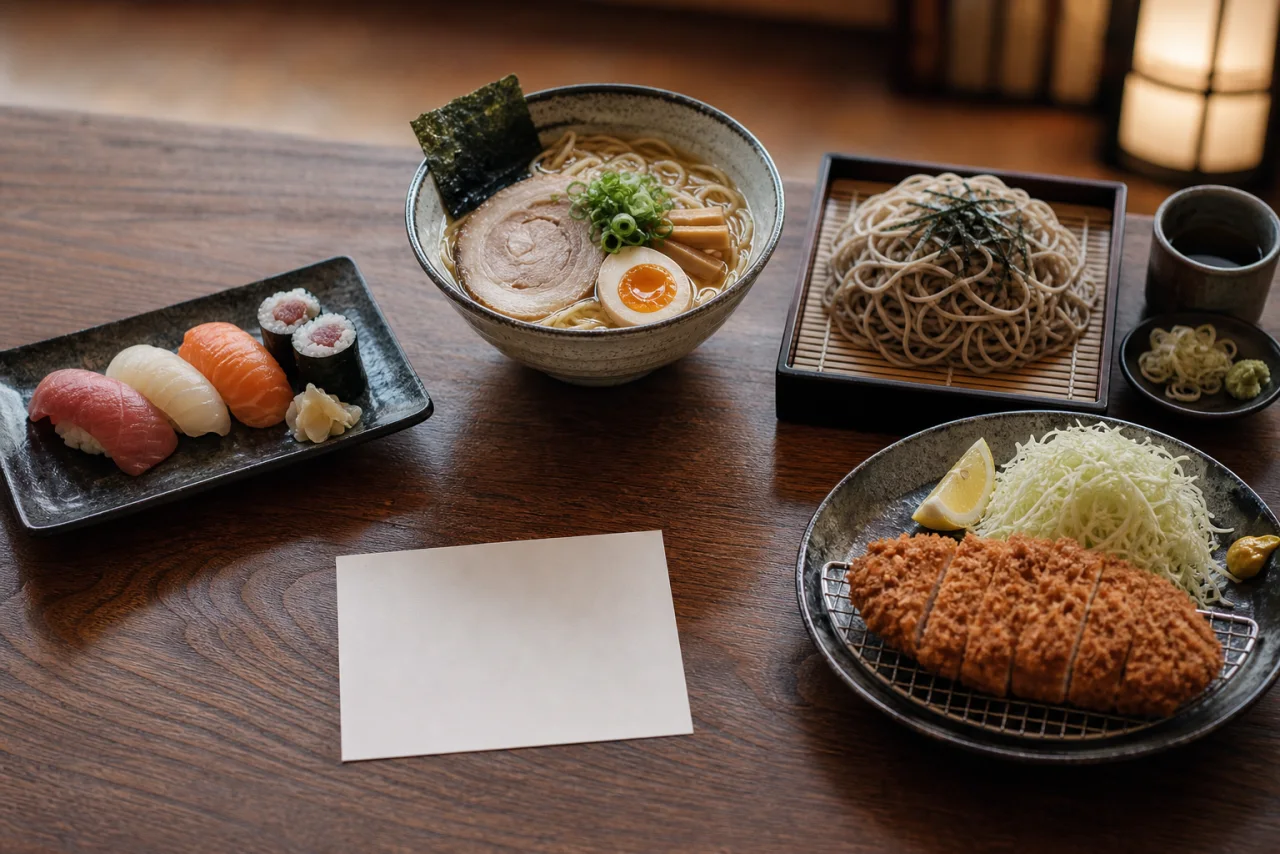
- Sushi restaurants may offer conveyor-belt service, counter seating, or set courses, each with different prices and ordering rhythms. If raw fish is a concern, ask staff about cooked fish, egg, and vegetable options and the possibility of cross-contact.
- Ramen shops may use ticket machines and have lines, noodle-doneness choices, or topping options. Check the restaurant’s official menu for broth type, pork, fish, or alcohol ingredients, and spice level.
- Soba and udon may be served hot or cold, with dipping sauce or in broth. Buckwheat allergies can be severe, so also ask about cross-contact in kitchens that prepare udon.
- Tonkatsu and tempura vary by cut, portion, and set-meal contents, so they can be easy first orders, but do not assume they are vegetarian or halal. Ask about sauces, broth, and shared fryers.
Day by day
Suggested itinerary
See each day's route, highlights, background and stay together in one place.
Choose a type of food → check the official menu, hours, wait times, and allergy information → save an alternative in the same area
Check the line, ticket machine, seating, and minimum order → order without blocking people behind you
Check payment options, trash rules, and the time of your next reservation → skip extra snacks if they would be too much
Places and meals
Look for your chosen type of food and alternatives within the area on your itinerary.
Google MapsCheck market restaurants separately for hours, hygiene, and crowding.
Google Maps 상세 글How to fit it in
On your first day, choose a low-risk meal that doesn’t require a reservation, such as a set meal or noodles. Save upscale tasting menus and popular restaurants for the second day or later, once you’ve adjusted to the time difference, local flavors, and your schedule, and checked official reservation and cancellation terms.
Reality check
Don’t cross town for a single restaurant. Find your first choice and an alternative near a station along that day’s route. Check last orders and the last train, and skip a long line if it would affect your next plans.
Allow 45–90 minutes for a typical meal, up to 2 hours including a wait at a popular restaurant, and follow the restaurant’s stated timing for a set course. Leave 30 minutes after the meal for travel, restrooms, and a break.
Check whether taxes, service charges, drinks, or seating fees are added to the listed menu prices. Have an alternative in a different price range, and check the official information for cash, card, or ticket-machine payment.
Avoid raw food depending on your allergies, pregnancy, or immune status, and stop eating if you feel unwell. Keep bags out of the aisle around hot broth and narrow counters.
If plans change
Switch to an alternative of the same type of food in the same area, or to a set meal in a department store or station building. Don’t miss your next reservation just to wait.
Don’t guess whether a dish is safe. Choose an option you can verify, such as packaged food with clear ingredient labeling, an official chain, or a kitchen at your accommodation.
Small tip
Prepare a card in Japanese listing allergens and asking about cross-contact, rather than relying only on food names shown in a translation app. If staff cannot assure you that a dish is safe, choose another restaurant.
Final check before departure
- Prepare a Japanese card stating the type of food you want and ingredients you need to avoid
- Check the official menus and hours for your first choice and alternative in that day’s area
- Set a maximum wait time and check payment and reservation cancellation terms
Restaurant hours, menus, and prices can change quickly. Use this guide to choose a type of food, then check each restaurant’s official menu, reservation details, and allergy information for your visit date. Check train connections alongside opening hours, and if you cannot confirm dietary safety, switch to an alternative with official ingredient information.
Information checked: 2026-07-29