
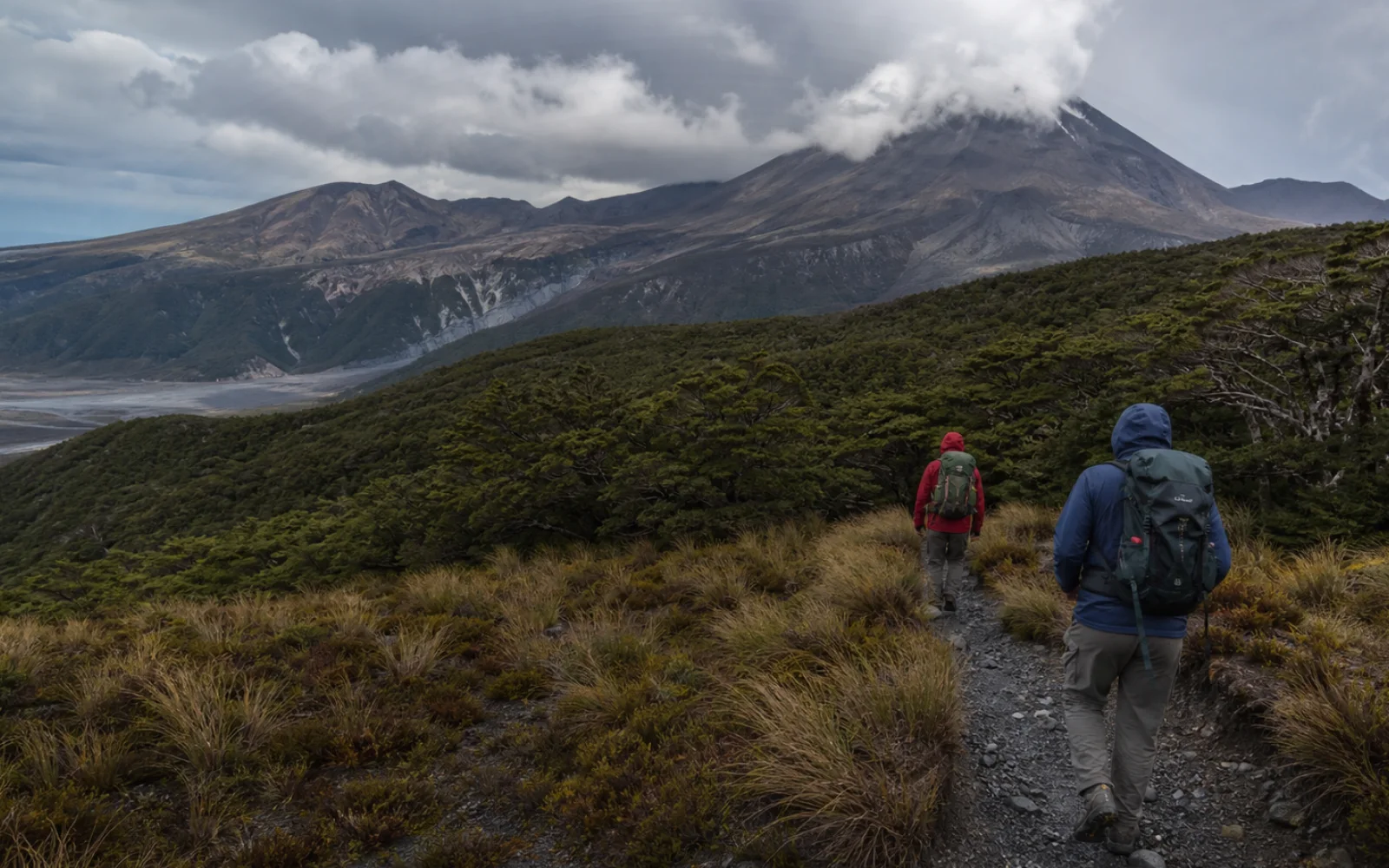
At a glance
- Even in summer, don’t set out if DOC posts a “Not Recommended Today” notice.
- A shuttle operating does not mean the hike is safe. Assess DOC alerts, the NIWA forecast, your gear, and your fitness separately.
- From May through late October, this route is not suitable for anyone without the skills and equipment to handle snow, ice, avalanche terrain, and below-freezing temperatures.
Day by day
Suggested itinerary
See each day's route, highlights, background and stay together in one place.
Check DOC alerts, the mountain forecast, volcanic alerts, and shuttle cancellation terms. Agree on the conditions that mean you won’t hike.
Even if the shuttle driver is operating, don’t set out if your gear, fitness, or visibility is inadequate. If you do start, note your turnaround time.
If strong winds, low temperatures, poor visibility, or a slower-than-expected pace occur, don’t climb farther into exposed terrain. Turn back safely.
How to fit it in
Stay near the national park and leave the whole day free. Set out only when the official guidance matches your gear and experience.
Reality check
The Tongariro Alpine Crossing is an approximately 19.4 km one-way hike from Mangatepopo toward Ketetahi. Because the start and finish points differ, book a shuttle for transport to and from the trail. Save the pickup point, final pickup time, and instructions for contacting the operator if you turn back early.
DOC lists a typical walking time of about 7–8 hours. Allow extra time for the shuttle and breaks, and don’t treat it like a 19 km walk on flat ground. If you may not make the scheduled pickup, check with your guide or operator early and decide whether to continue.
Compare shuttle or guided trips, gear rental, accommodation, and cancellation terms together. Check what refunds or changes are allowed if weather forces a cancellation before you book.
Strong winds, low temperatures, heavy rain, poor visibility, and snow can occur even in summer. If DOC’s severe weather guidance, volcanic alert, or on-site closure makes conditions unsuitable, don’t set out. Turning back takes priority over completing the hike.
If plans change
Change your shuttle booking and switch to a walk along Lake Taupō or a short, low-elevation track DOC has confirmed is open.
If you lack the skills and equipment for snow and ice, don’t attempt this as an ordinary hike. Choose a trip with a qualified guide or cancel entirely.
Small tip
Winter conditions differ from ordinary hiking. If snow and ice are expected, consider a guided trip with suitable skills and equipment.
Final check before departure
- Check DOC alerts, the mountain forecast, and volcanic alerts separately.
- Make a free visitor booking on DOC’s official track page, then align the dates with your shuttle or guided-trip booking. Save the shuttle pickup, cancellation, and emergency contact details separately.
- Check your waterproof and warm layers, water, food, offline map, and emergency gear.
Verified as of 2026-07-30. Check DOC’s same-day alerts and the linked NIWA forecast. A shuttle operator’s decision to run is not a safety assessment.
Information checked: 2026-07-30