
At a glance
- To estimate the price in won, multiply the VND amount by the VND-to-KRW exchange rate you checked just before paying. For a quick reference, calculate how much 100,000 dong is worth in won at that day’s rate and save it in a note.
- Separate 500,000, 200,000, and 100,000 dong bills for larger payments; 50,000 and 20,000 dong bills for everyday use; and bills of 10,000 dong or less as small change. This can help prevent calculation errors.
- Use a bank or licensed currency exchange counter when possible. Check the rate, fees, and payout, then recount the bills before leaving the counter.
- Set aside cash for taxis, markets, street stalls, and small shops rather than relying only on cards. Don’t keep more than a day’s spending money in one wallet.
단계별 확인 방법
Just before paying, check the VND-to-KRW rate for 1 dong in your bank or card app, then multiply it by the VND amount. Add any separate fees to the result. Enter the full amount into your calculator, such as 1,000,000 VND.
Using the rate you checked, calculate the KRW value of 50,000, 100,000, 200,000, and 500,000 dong and save the amounts on your phone. Recalculate the table if the rate or fees change.
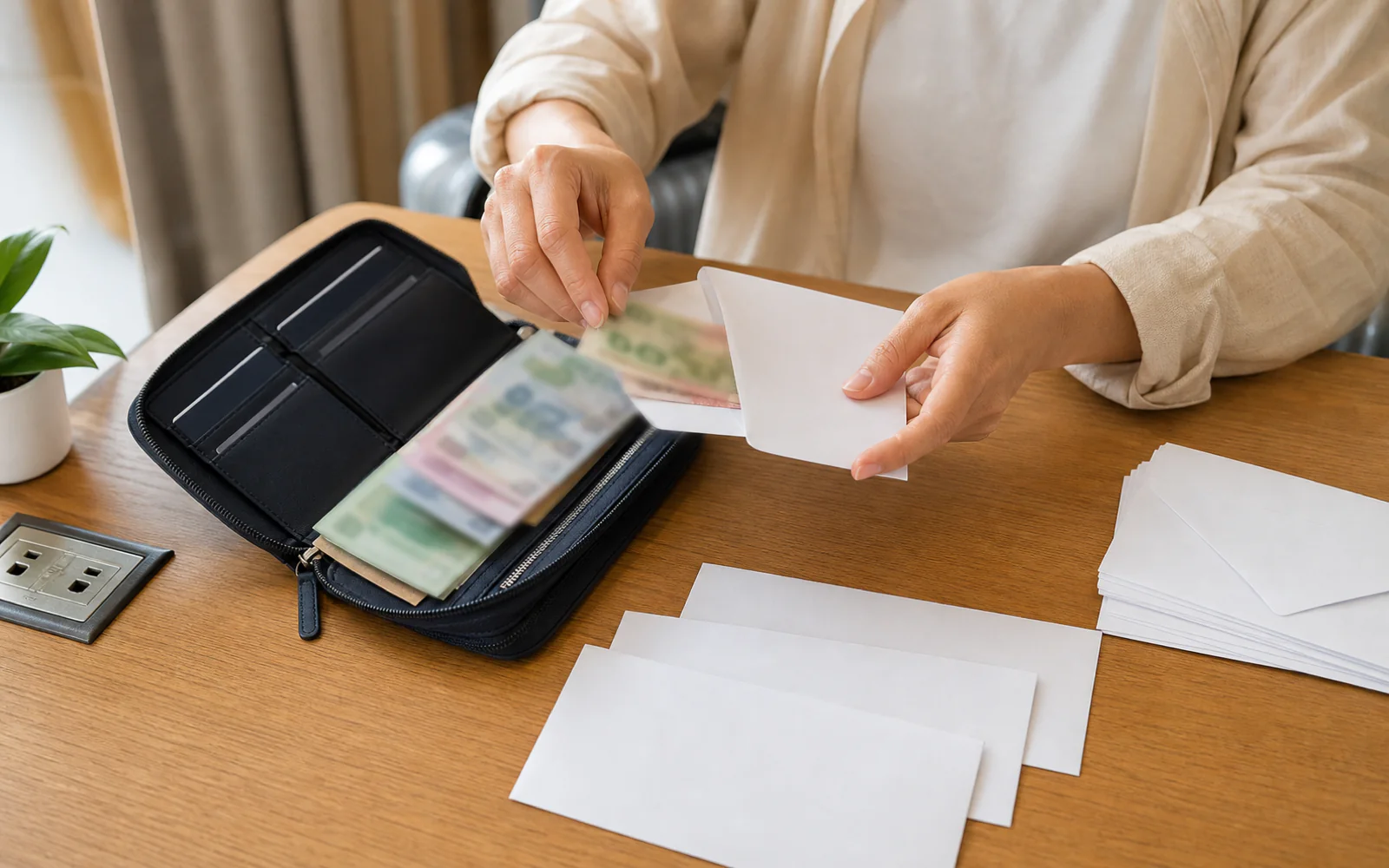
Keep 500,000, 200,000, and 100,000 dong bills in an inside compartment for larger payments; keep 50,000 and 20,000 dong bills somewhere easy to reach. Put 10,000, 5,000, 2,000, and 1,000 dong bills in a small zippered pocket. Bills of 50,000 dong or less are often used for meals, taxis, and market purchases, so it’s better to sort them separately than leave them at the bottom of your wallet.
Don’t choose a bill by its color or size alone. Check the number on the front and count the zeros. In a dark car or crowded market, say the amount aloud as you hand over the bill, and count your change before you leave.
Don’t look only at the posted rate. Ask the counter to show you on a calculator how much VND you’ll actually receive after fees. Check whether you need your passport and whether they provide a receipt. Count the bills by denomination at the counter.
If a card terminal or ATM offers to charge you in South Korean won (KRW), the conversion may include an exchange rate and additional fees. In most cases, choose the local currency, VND. Check your card issuer’s terms for international transactions and ATM fees in advance.
Day by day
Suggested itinerary
See each day's route, highlights, background and stay together in one place.
Check the day’s exchange rate and your card’s international payment settings. Save a quick conversion table on your phone.
At the airport, get only what you need for transportation and other essentials. For additional cash, compare the actual payout at banks and licensed exchange counters.
Move only the small bills you’ll use that day to a separate wallet. Store the rest of your cash in separate secure places at your accommodation.
How to fit it in
For places where cash may be needed, such as markets, local restaurants, and taxis, carry a mix of 10,000, 20,000, and 50,000 dong bills. If you only have large bills, ask whether the seller can make change before paying.
Reality check
In a taxi, prepare small bills close to the expected fare before you arrive. Don’t show the driver your whole wallet or take out and count a large stack of cash.
On your departure day, save the KRW values of four commonly used VND amounts at that day’s rate. Before a large payment, recalculate using your bank or card app.
Don’t use a fixed conversion formula for VND to KRW. Just before paying, check the VND-to-KRW rate, international transaction fees, and ATM fees in your bank or card app to estimate the cost in won. For cash exchanges, compare offers using the VND payout quoted by each counter and the receipts.
Keep your daily cash separate from your emergency funds, and don’t take out all your cash on the street just after exchanging money. At an ATM, check the card slot and your surroundings, and keep the transaction receipt.
If plans change
Don’t use an informal exchange as an alternative. Pay in VND by card or use an official ATM at a bank after banking hours.
Don’t keep trying. Check whether international use is enabled on your card, then try another official bank ATM or visit a counter the next business day.
Small tip
You may see gold shops exchanging money in tourist areas such as Hanoi’s Old Quarter, but not every shop is a legally authorized exchange counter. Use a bank or a clearly licensed exchange counter when possible. It’s safer to avoid informal exchanges because of the risk of rate disputes, counterfeit bills, and no receipt.
Final check before departure
- On your departure day and just before paying, check the VND/KRW rate and international transaction fees in your bank or card app.
- Find banks and official ATMs near your accommodation. Also check whether your bank app lets you reserve currency for exchange.
- At the airport, get only the cash you need for transportation and other essentials. At the exchange counter, check for a license sign, confirm the payout and receipt, then count the bills in front of the counter.
- Keep a day’s spending money separate from your emergency funds.
Exchange rates, card and ATM fees, and exchange counter hours can change at any time. Check exchange rate information from the State Bank of Vietnam and the terms of your financial institution just before paying. Prefer a bank or an exchange counter with a license sign that provides a receipt, and avoid suspicious informal exchanges.
Information checked: 2026-07-25