
At a glance
- The city walls in Dubrovnik are best visited in the morning or late afternoon.
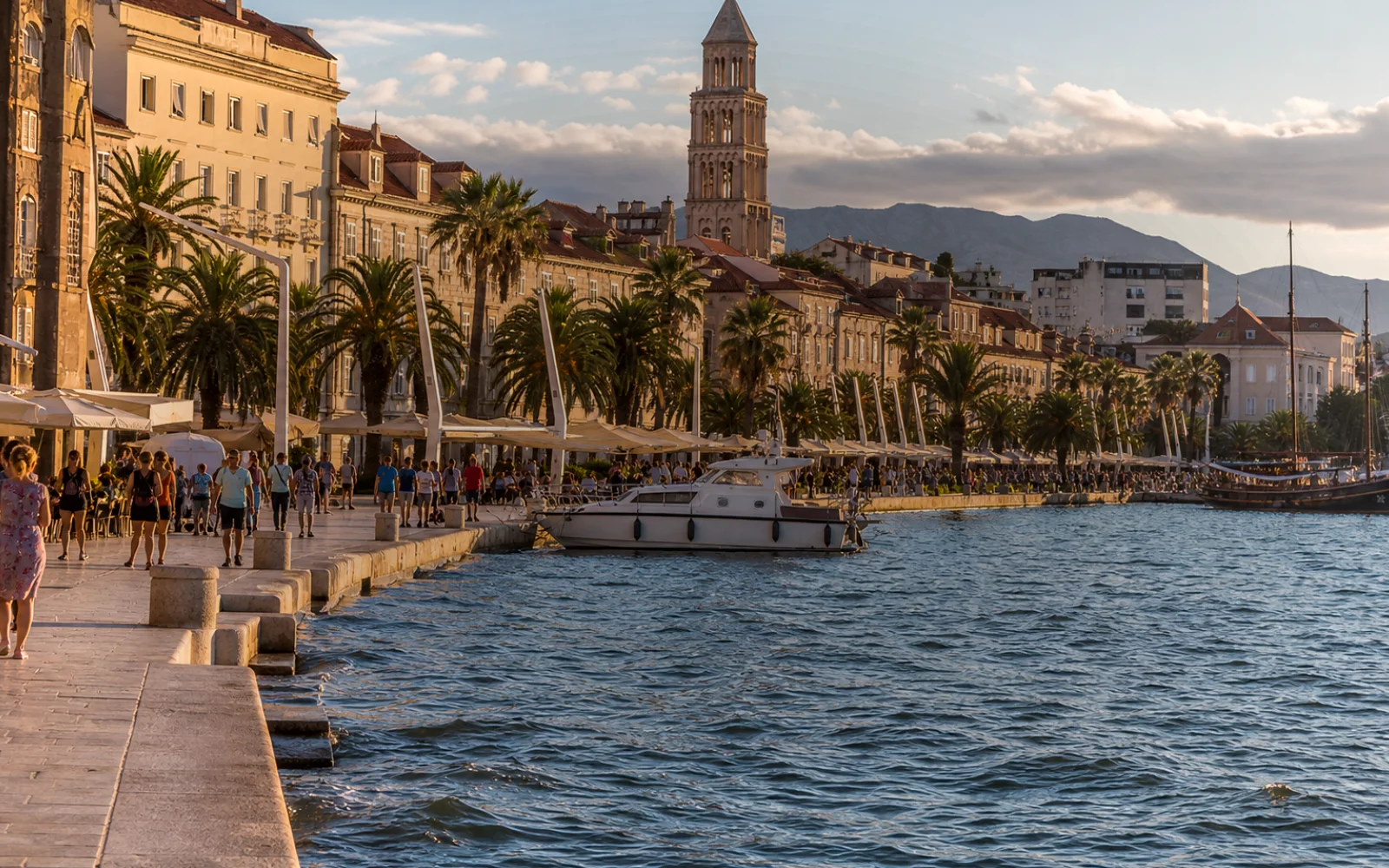
- Split’s defining feature is a palace where the city is still alive within its walls.
- Keep travel days light because of the time it takes to get between coastal cities.
Day by day
Suggested itinerary
See each day's route, highlights, background and stay together in one place.
After arrival, walk around the Old Town and harbor. Visit the city walls only if you have enough time and entry is still open. If you arrive late, move the visit to the morning of Day 2.
If you haven’t visited the city walls yet, allow 1 hour 30 minutes to 2 hours in the morning. In the afternoon, choose either the view from Mount Srđ or Lokrum Island, and return before the actual last descent or return boat. In the evening, stroll through the Old Town below the walls to see it at night; don’t count on being able to visit the walls after dark.
The plan is: Gruž bus station in the morning → your booked bus to Split → the terminal next to the harbor → luggage drop-off or check-in. If you’re running late, skip the paid palace underground areas and the cathedral, and have dinner in the lanes or along the Riva instead.
Pick up your luggage and head to the airport or your next city. Take a short walk on Marjan only if your departure is late in the afternoon and you have enough time for the round trip, luggage, and check-in. Otherwise, have breakfast near your accommodation.
History and context
Seaborne trade and defensive walls shaped Dubrovnik’s identity.
Split is a unique place where a modern city grew up within the ruins of a palace.
Places and meals
A highlight for views of the Adriatic Sea and red-roofed buildings.
Google MapsA viewpoint overlooking all of Dubrovnik.
Google MapsThe central archaeological site in Split’s Old Town.
Google MapsFood and restaurants
- Plan meals around seafood and Dalmatian wine in these coastal cities.
- Compare the views and prices at restaurants tucked inside the Old Town.
A good choice for a meal with a view in Dubrovnik.
Dubrovnik Google MapsA good way to end an evening after walking through the palace lanes, with a Dalmatian-style meal.
Split Google MapsHow to fit it in
For a short trip along the Croatian coast, it’s easier to focus on Dubrovnik and Split in depth.
Reality check
For Dubrovnik→Split, look up Dubrovnik bus station→Split bus station by date on an operator’s site, such as FlixBus, and reserve a seat. FlixBus lists a fastest trip of 3 hours 55 minutes, but allow at least 4–5 hours for the one-way journey based on the stops and times of your actual service. Dubrovnik departures are from Obala pape Ivana Pavla II 44 in Gruž; Split arrivals are at Obala kneza Domagoja 12, next to the harbor. From Old Town accommodation, allow an extra 30–45 minutes to reach the Gruž terminal by bus or taxi with your luggage, and follow the boarding cutoff on your booking. From the Split terminal, allow 10–15 minutes on foot to reach the Riva and the southern part of the palace area.
This is a 3-night, 4-day trip, with 2 nights in Dubrovnik and 1 in Split. Allow 1 hour 30 minutes to 2 hours for the city walls, and visit only before entry closes on your visit day. On Day 2, choose either Mount Srđ or Lokrum Island and leave 3–4 hours; don’t try to do both. On Day 3, allow 6–7 hours for the bus, getting to and from the terminals, waiting, and checking in. Don’t book a paid afternoon attraction. If you depart on Day 4, take a short, 1-hour walk on Marjan only if your late departure and luggage storage arrangements both allow it.
Enter your date, number of travelers, and luggage on the official FlixBus route page, then compare the total just before payment. Advertised lowest fares aren’t necessarily available on your visit date. The basic budget includes 2 nights in Dubrovnik, 1 night in Split, a one-way bus ticket, accommodation and terminal transport, meals, and city walls admission. Check the Adult ticket, visit-date price, last entry time, and what’s included through the official City Walls Dubrovnik ticket seller. If you choose Mount Srđ, add a round-trip cable car ticket; if you choose Lokrum, add the official boat and island admission separately. A walk along the Riva and through the palace lanes is different from admission to paid underground areas or churches.
The city walls have low railings and little shade, so bring water and a hat. Watch your step on wet marble near the harbor; it can be slippery.
If plans change
Avoid entering at midday. See Lovrijenac Fortress from the outside and walk in Lapad, then visit the city walls first thing the next day.
Skip the paid underground areas of Diocletian’s Palace and walk through the open Old Town and harbor area instead.
Small tip
In peak season, book accommodation and bus seats early to make coastal travel easier.
Final check before departure
- Check the actual arrival point for intercity buses and boats.
- Check the city walls’ last entry time and the temperature.
- Ask whether the accommodation has stairs and whether vehicles can access it.
- Book transport between Dubrovnik and Split before scheduling paid attractions. Once you include the time to carry luggage from your accommodation to the departure terminal and check in after arrival, it’s better to keep sightseeing short on travel day.
Check the Dubrovnik city walls tickets through the official online seller. Diocletian’s Palace in Split is an archaeological site woven into the city. On travel day, don’t build your schedule around paid attractions; leave time for less time-sensitive activities like wandering the palace lanes and strolling the Riva.
Information checked: 2026-07-18