
At a glance
- With two full sightseeing days in Rome, visit the Colosseum and Roman Forum on one day and the Vatican on another. On arrival day, take only a walk near your hotel, depending on your flight time.
- Florence and Siena connect Tuscan art, piazzas, and hill towns.
- Leave some buffer time for Positano and Cinque Terre because weather and transport can be unpredictable.
- Check high-speed trains in this order: Roma Termini→Firenze Santa Maria Novella→Venezia Santa Lucia. According to Italo’s official information, Rome to Florence takes about 1 hour 30 minutes. Allow extra time to reach the station and handle your luggage at your accommodation. For Venice, distinguish Santa Lucia on the main island from Mestre on the mainland, and match your ticket to your accommodation address.
- Compare the total fares for two one-way trips on Trenitalia and Italo for the same date, passenger count, and class. Before paying, check the change and refund conditions for discounted tickets and the seat details. Add two one-way intercity tickets, local transport in each city, booked admission tickets such as the Colosseum and Uffizi, and the cost of six actual nights of accommodation to your budget. To add Cinque Terre, the southern coast, or Verona to a basic six-night, seven-day trip, first remove a sightseeing day or one city.
Day by day
Suggested itinerary
See each day's route, highlights, background and stay together in one place.
Day 1: Arrive in Rome. Days 2–3: Explore Rome. Day 4: Travel to Florence in the morning and spend the first night there. Day 5: Explore Florence and spend a second night. Day 6: Travel to Venice in the morning and spend one night. Day 7: Take a short walk or leave straight away. Sightseeing at either end of the trip in Rome or Venice may need to be cut back depending on your flight times.
A basic plan is 3 nights in Rome, travel to Florence on Day 4 for 3 nights, travel to Venice on Day 7 for 3 nights, and depart on Day 10. If you want to visit a nearby destination such as Siena, adjust one of your Florence days instead of moving to another hotel.
History and context
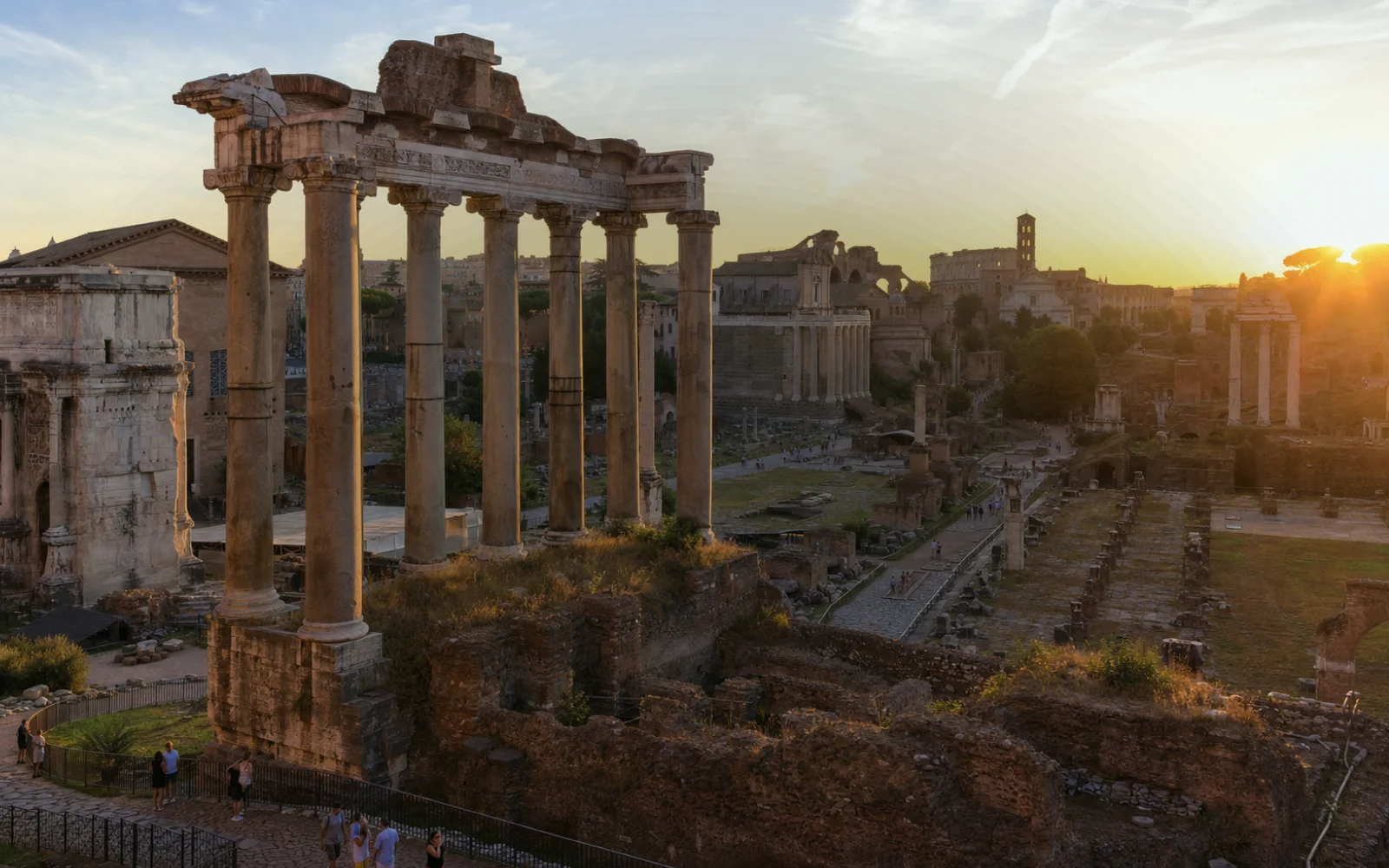
The ruins in central Rome preserve the political, military, and public life of the empire in the cityscape.
Florence brings the Medici family, the Duomo, and the Uffizi together in one city.
Venice is an example of how East–West trade and the lagoon shaped a city.
Places and meals
A starting point for a first visit to Rome. Pair it with the Roman Forum to see the layout of the ancient city.
Google MapsA key Florence destination for focusing on Renaissance painting.
Google MapsA piazza bringing together symbols of Venetian power, religion, and maritime trade.
Google MapsA signature view of the Amalfi Coast, but first account for uncertainties around bus and ferry travel, as well as accommodation costs.
Google MapsFood and restaurants
- In Rome, try carbonara, amatriciana, and fried specialties from the Jewish Ghetto.
- In Florence, choose between bistecca alla fiorentina and a market meal to fit your budget.
- In Venice, cicchetti at a bacaro make an easy fit with your route.
On a day visiting the Colosseum and Roman Forum, choose a pasta-focused restaurant between your accommodation and your next stop rather than relying on a specific venue that may require a reservation.
Ancient ruins route Google MapsA market-style lunch is quick and easy; bistecca alla fiorentina is better suited to a long meal shared by several people.
Around the Central Market and Uffizi Google MapsCicchetti are small plates meant to be shared over several drinks, so they work well for a light bite before your next walk rather than a full dinner.
Lanes lined with bacari Google MapsHow to fit it in
For a first trip, focus on Rome, Florence, and Venice. Treat the southern coast or Cinque Terre as a further extension after those three core destinations.
Reality check
Rome, Florence, and Venice are naturally linked by high-speed rail. Coastal destinations such as Positano and Cinque Terre involve more transfers, so set aside a separate day for them.
To keep your itinerary on track, first set visiting hours and entry times for timed-entry sights such as the Colosseum, the Vatican, and the Uffizi. Fit the rest of your walks around them.
As admission costs for ruins and museums add up in each city, a light lunch of a panino or cicchetti and one proper dinner each day makes for a good rhythm.
In busy places such as the Rome Metro and St. Mark’s Square in Venice, keep your belongings in front of you and avoid unauthorized taxi touts near tourist sites.
If plans change
Don’t force travel between Rome, Florence, and Venice; first check which trains are guaranteed to run and whether you need to change your accommodation.
Compare the full cost of each stay, including the city tax paid on site and timed-entry fees for historic sites, instead of comparing only the advertised price.
Small tip
For the Duomo, the Vatican, the Colosseum, and the Uffizi, having a reservation can make more difference to your day than the on-site line.
Final check before departure
- Check Trenitalia and Italo services and change conditions.
- Only if you rent a car, check the ZTL (restricted traffic zone) rules and the permitted route to your accommodation.
- Book no more than one major historic site per day.
Timed entry reservations are required for the Colosseum, and official ticket sales open 30 days before your visit. Don’t press ahead with travel between Rome, Florence, and Venice; first check which trains are guaranteed to run and what changes are needed to your accommodation bookings.
Information checked: 2026-10-04