
At a glance
- For exterior and interior photos and visitor information, see the official architecture or facility links under each location.
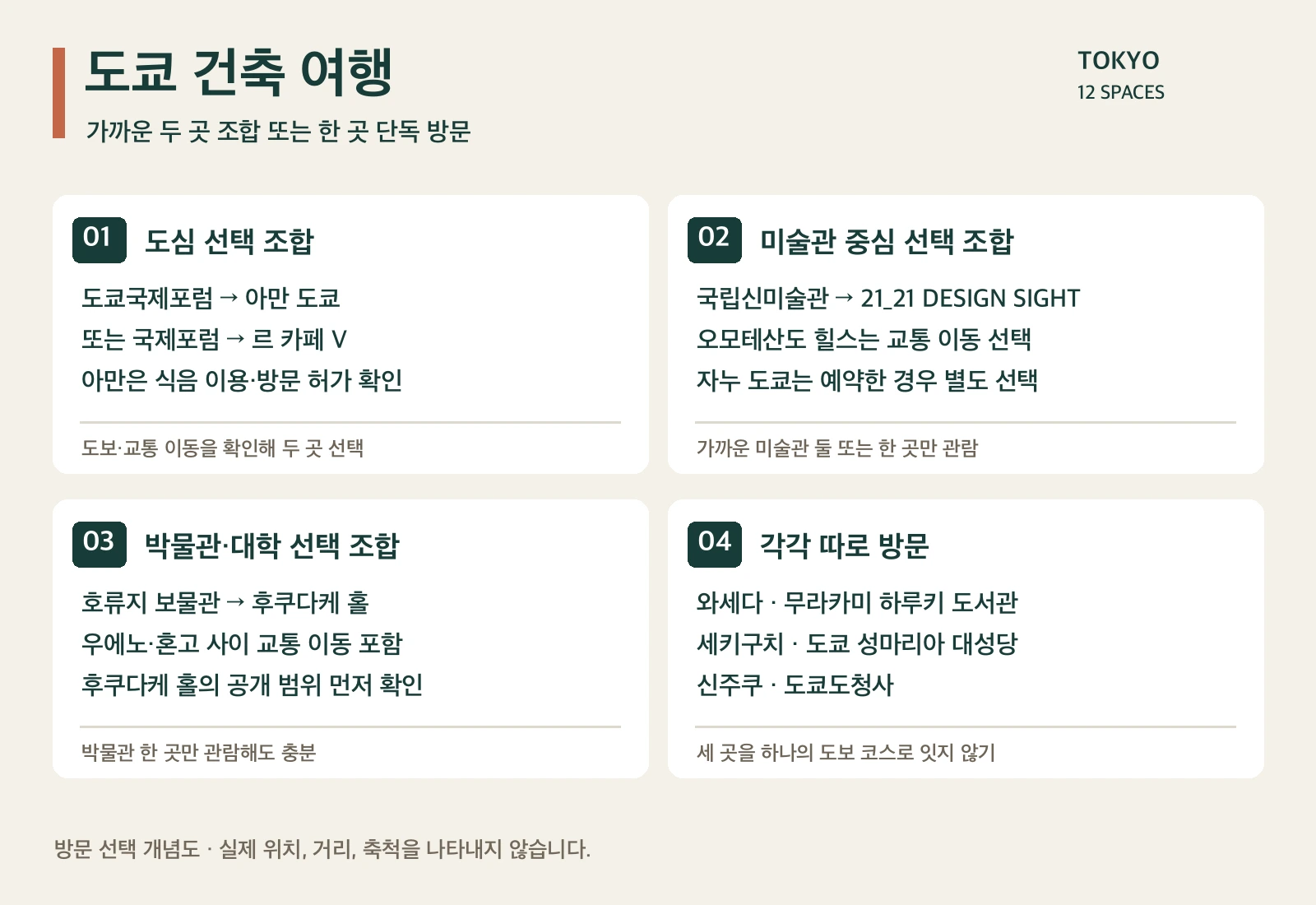
- The first three groups are examples of choosing one or two nearby places. Some pairings work well on foot; others, such as Ueno and Hongo or Roppongi and Omotesando, may also involve transit. Choose your starting point and visiting time, then check the actual route on a map.
- For glass and metal, choose the International Forum and the National Art Center, Tokyo. For concrete walls, light, and slopes, choose 21_21 DESIGN SIGHT, Omotesando Hills, or Fukutake Hall. The two hotels and Le Café V are options for seeing how a building’s interior shapes the experience. Plan ticketed exhibition rooms around their own schedules and admission requirements.
- On a rainy day, start with a specific indoor destination, such as the International Forum atrium, an exhibition at the National Art Center, Tokyo or 21_21, or the Gallery of Horyuji Treasures. If an exhibition is closed, simplify the route with places you can see without a ticket, such as the sloping passage at Omotesando Hills or the exterior of the Metropolitan Government Building.
Day by day
Nearby Pairings and Separate Visits
The first three rows are examples of nearby pairings and may include transit, depending on your choices. The Haruki Murakami Library, St. Mary’s Cathedral, and Tokyo Metropolitan Government Building in the last row are separate destinations, not one walking route.
Tokyo International Forum glass atrium → lunch or a break → a dining venue at Aman Tokyo that you have confirmed in advance, or Le Café V in Ginza
- Tokyo International ForumGoogle MapsStart with the free public passageways.
- Aman TokyoGoogle MapsConfirm dining access or visitor permission in advance.
- Le Café VGoogle MapsThis option may require waiting on site and paying for a drink.
An exhibition or public area at the National Art Center, Tokyo → one exhibition at 21_21 DESIGN SIGHT, or a walk through the passage at Omotesando Hills
- The National Art Center, TokyoGoogle MapsCheck exhibition tickets and the Tuesday closure.
- 21_21 DESIGN SIGHTGoogle MapsCheck for Tuesday closures and exhibition changeover closures.
- Janu TokyoGoogle MapsAdd this if you have confirmed access to a lounge or restaurant.
- Omotesando HillsGoogle MapsWalk through the passage during the shopping complex’s operating hours.
Gallery of Horyuji Treasures exhibition and exterior by the reflecting pool → subway ride → check how much of Fukutake Hall you can access
- Gallery of Horyuji TreasuresGoogle MapsFollow the museum’s exhibition and admission requirements.
- The University of Tokyo’s Fukutake HallGoogle MapsThis is a university facility, so follow guidance about classes, events, and security.
Choose one place you want to see: the Haruki Murakami Library, St. Mary’s Cathedral, or a Tokyo Metropolitan Government Building observation room. If you choose the government building, add a walk around the west side of Shinjuku to see its exterior.
- Haruki Murakami LibraryGoogle MapsCheck the university schedule and public access.
- St. Mary’s CathedralGoogle MapsIf interior access is not confirmed, see only the exterior.
- Tokyo Metropolitan Government BuildingGoogle MapsCheck whether the observation rooms are open that day and how long the wait is.
Places and meals
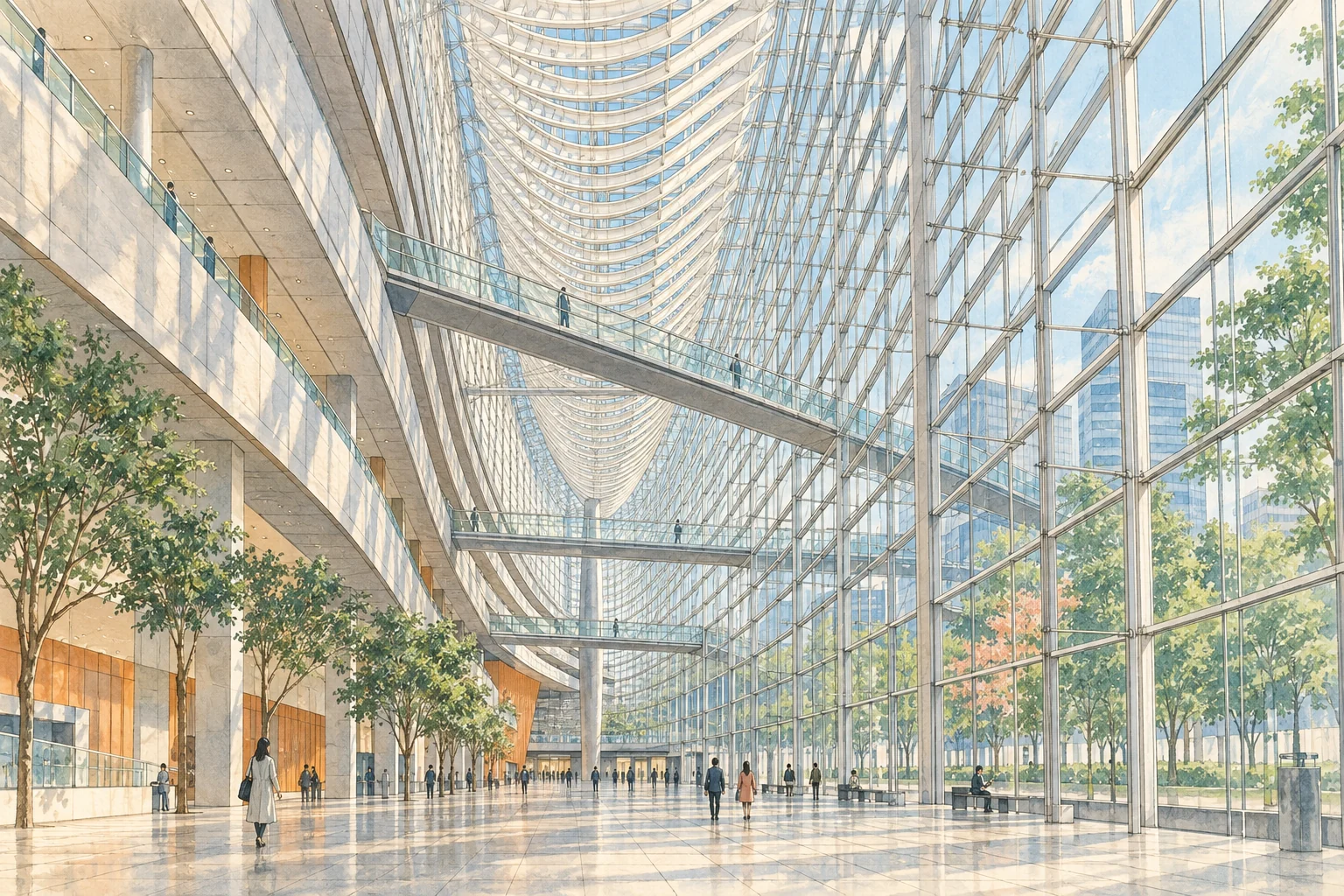
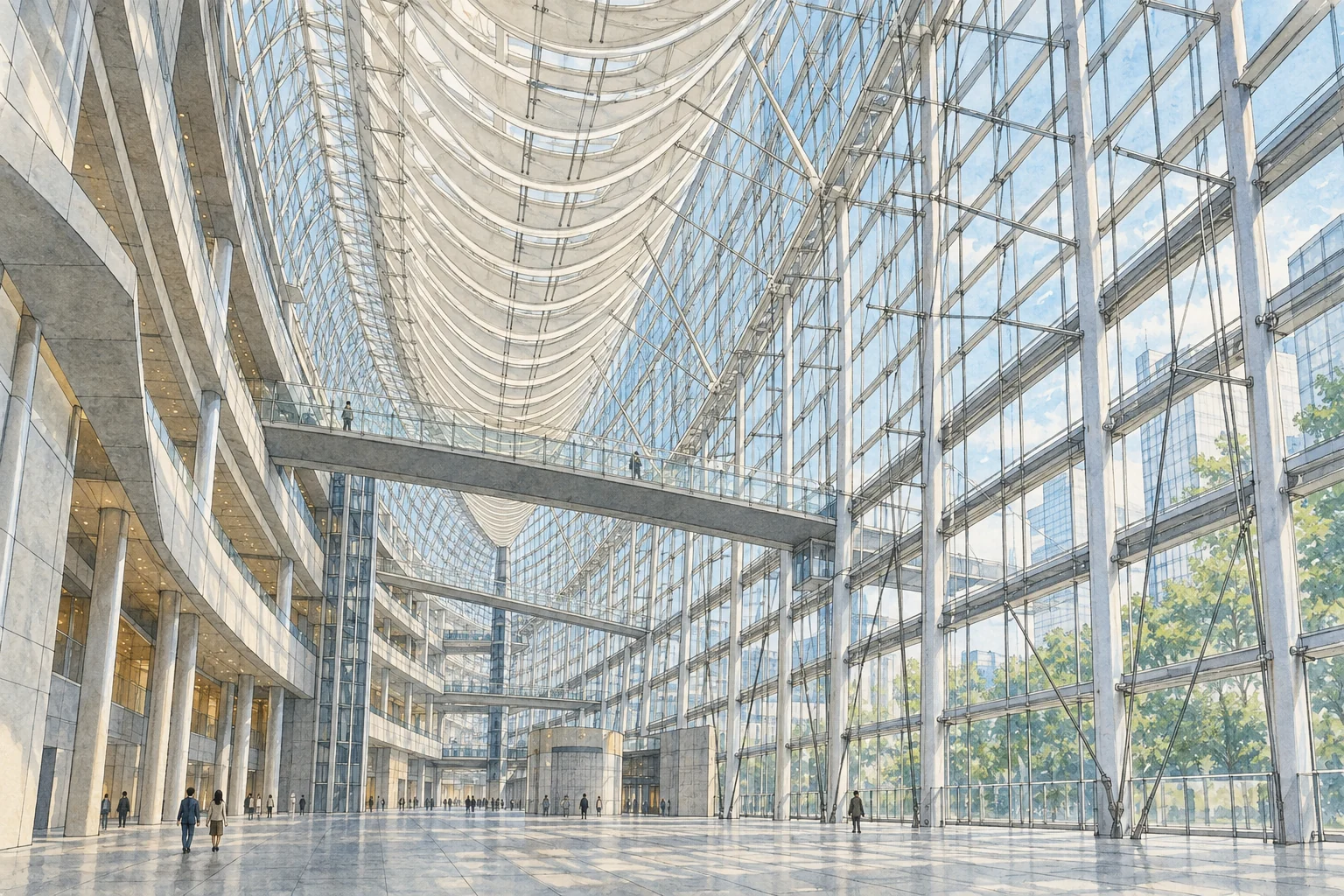
Enter from the Yurakucho Station side to see the glass atrium, about 200 m long, curving to one side like a ship’s hull. From the floor, look up to see the white steel grid and glass roof most clearly. The glass building’s public passageways are a good place to see the architecture without a performance ticket. Access to exhibition and hall interiors depends on the event schedule and requires separate admission.
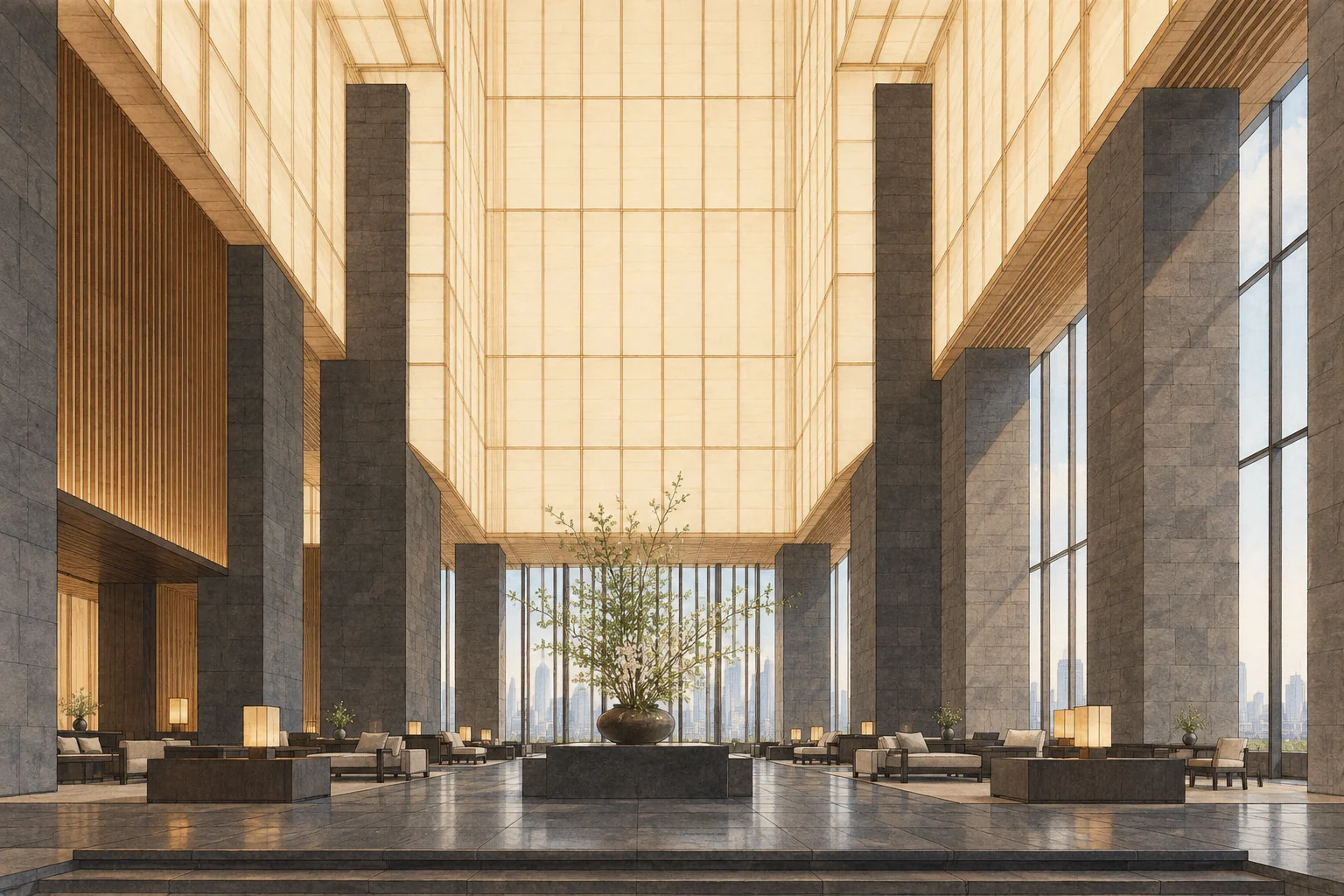
At Aman Tokyo, focus on the hotel interiors designed by Kerry Hill, rather than the tower as a whole. In the 33rd-floor lobby, the entire 30-meter-high ceiling unfolds like a traditional Japanese lantern. Look at how traditional Japanese paper layered within a lattice frame filters natural light, and at the generous spaces between the ceiling and columns. If you are not staying at the hotel, check the official dining reservation page first for access conditions at the lounge or restaurants. If you cannot secure a dining reservation or permission to visit, leave the lobby out of your itinerary and finish with the International Forum and a walk through Ginza.
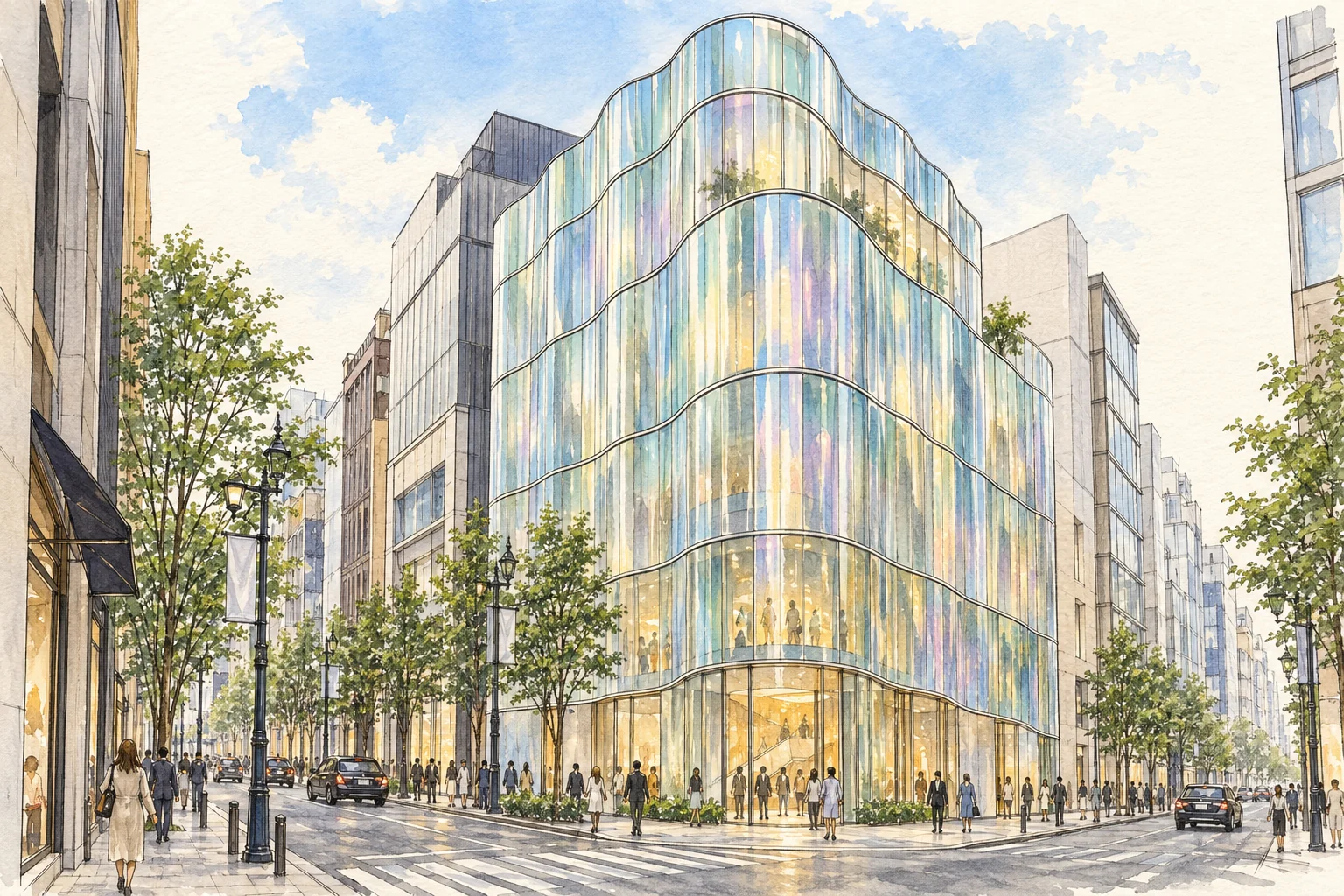
The Louis Vuitton building on Ginza Namiki-dori is a place to see Jun Aoki’s rippling exterior and Peter Marino’s interior at Le Café V on the 7th floor. From the street, watch the pearlescent panels change with the light. Inside the café, compare the intimate sightlines created by wood, metal, and furniture. The café is open 11:00–20:00, with last orders at 19:00, and does not take seating reservations. A store appointment does not reserve a café seat, so allow time to wait if you plan to have a drink.
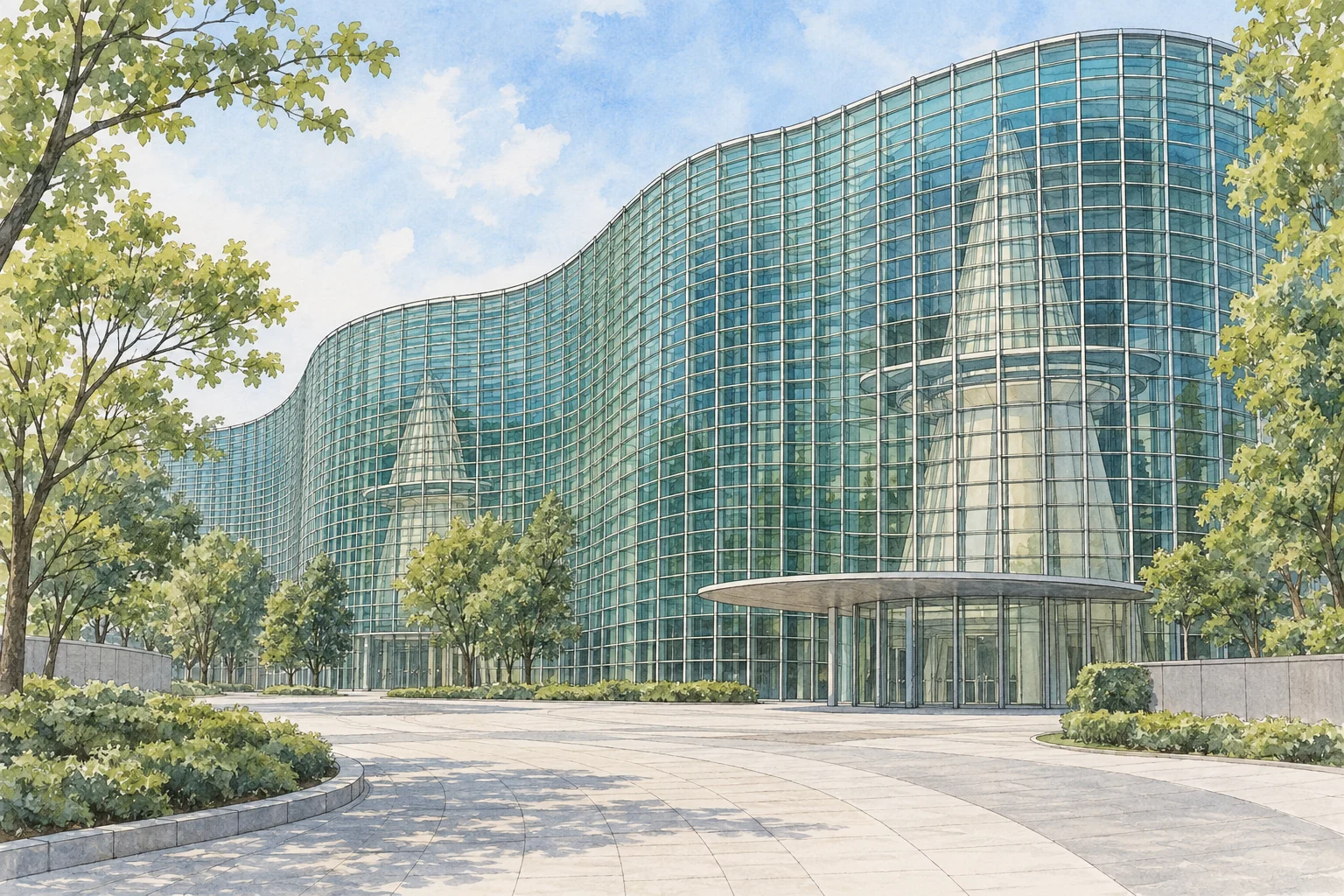
The building was jointly designed by Kisho Kurokawa Architect & Associates and Nihon Sekkei. Its south-facing glass wall curves in a long wave. Approaching from Nogizaka Station, you can see a huge conical space and white columns through the glass. You do not need a ticket to see the shapes in the public lobby, but exhibition rooms require tickets for each exhibition. Regular hours are 10:00–18:00, and the museum is closed on Tuesdays. Check holiday exceptions and last admission for each exhibition.
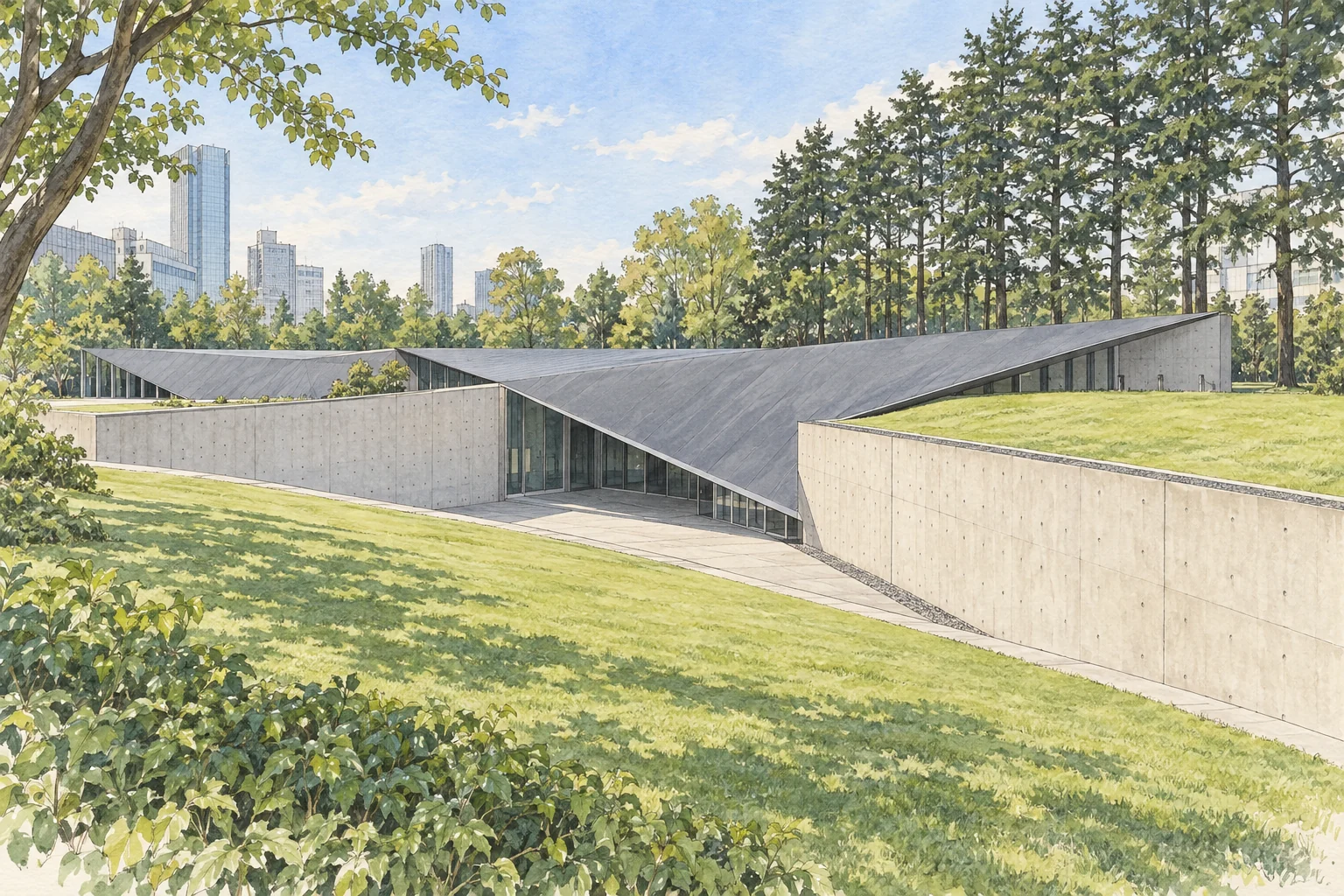
From above ground, 21_21 looks as if a single roof panel has folded down; the exhibition galleries are actually below it. Tadao Ando and Nikken Sekkei shaped the changing light with a long metal roof, exposed concrete walls, and a low entrance leading underground. Look at the roofline from the Midtown Garden, then go down the stairs to see the change in level. It is open 10:00–19:00, with last admission at 18:30. It is closed on Tuesdays and during exhibition changeovers, and admission prices vary by exhibition.
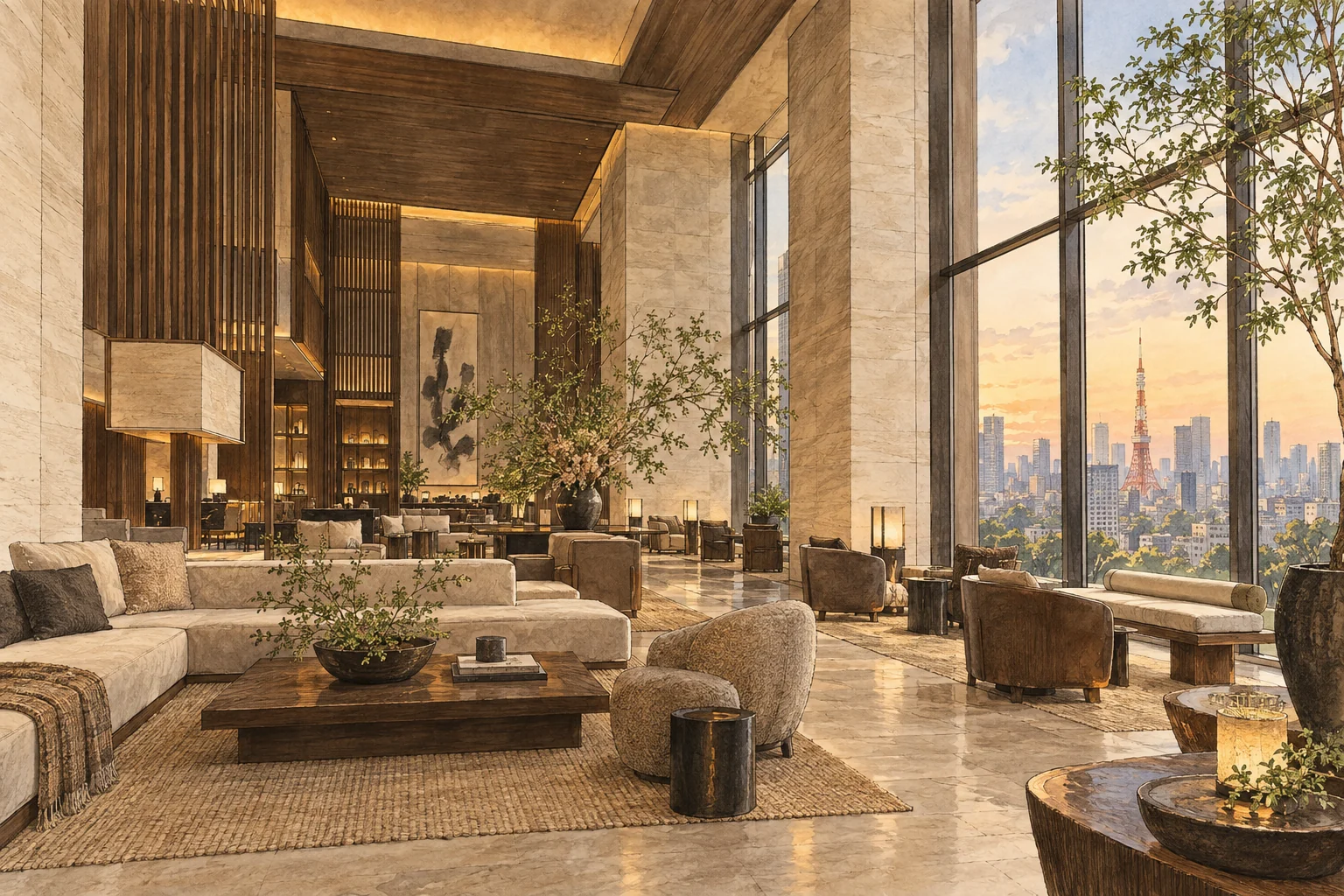
Janu Tokyo is a hotel whose guest rooms and shared spaces were designed by Jean-Michel Gathy. Focus on how ceilings at different heights, stone, wood, and textiles give each shared space its own atmosphere, rather than on the tower’s exterior design. It works well as an addition to a walk around the plaza and shops at Azabudai Hills if you have a meal or reservation there. Decide which space you plan to visit by making an official lounge or restaurant reservation. Without a reservation or visitor permission, do not assume you can tour the hotel interior; take a walk through Azabudai Hills’ public plaza instead.
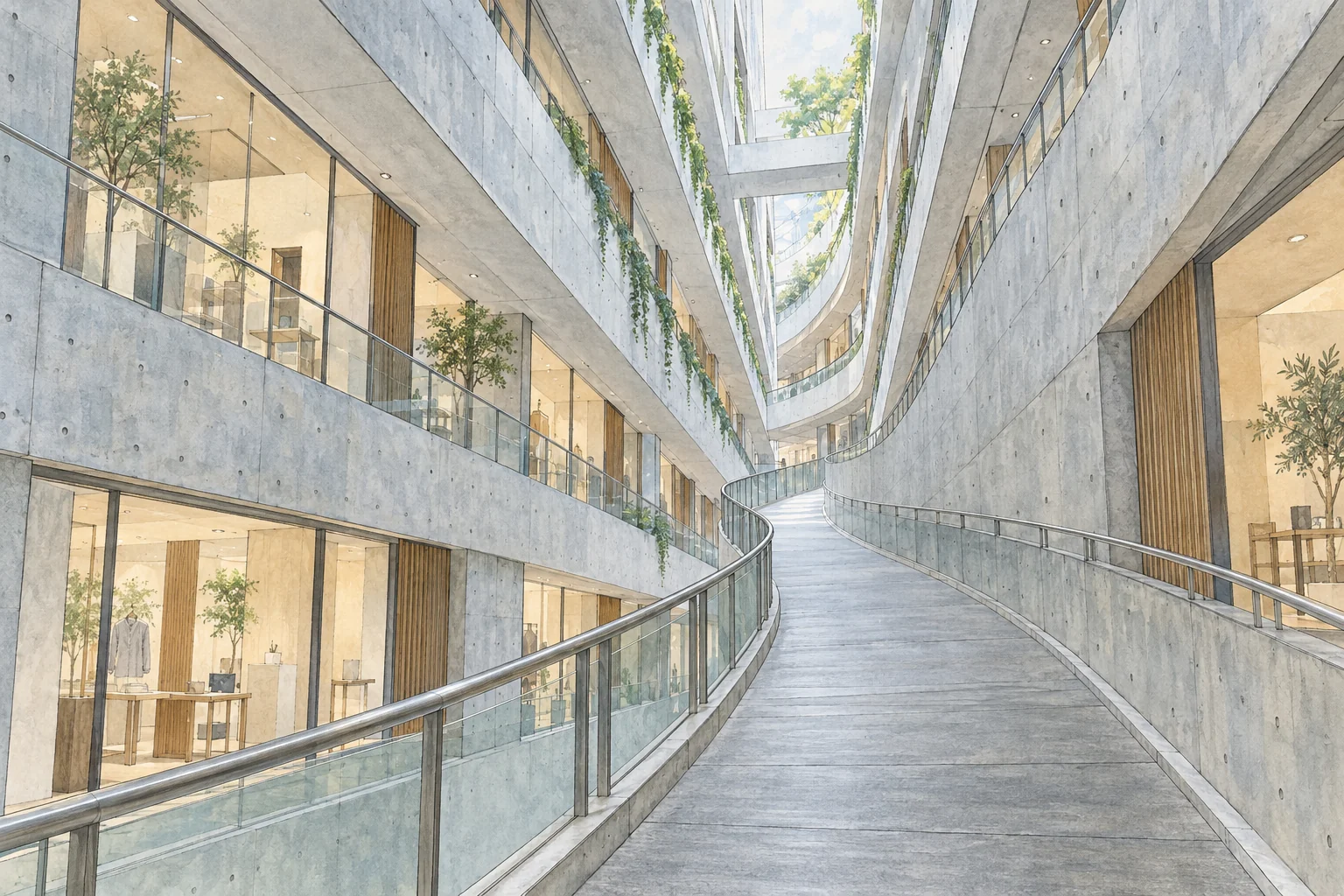
The highlight of Omotesando Hills is the gently sloping spiral passage that runs through the center of the building. Tadao Ando carried the change in elevation along the tree-lined avenue indoors, letting visitors move between shopping levels as if walking along a street. The passage is about 700 m long, with a slope of about 3 degrees, so the railings and storefronts extend into a long view rather than a flight of stairs. The entire former Dojunkai Aoyama Apartments building was not preserved as it stood; look separately at the portion that remains and its relationship to the new building.
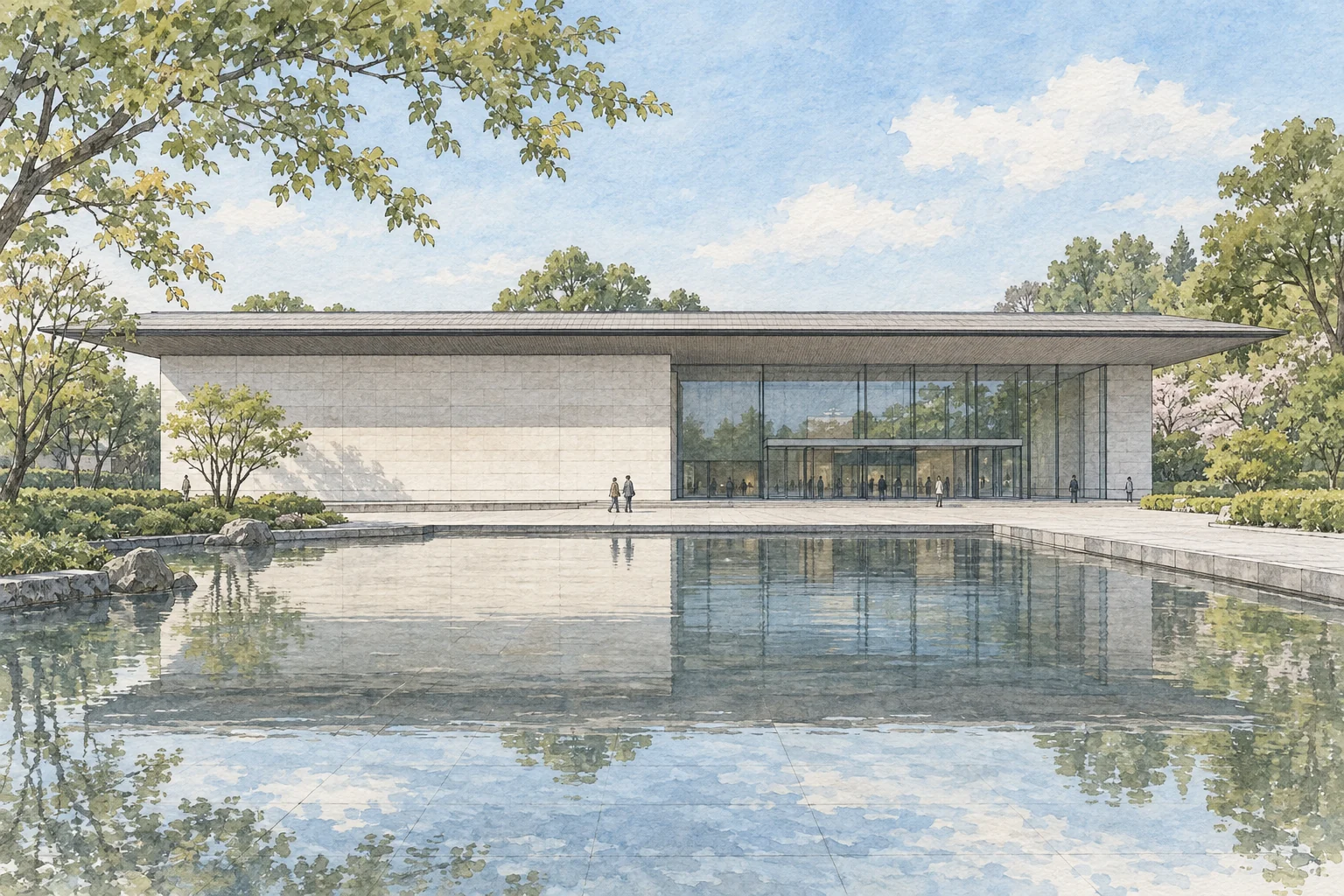
Inside the Tokyo National Museum, the Gallery of Horyuji Treasures pairs a low, long white building with a shallow reflecting pool in front. Yoshio Taniguchi carefully arranged the length of the walls, the reflections on the water, and the transition into the dark exhibition rooms. From the pond, look at the long horizontal eaves and the facade reflected in the water. Inside, notice the contrast between the bright corridor and the exhibition rooms. Follow the Tokyo National Museum’s visitor information for admission requirements and gallery schedules.
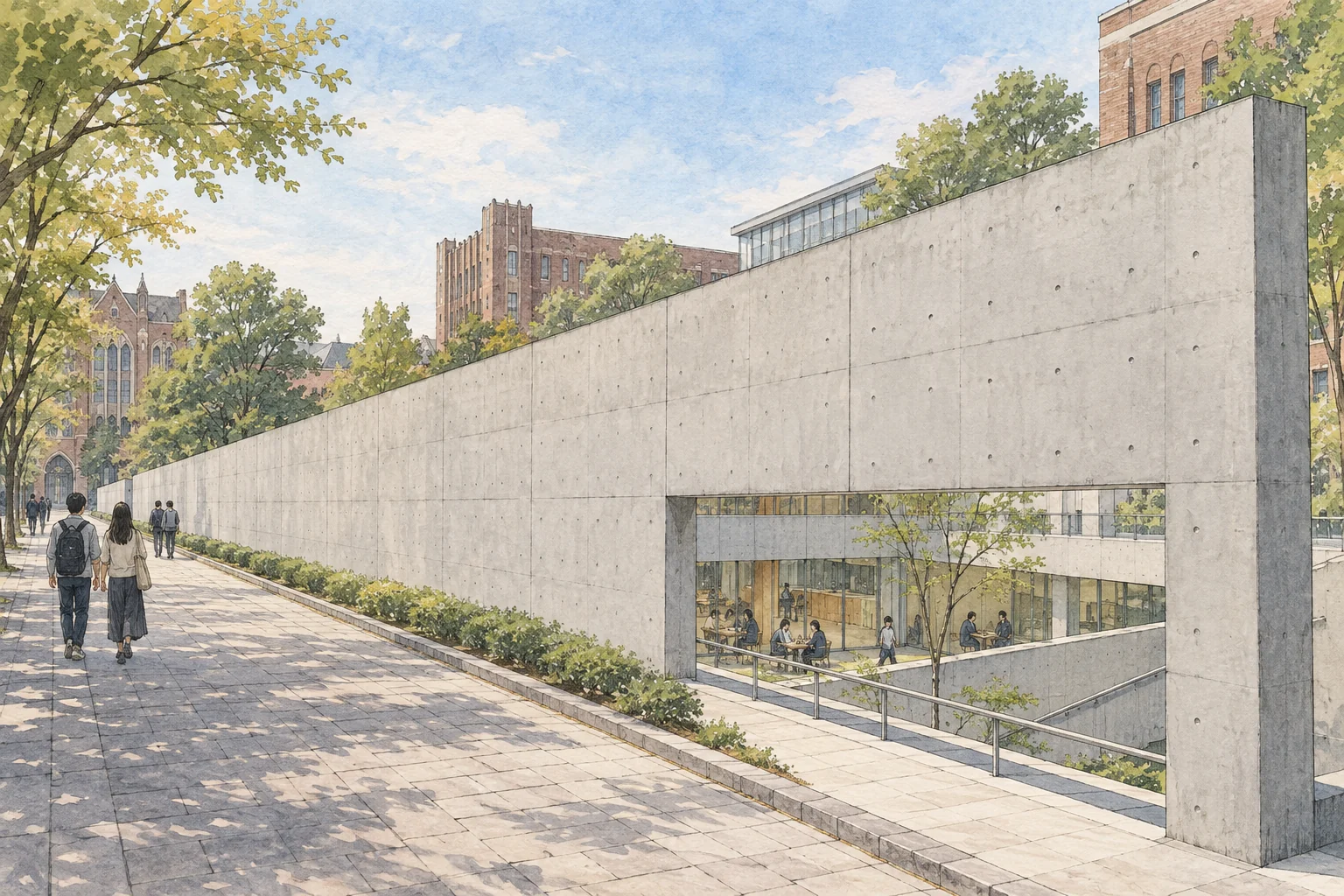
Fukutake Hall is a university facility designed by Tadao Ando. Its 100-meter-long exposed-concrete “Thinking Wall” is the first feature you see from the street. A low courtyard and transparent shared space beyond the wall create a sequence of views that are both blocked and opened up by the long wall. It is about a 7–8-minute walk from Hongo-sanchome Station and about 10 minutes from Todaimae Station. Along the way, you can also see where the materials change from the campus’s red brick. Weekday hours are listed as 8:00–20:00; follow facility guidance in areas being used for classes or events.
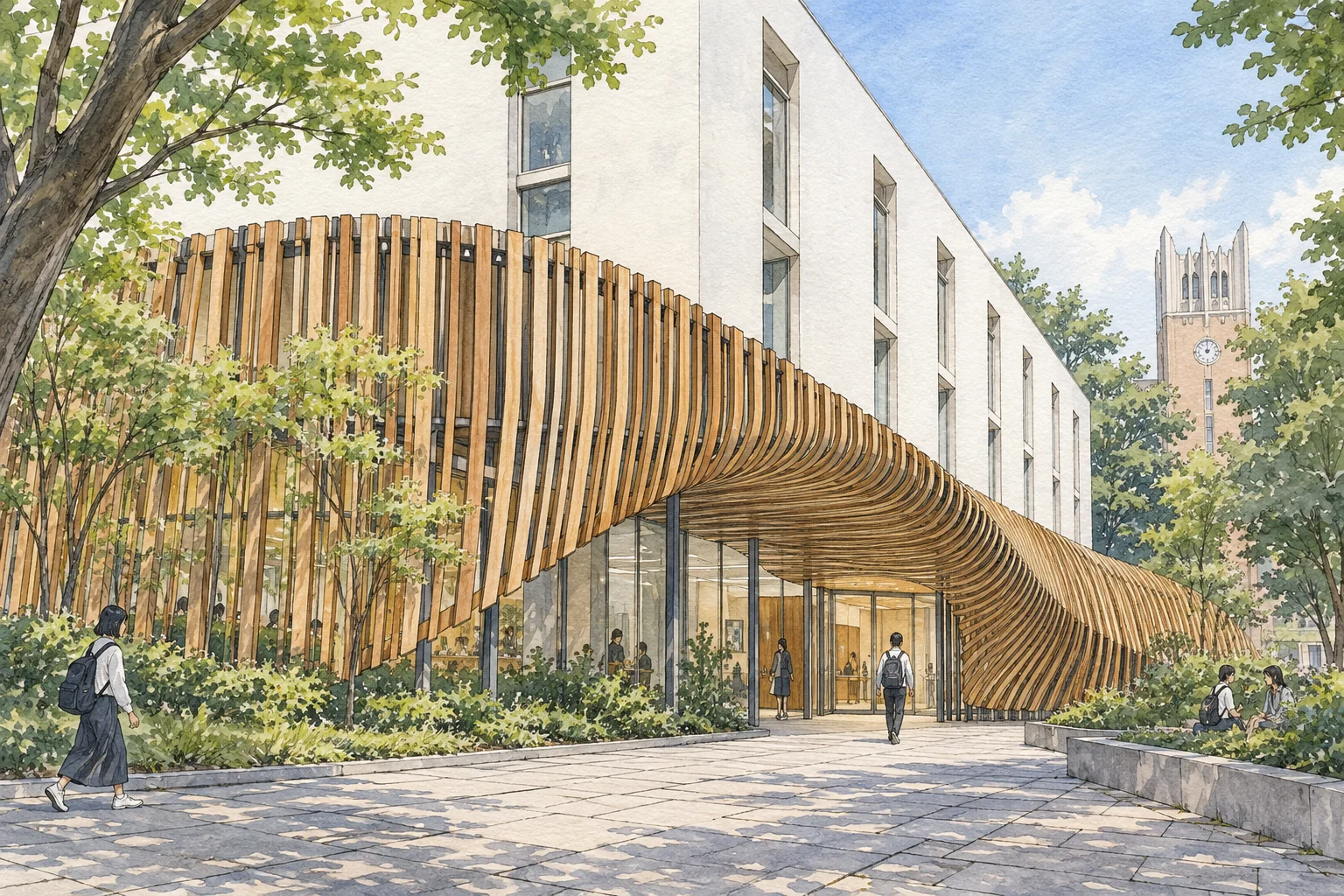
The Waseda International House of Literature is a library created by Kengo Kuma through the renovation of the former Building 4. Wooden arches from the entrance wrap around bookshelves and stairs, creating a long, tunnel-like reading space inside the concrete building. Take your time noticing how the spacing of the arches and the height of the shelves change as you move farther in. It is open free of charge 10:00–17:00 and closed on Wednesdays. Individuals and groups of up to 20 can visit without a reservation; groups of 21 or more need one.
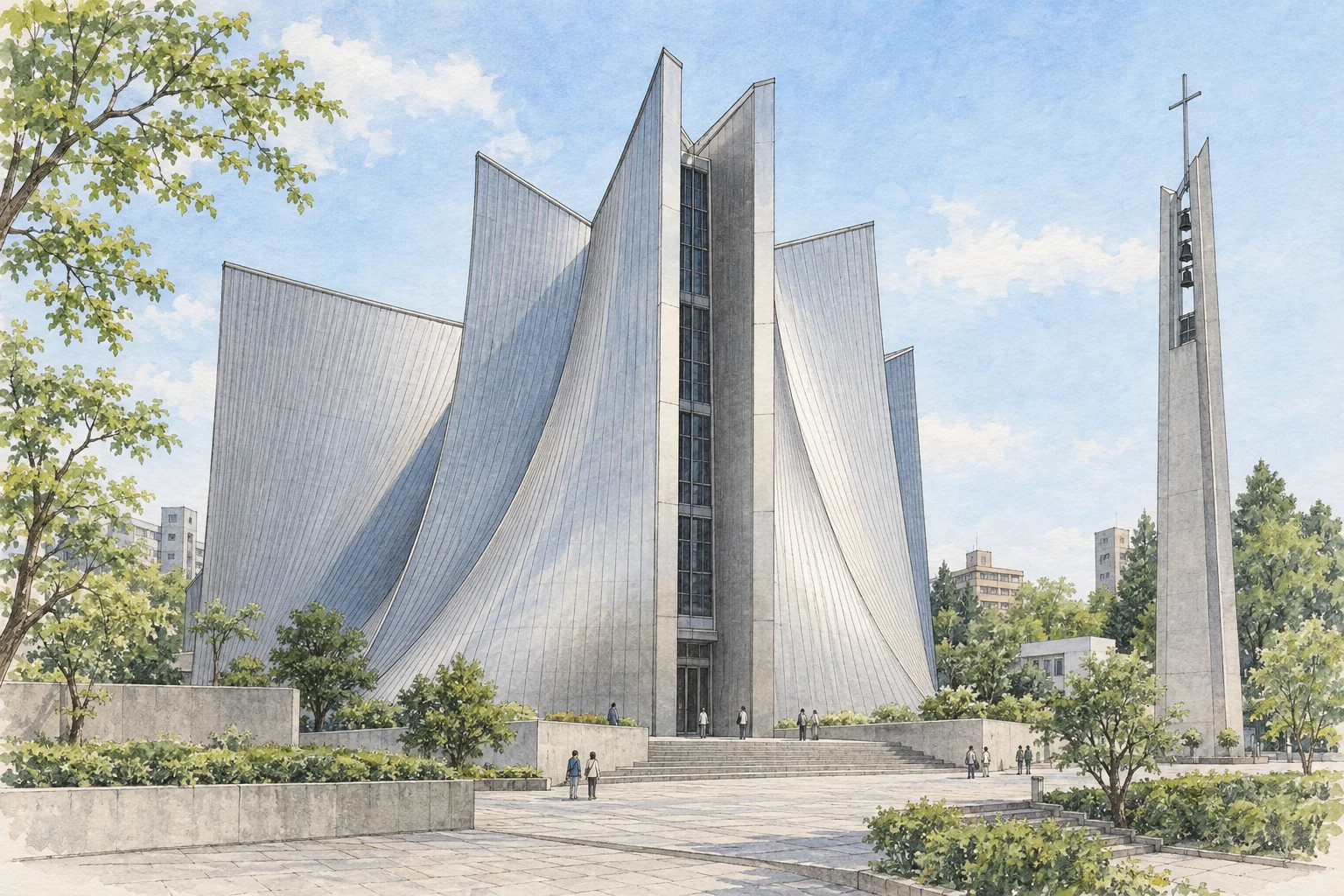
Kenzo Tange’s St. Mary’s Cathedral has a structure formed by eight curved surfaces that flare upward and create a cross shape. The exterior metal cladding and the exposed concrete interior use different materials, but both converge toward the light above. From the side rather than the front, you can see the curved surfaces coming together and the roofline rising. Inside, look at the cross-shaped light entering through the ceiling. Worship services and events take priority, and indoor photography is usually prohibited. If you want to see inside, contact the cathedral through the tour inquiry information on its official website to ask whether a visit is possible on your date. If you cannot confirm access or an event is taking place, plan to see only the exterior from areas open to the public.
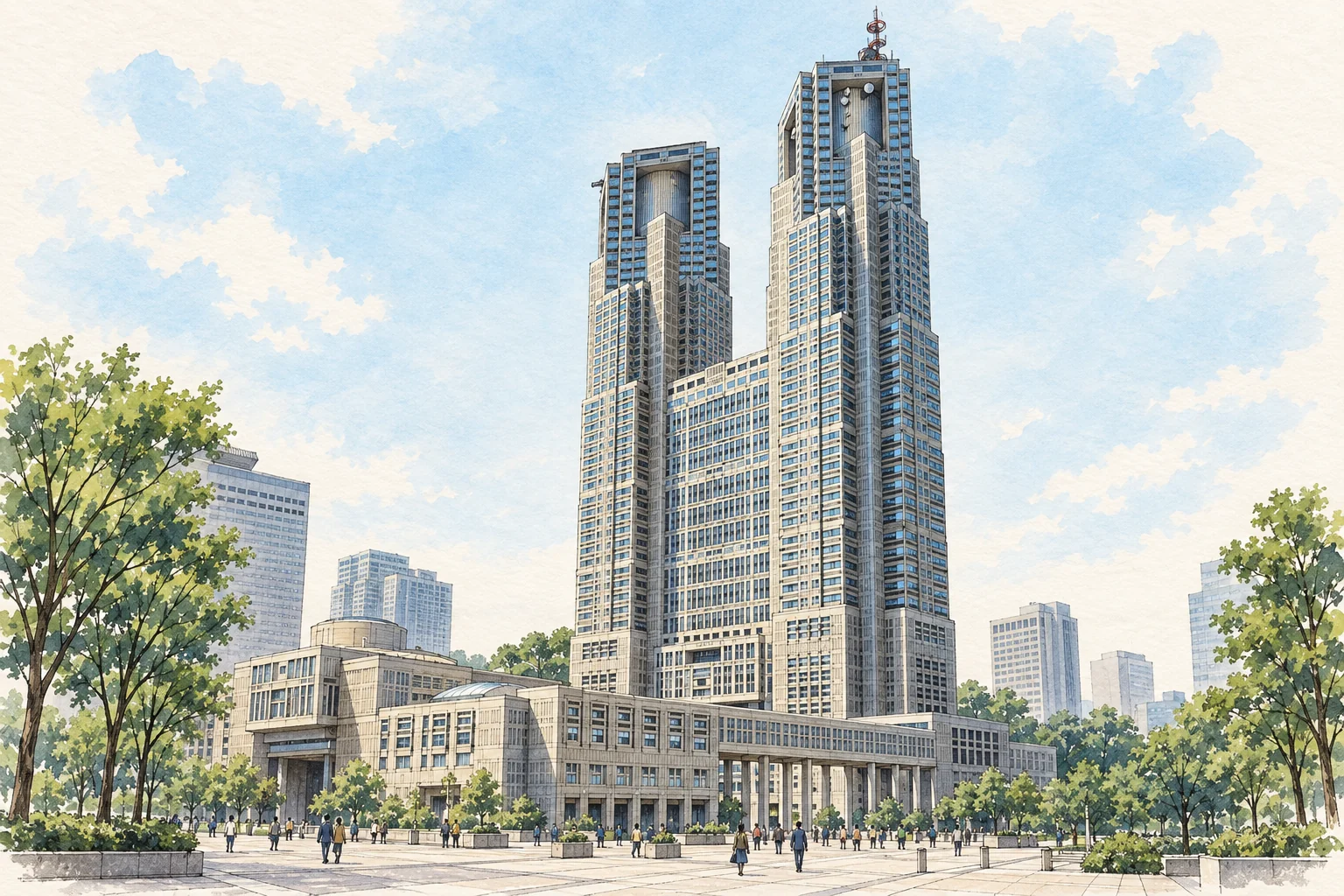
The Tokyo Metropolitan Government Building No. 1 is known for its two towers that rise apart and its vertically repeated windows. From a distance, it looks symmetrical, but up close from the Civic Plaza, the towers, lower assembly building, and pedestrian decks connect at different heights. Take the dedicated elevator on the first floor to the north and south observation rooms on the 45th floor, where you can also see the city grid from above. The observation rooms are free, but may close at short notice due to weather or events. If they are closed, finish with a walk around the Civic Plaza and exterior.
How to fit it in
In Marunouchi and Ginza, Roppongi and Omotesando, or Ueno and Hongo, you can add a nearby passage or an exterior walk to a visit to an exhibition or museum. Depending on the two places you choose, you may be able to walk between them or take the subway. The Haruki Murakami Library in Waseda, St. Mary’s Cathedral in Sekiguchi, and the Tokyo Metropolitan Government Building in Shinjuku are far apart, so it makes sense to visit each one separately.
Reality check
Once you have chosen two places, compare walking and public transit routes on a map. Even places that look close can take different amounts of time because of station exits, hills, and hotel or university entrances. Do not try to link Waseda, Sekiguchi, and Shinjuku in one route; choose one place you want to see and travel to it separately.
Allow 90–120 minutes for one ticketed exhibition or museum, 30–45 minutes for a building exterior or public passage, and about 40 minutes for a café, not including wait time. When traveling between different areas, add 30 minutes for moving through the station and finding your way, in addition to the time on the train.
Even free public passages at the International Forum and Omotesando Hills, and the Metropolitan Government Building observation rooms, require a check of that day’s operating status. Ticket prices at the National Art Center, Tokyo, 21_21, and the Gallery of Horyuji Treasures vary according to exhibitions and visitor requirements. Le Café V involves the cost of drinks or food, and seating cannot be reserved. Do not assume hotels, universities, or churches sell general admission tickets.
At museums, churches, universities, and hotels, follow on-site security and guidance about photography, bags, and access routes. Do not occupy spaces being used for worship, classes, or events to take photos or stay for a long time. If an observation room wait or bad weather puts you behind schedule, skip the next area and return to a nearby station.
If plans change
If you have an exhibition reservation, spend your time at one of the National Art Center, Tokyo, 21_21, or the Gallery of Horyuji Treasures; do not count an unreserved hotel, university, or church visit as a confirmed alternative. If exhibitions are closed, simplify your choices to places with clear access conditions, such as public passages at the International Forum and indoor dining.
21_21 is closed on Tuesdays and during exhibition changeovers, and the National Art Center, Tokyo is generally closed on Tuesdays. Instead of spontaneously adding several other ticketed exhibitions in Roppongi, switch to a walk through Omotesando Hills or a free exterior in another area.
Do not rush to find another high-rise observation deck from the Tokyo Metropolitan Government Building. See the Civic Plaza and exterior, then return to Shinjuku Station or continue to your next reservation.
Choose either the Gallery of Horyuji Treasures or the Haruki Murakami Library first. Public access to the library may vary with the university schedule, so if you need certainty, check museum exhibition and admission conditions first.
Small tip
At places where architecture and interiors are handled separately, look first at the exterior’s proportions and structure. Once inside, notice how furniture, lighting, and materials lower or lift your gaze. This helps you avoid treating the view from the street and the view from inside as one continuous experience.
Final check before departure
- Choose one place you most want to see first, and calculate subway or walking time only when adding a nearby location.
- Check the dates, last admission, and ticket conditions separately for ticketed exhibitions and museums.
- Check public access and event schedules separately for hotels, universities, and churches.
- Check that seating at Le Café V cannot be reserved and confirm the last order time.
- Check same-day opening information and crowd notices for the Tokyo Metropolitan Government observation rooms.
Exhibitions, worship services, university events, hotel operations, and weather can vary on the day of your visit. Before you go, check last admission for ticketed exhibitions and museums, and check that day’s public access routes at churches, universities, and hotels.
Information checked: 2026-09-18