
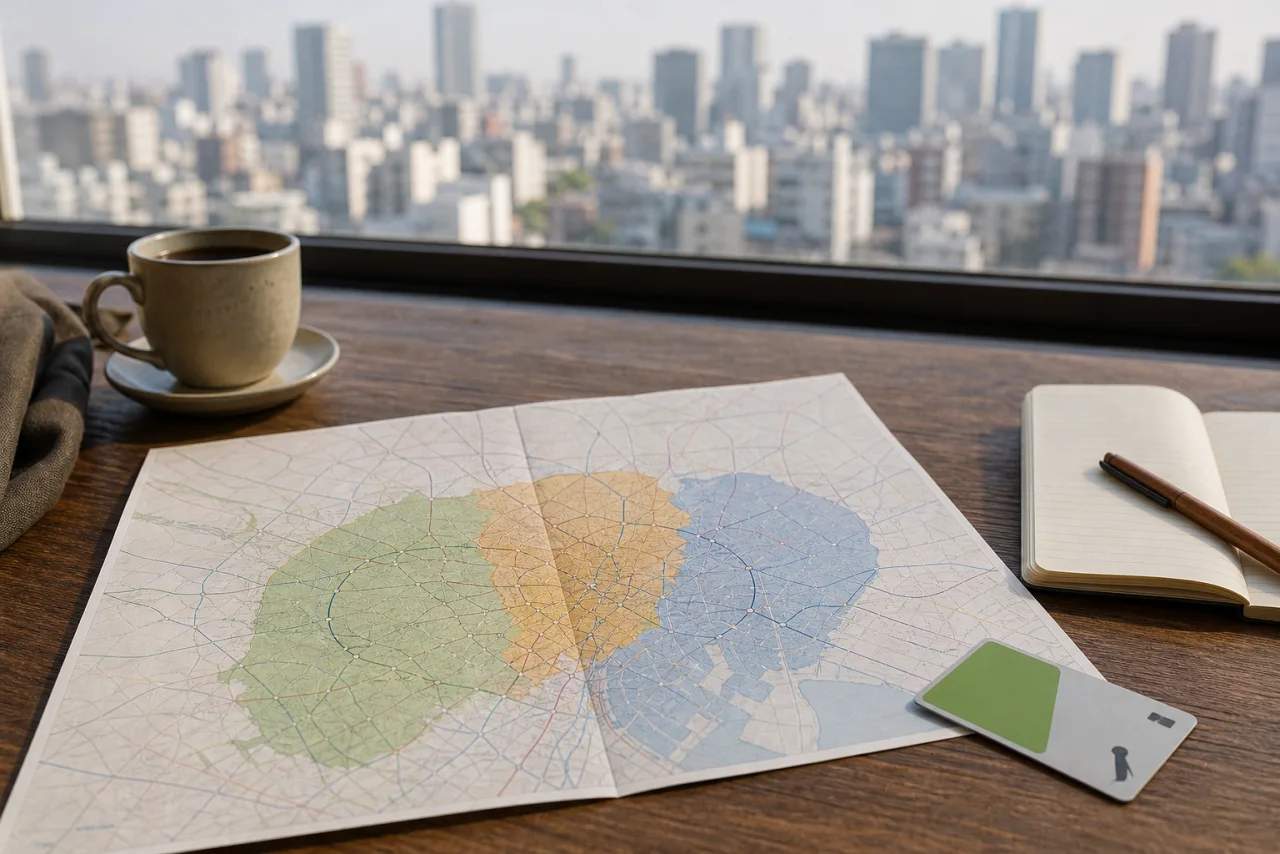
At a glance
- Start your day in the east somewhere that’s easier to visit early, such as Asakusa, then expand to either Ueno or Yanesen. Museum closing days and market hours determine the best order.
- For a day in central Tokyo, use Tokyo Station as your starting point and choose one direction: Marunouchi and Ginza, or Tsukiji and Hamarikyu. If you want to fit in both shopping and a garden, use the evening opening hours.
- Focus your day in the west on either Harajuku and Shibuya or Shinjuku. Exploring both major stations in depth can wear you out just from finding exits and walking through underground passages.
- If you’re taking a day trip, leave one Tokyo itinerary out. Yokohama, Hakone, Nikko, and Kamakura each deserve a full day; they aren’t half-day add-ons to a city itinerary.
Day by day
Suggested itinerary
See each day's route, highlights, background and stay together in one place.
Early walk in Asakusa → Ueno Park and a museum or Yanesen → Dinner near your hotel
Tokyo Station and Marunouchi → Ginza or Hamarikyu and Tsukiji → Dinner in Shinbashi
Meiji Shrine and Omotesando → Explore one part of Shibuya or spend the day in Shinjuku
Places and meals
Pair a temple or market with a park or museum, but choose just one paid attraction.
Google Maps 상세 글Get to know central Tokyo’s architecture, shopping districts, and rail hubs in one day.
Google Maps 상세 글Plan your morning at the shrine and your afternoon in a shopping district.
Google Maps 상세 글How to fit it in
For your first three days, focus on just one area each: east, center, and west. From day four on, choose southern art museums, the waterfront, or a day trip. If your hotel is in the west, you can briefly visit Shibuya on arrival day and save a full day for the east. Adjust the order to suit your plans.
Reality check
The simplest approach is to take JR or the subway between areas and walk within each area. Before setting out, save the station name, line symbol, exit number, and first stop together. If someone in your group needs an elevator, check the official station guide for accessible exits.
Plan for 7–9 hours each in the east and center, and 8–10 hours in the west, where major stations and shopping can take more time. On arrival day, if you have less than four hours after immigration and getting to your hotel, keep it to one dinner near your hotel.
Break your budget into local transportation, one paid attraction, two meals, and one break per area. Packing an observation deck, museum, and theme attraction into one day can fragment your route with both costs and timed reservations.
At crowded platforms and intersections, step to the side before stopping to check your map. Late at night, check for a well-lit walking route from your hotel station exit and an official taxi stand before relying on the last train.
If plans change
Stay indoors within the same area: try a Ueno museum in the east, the underground areas of Tokyo Station or Ginza in the center, or a complex in Shibuya or Shinjuku in the west.
Don’t move on to another area. Pick one place to sit in the current neighborhood, such as a café, garden, or free observation spot, then cancel your evening plans.
Small tip
Places that look close on a map may involve transfers between different rail operators and long walks inside enormous stations. When estimating travel time between stops, allow a 15–25 minute buffer to reach the exit in addition to ride time. This lowers the risk of missing a reservation.
Final check before departure
- Check closing days and reservation times for your visit date
- Save the first train from your hotel to each of the three areas and the last train back
- Choose one must-see and one place to skip each day
If construction, events, or extreme heat change access routes or opening hours, choose an alternative in the same area instead of moving to another one. Check the latest neighborhood and accessibility information on Tokyo’s official tourism site shortly before your visit.
Information checked: 2026-07-29