
At a glance
- Avoid the morning commute crowds around Tokyo Station’s Marunouchi side, and check for pedestrian restrictions and events. Read the station’s history briefly in the context of central Tokyo’s development, and don’t confuse it with the railway areas inside the station.
- Going as far as the Imperial Palace Outer Gardens or east to Nihonbashi will add a lot of walking. Choose just one morning focus—architecture or gardens—and save your energy for Ginza in the afternoon.
- Rather than trying to visit every brand in Ginza, choose one or two places based on what interests you, such as a department store, stationery shop, design store, or gallery. Check each store’s official terms for tax-free shopping and stock availability.
- Dinner doesn’t have to be expensive. Choose one restaurant to reserve, or plan an option that fits your budget and route back at a station building or department store food hall.
Day by day
Suggested itinerary
See each day's route, highlights, background and stay together in one place.
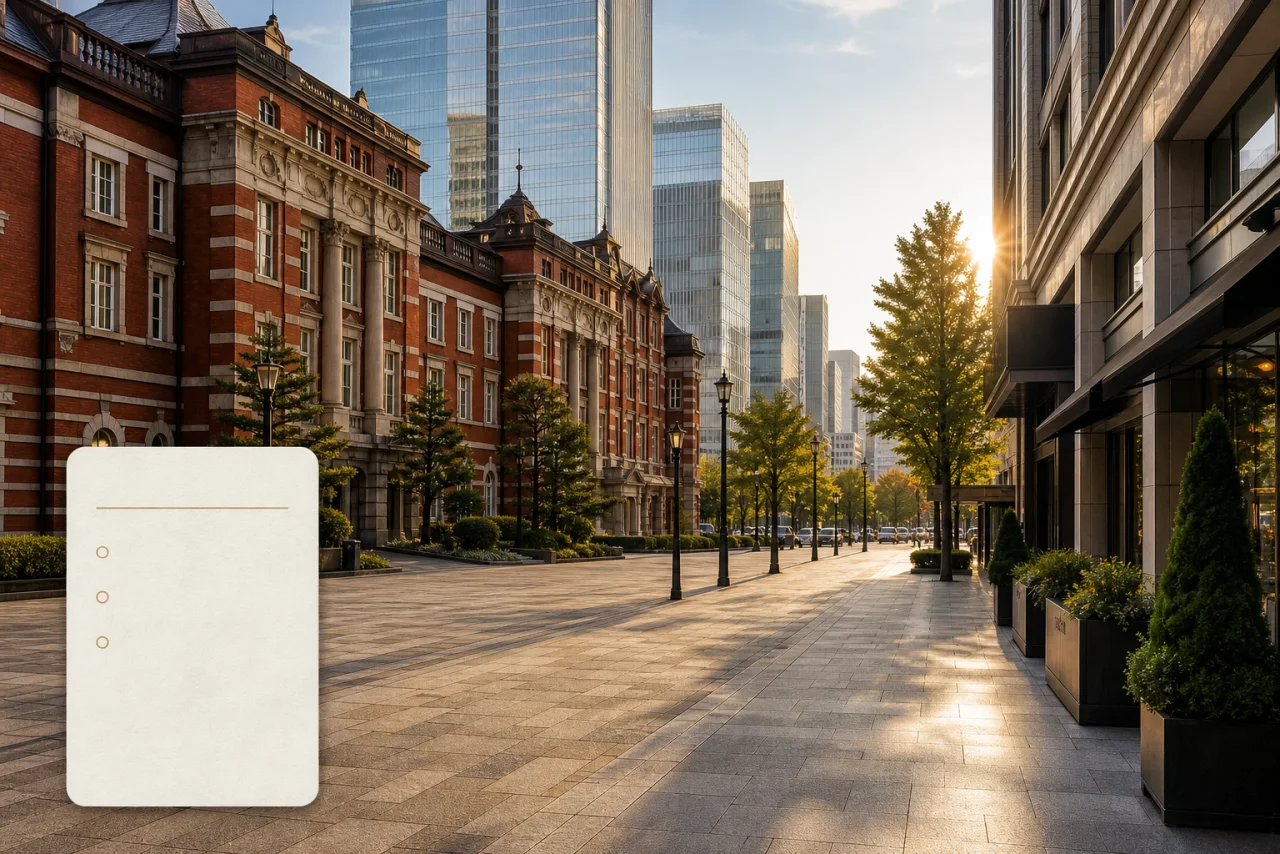
Tokyo Station’s Marunouchi Exit → Station Plaza and Marunouchi architecture → Break
Walk in one direction toward Yurakucho → Two Ginza shops or exhibitions chosen for your interests
Dinner reservation or a meal at the station or a department store → Return via whichever is closest: Ginza, Yurakucho, or Tokyo Station
Places and meals
See the station’s historic exterior and public walkways through the business district.
Google MapsChoose a shopping destination and route back after dinner in the same direction.
Google MapsHow to fit it in
Use Tokyo Station as your starting point in the morning and focus on just one area: architecture or the Imperial Palace Outer Gardens. In the afternoon, pick two Ginza shops you actually need to visit and leave time for one dinner. Nihonbashi is better as a separate half-day trip.
Reality check
You can walk from Tokyo Station to Ginza or take the train via Yurakucho or Ginza Station. If you’re traveling light and the weather is good, walk one way. Switch to a short train ride if it’s raining or you’re tired.
Allow 2–3 hours for Tokyo Station and Marunouchi, 3–5 hours for Ginza, and 1–2 hours for a meal. If checking stock or completing tax-free procedures takes longer than expected, skip another store.
A public architecture walk costs little; exhibitions, shopping, and meals are optional expenses. Read the current terms and excluded items for department store discounts and tax-free shopping. Don’t buy things you don’t need just to get a refund.
Watch for pedestrian signals and bicycles in the business district, and crowds on station platforms. Avoid walking around late at night with expensive purchases on display, and store receipts and your passport separately.
If plans change
Cut back on the outdoor walk and use connected indoor spaces around Tokyo Station, Marunouchi, and Ginza. Check official building information to confirm whether routes between buildings are fully indoors.
Skip the Imperial Palace Outer Gardens or an extra gallery, and keep your dinner reservation and return to your hotel. Don’t carry your purchases to another area.
Small tip
At Tokyo Station, choosing the wrong exit can mean a long walk. Save whether you need the Marunouchi or Yaesu side, along with the floor and whether your meeting point is inside or outside the ticket gates.
Final check before departure
- Save your station ticket gate, Marunouchi Exit, and meeting point
- Check the opening hours for the two Ginza shops or exhibitions you actually plan to visit
- Decide where to store your purchases, whether to reserve dinner, and which station to return from
Station construction, plaza events, and store hours can change. Check official Tokyo area information and railway and store websites on the day, and follow any on-site restrictions. Visit exhibitions with shorter hours first, then decide where to leave your purchases and how you’ll get back after dinner to cut down on walking across central Tokyo.
Information checked: 2026-07-29