
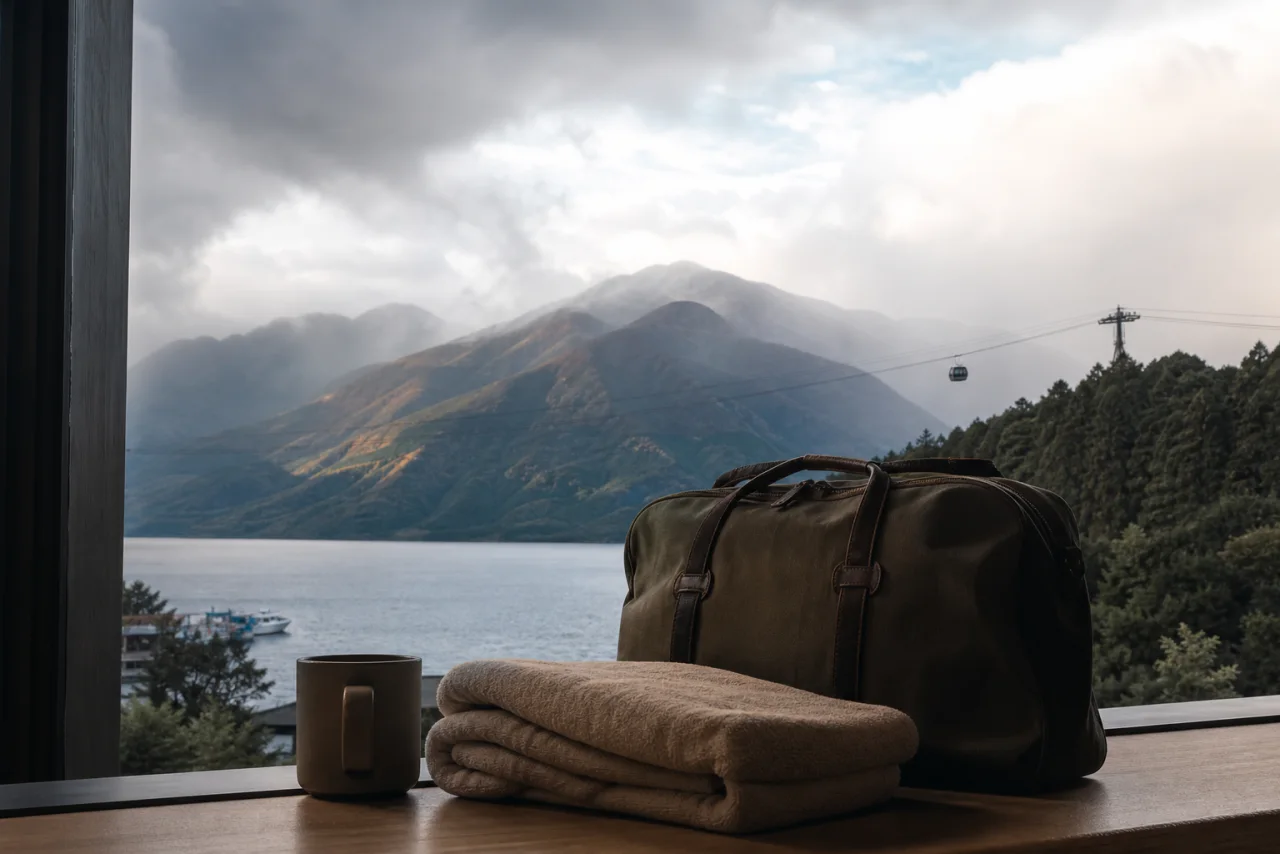
At a glance
- Check the official Hakone Freepass page for included transportation, departure station, and validity period. Don’t make completing the full loop your goal just because you bought a pass.
- Mountain and lakeside areas such as Owakudani and Lake Ashi may have restrictions due to volcanic gas, strong winds, rain, or poor visibility. Check your health conditions, such as asthma, and any official restrictions.
- For a day trip, choose just two activities, such as one museum and a hot spring, or the ropeway and the lake. For an overnight stay, choose lodging based on access to Hakone-Yumoto and your route the next morning.
- Leave large bags in Tokyo or at your lodging, and check baggage delivery or storage deadlines and arrival guarantees. Don’t take a suitcase up into the mountains.
Day by day
Suggested itinerary
See each day's route, highlights, background and stay together in one place.
Start early from Shinjuku → Hakone-Yumoto → Gora → Sounzan → Owakudani → Togendai → Motohakone Port → return to Hakone-Yumoto by bus. This is an example for a day when transportation is running normally. Don’t add every museum and hot spring as well.
Shinjuku → Hakone-Yumoto → Hakone Tozan Train to Chokoku-no-Mori Station → visit one place, the Hakone Open-Air Museum → head to your lodging before dinner and check-in time.
If the ropeway and boat are running, see just one or two sections for the views or lake. If service is suspended, rest at your lodging or scale back to Hakone Yuryo hot spring near Hakone-Yumoto, and keep your early train back to Tokyo.
Places and meals
Set your return time to Tokyo first. This is your starting point.
Google MapsCheck the route direction and service status separately for the ropeway and sightseeing boat.
Google MapsA museum option near Chokoku-no-Mori Station. If the ropeway is suspended, check rail service first.
Google MapsA day-use hot spring option near Hakone-Yumoto. Check shuttle service, age restrictions, and tattoo policies.
Google MapsHow to fit it in
For a day trip, choose only two of these three: views, a museum, or a hot spring. An overnight stay is worthwhile if staying at a hot spring is part of the experience or you want flexibility to wait out bad weather. Check whether you would be paying for lodging in Tokyo as well.
Reality check
新宿 (Shinjuku) → 小田原 (Odawara) → 箱根湯本 (Hakone-Yumoto) is the main route. The direct Romancecar takes about 80 minutes. One example loop is Hakone-Yumoto → Hakone Tozan Train to Gora → cable car to Sounzan → ropeway to Owakudani and Togendai → sightseeing boat to Motohakone Port → bus to Hakone-Yumoto. Check service and boarding directions for each connection on Hakonenavi, and limit your day to two experiences: the views and the lake.
Plan for the loop’s travel time first: 40 minutes by train, 10 minutes by cable car, 30–40 minutes by ropeway, 30–40 minutes by boat, and 40–60 minutes by return bus. Add 20–30 minutes for each transfer. With sightseeing, meals, and round-trip travel from Tokyo, it’s a long 10–12-hour day. If service is suspended in the afternoon, don’t wait for replacement buses just to finish the loop; prioritize the return train you’ve secured. For an overnight stay, visit one museum on the first day, then see whichever views or lake sections are operating on the second day.
As of 2026-10-03, the official fare for the adult Hakone Freepass is 7,100 yen for a 2-day pass departing from Shinjuku, or 6,000 yen departing from Odawara or Hakone-Yumoto. The Shinjuku version includes the basic round-trip Odakyu fare, but the Romancecar limited express seat fee is extra. If you buy the Shinjuku version, don’t add the included basic fare again. If you buy the Odawara or Hakone-Yumoto version and travel from Shinjuku, calculate the round-trip basic fare between Shinjuku and Odawara separately once. If you take the Romancecar, add the limited express seat fee for both one-way trips shown on the reservation screen, plus actual costs for museums, hot springs, and food. Since a day trip also means buying a 2-day pass, compare the cost with individual fares if you’re visiting just one lower-elevation area.
Follow volcanic gas, weather, and service restrictions, and stay out of closed areas. For hot springs, check your health conditions and the facility’s rules, including hydration and no bathing after drinking alcohol.
If plans change
If the Hakone Tozan Train is running, switch to a visit to one museum in Chokoku-no-Mori. If rail service is also disrupted, scale back to Hakone Yuryo in Hakone-Yumoto or rest at your lodging, and secure your return train first.
Don’t travel in search of another mountain viewpoint. Choose just one operating museum or hot spring. Use the hot spring only if it suits your health and you meet the facility’s bathing requirements.
Small tip
There’s no single correct direction for the loop. Choose clockwise or counterclockwise based on the day’s service status and your lodging location. If one section stops running, don’t insist on completing the whole loop.
Final check before departure
- Check Official Status for All Transportation, Volcanic Activity, and Weather
- Decide on Two Day Trip Experiences or Your Reason for Staying Overnight
- Save Pass Inclusions, Baggage Details, and the Last Return Option
Mountain transportation, volcanic conditions, and weather can change on the day. Check current notices from Odakyu, Hakone’s tourism authority, and each facility operator together just before departure. If a booked facility’s hours conflict with safety restrictions, prioritize an alternate route over the cost. If a section is suspended, rest in the lower areas and return on an early train.
Information checked: 2026-10-03