
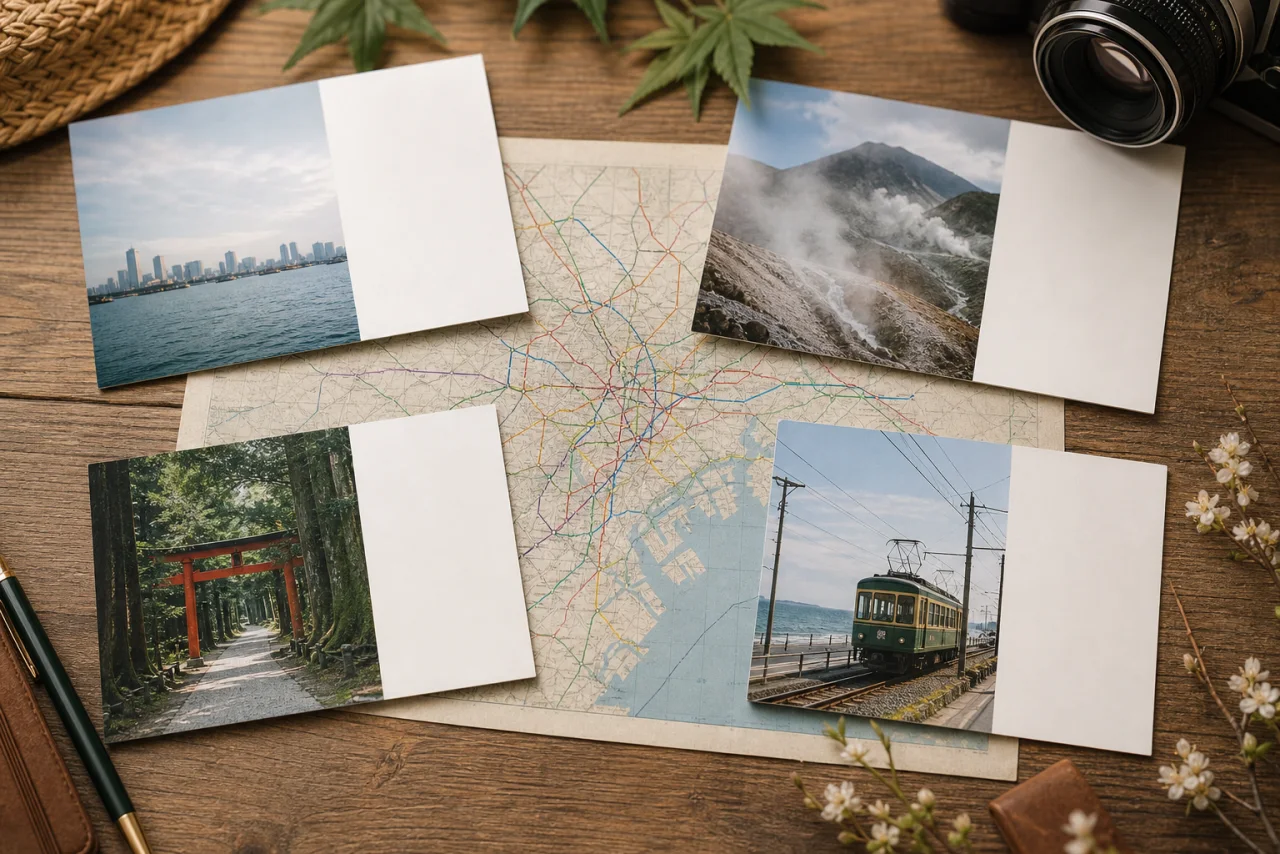
At a glance
- Yokohama is easy to reach by train from central Tokyo, with flat walks along the harbor. You can start late, but plan your route so you don’t have to double back between Minato Mirai, the historic port area, and Chinatown.
- In Hakone, getting around by different modes of transport—and dealing with the weather—are part of the trip. An overnight stay gives you more time for the hot springs; on a day trip, focus on a few highlights instead of trying to complete the full loop.
- In Nikko, shrine and temple opening hours and local bus schedules shape your day. If you also want to explore nature, consider staying overnight instead of making a day trip from Tokyo.
- Kamakura can feel rushed if you try to fit in the temples of Kita-Kamakura, central Kamakura, Enoshima, and the coast. Choose one of two routes: temples or the coast.
Day by day
Suggested itinerary
See each day's route, highlights, background and stay together in one place.
Tokyo → one-way walk along Yokohama’s harbor → Chinatown or night views → return
Tokyo → two or three key Hakone transit segments → one hot spring or museum → return early
Tokyo → either Nikko’s historic sites or one Kamakura route focused on temples or the coast → return before the last train
Places and meals
Choose this if you’re up for hot springs, mountain transit, and changeable weather.
Google Maps 상세 글Choose one focus: temples or the coast.
Google MapsHow to fit it in
If you have 4 days or fewer in Tokyo, one day trip is enough. If you can’t explain your reason for choosing a destination in one sentence, or heavy rain is forecast, staying in Tokyo is a good choice. You can save an overnight trip for your next visit.
Reality check
Your departure station depends on where you’re staying and which travel option you choose. On each operator’s official site, check round-trip service for your travel date, whether you need reserved seats, which sections are covered by a pass, and any local transit service suspensions. Aim to return one or two departures before the last one.
Plan for a long day: 7–10 hours for Yokohama or Kamakura, and 9–12 hours for Hakone or Nikko. Staying overnight replaces the rush of traveling back and forth from Tokyo with evening and morning experiences, but adds lodging costs and luggage transfers.
Add up long-distance round-trip transport, local transit, one key paid experience, meals, and an emergency return fare. Check what a pass covers and which facilities accept it, then compare its cost with buying tickets individually.
Check for strong winds, heavy rain, extreme heat, and winter road conditions in mountain and coastal areas. Follow photography, dress, and access rules at cultural heritage sites and religious spaces. If you’re tired, cut back on stairs and rocky coastal routes.
If plans change
Don’t push ahead to outlying areas of Hakone or Nikko. Switch to an urban day trip such as Yokohama, or spend the day indoors in Tokyo. Check official service updates for the alternative destination, too.
Don’t try to squeeze in Hakone or Nikko. Scale back to a half-day in Yokohama or one area of central Kamakura, or stay in Tokyo.
Small tip
Don’t count only the round-trip train ride. Allow time for the bus or walk to your first stop, and for getting from your last stop back to the station. Local transit waits are a major variable in Hakone and Nikko.
Final check before departure
- Choose one trip focus: harbor, hot springs, historic sites, or temples and coast
- Check official schedules for round-trip and local transit, including your return
- Save a backup area in Tokyo in case of bad weather, closures, or service suspensions
Local transport and facilities may change with the season, weather, or maintenance. Check updates from local tourism offices, rail operators, and facilities on the day of your visit. If a timed reservation conflicts with a local safety notice, follow the safety instructions even if you lose the reservation.
Information checked: 2026-07-29