
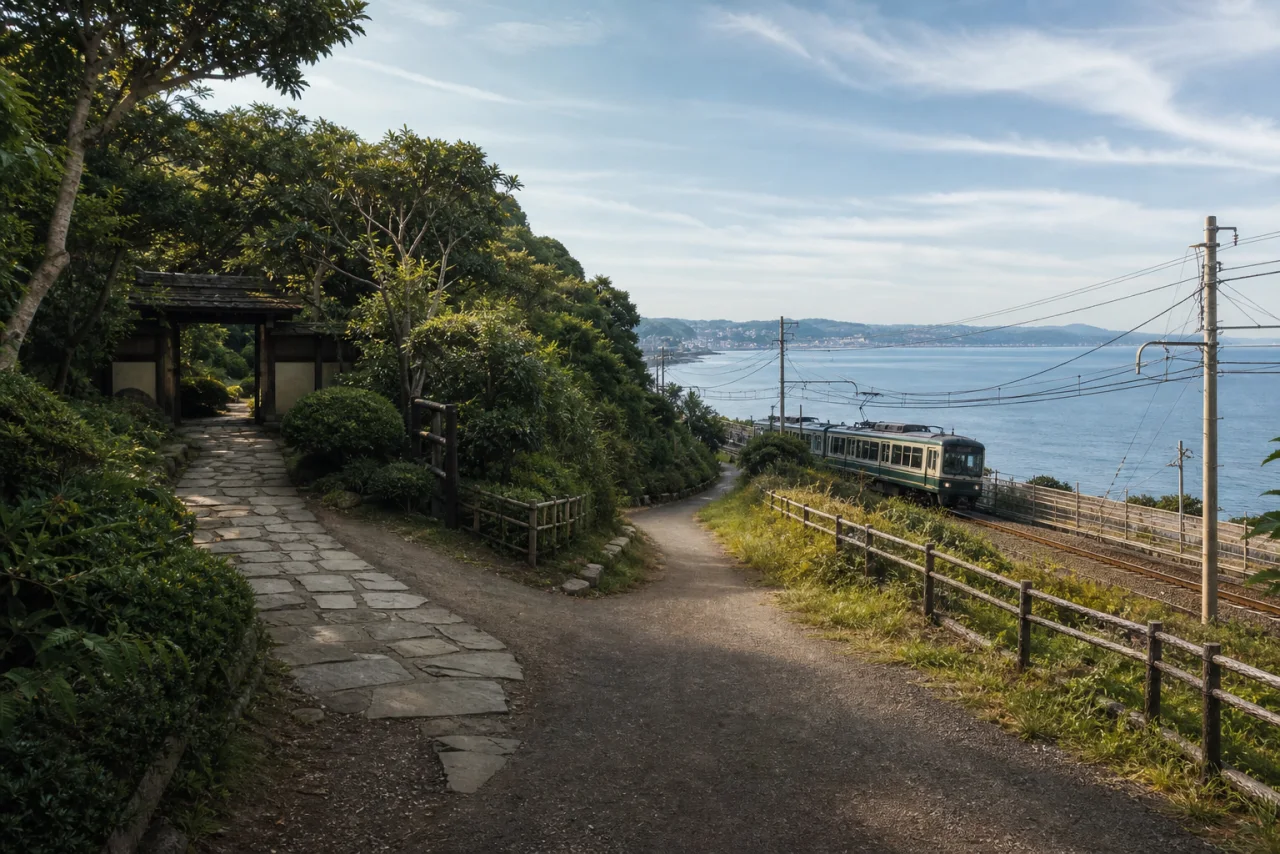
At a glance
- For the temple itinerary, start in Kita-Kamakura and work south toward central Kamakura, visiting two or three temples confirmed open that day. Allow for entry lines and one-way routes during flower and autumn foliage seasons.
- For the coastal itinerary, pair either the Great Buddha of Kamakura or one stop in Hase with Enoshima, and check the island stairs, wind, sunset, and return trip. Don’t add five temples beforehand.
- The Enoden is a local railway, and its famous level crossing is not a photo set. Stay out of roadways, off railway tracks, and out of residential areas; use stations and public walkways only.
- Follow the rules for worship, photography, and clothing at religious sites, and heed coastal controls for waves and strong winds. Don’t block pedestrian traffic to take seasonal photos of hydrangeas, cherry blossoms, or other flowers.
Day by day
Suggested itinerary
See each day's route, highlights, background and stay together in one place.
Tokyo Station → JR Kita-Kamakura Station → Engaku-ji in front of the station → Kencho-ji via the main road → exterior of Tsurugaoka Hachimangū → lunch in central Kamakura → return from JR Kamakura Station. Don’t include a hiking trail or Enoshima.
Tokyo → Kamakura → Enoden to Hase → either the Great Buddha or Hasedera Temple → meal. Continue to Enoshima only if the wind and your energy are good and you have plenty of time to return. It’s fine to end your day in Hase.
If the line at the next temple is long, skip it and finish at a nearby station. Don’t use rocks inside the island or areas beside railway tracks as photo alternatives.
Places and meals
The first temple, in front of Kita-Kamakura Station.
Google MapsA separate temple south of Engaku-ji; walk there via the main road.
Google MapsAfter seeing the exterior and paying your respects at the final stop on the temple itinerary, head down to Kamakura Station.
Google MapsAn option for the coastal itinerary; don’t combine it with the full temple itinerary.
Google MapsHow to fit it in
Choose the temple itinerary if you want to see history and gardens, or the coastal itinerary for the sea, railway, and island. Don’t commit to Enoshima from the start. Leave yourself the option to end in Hase based on your energy and the wind that afternoon.
Reality check
Allow about 55–65 minutes from Tokyo Station to JR Kita-Kamakura Station on the Yokosuka Line. For the temple itinerary, get off here and head south from Engaku-ji to Kencho-ji, Tsurugaoka Hachimangū, and Kamakura Station. For the coastal itinerary, take the Enoden from JR Kamakura Station to Hase Station and visit either the Great Buddha or Hasedera Temple. If you continue to Enoshima, add the walk and stairs between Enoden Enoshima Station and the island entrance. In strong winds, end your day in Hase.
Plan for 45–60 minutes at Engaku-ji, a 20–25-minute walk to Kencho-ji, 60–90 minutes at Kencho-ji, about a 20-minute walk to Hachimangū, and time for lunch and the walk to Kamakura Station. Two temples and the shrine exterior take 5–6 hours locally, or 8–10 hours including the round trip from Tokyo and waiting time. The coastal itinerary takes 9–11 hours with Enoden waits and walking on the island; don’t add the full temple itinerary beforehand.
According to official information as of 2026-10-03, general admission for adults to Engaku-ji is 500 yen. Add the current official admission fees for Kencho-ji, Hasedera, or the Great Buddha, depending on which places you visit, and distinguish free shrine worship from paid facilities. For the temple itinerary, compare round-trip JR fare plus two temple tickets and meals. For the coastal itinerary, compare round-trip JR fare plus Enoden rides, any chosen facility admission, and meals. If you choose an Odakyu pass, check the departure station and whether JR is included; don’t assume its price is for the same round-trip route.
Don’t photograph on railway tracks, roads, or private property, and follow temple etiquette. Take care around strong coastal winds, high waves, wet rocks, and island stairs. Stay away from the water during warnings.
If plans change
Skip places with long entry lines and shorten the day to public paths and one less-crowded temple that is open. Don’t detour through residential lanes.
Skip the island and coastal rocks, eat in Hase or central Kamakura, then take an early train back.
Small tip
If popular photo spots are crowded, don’t wait for the same shot. Kamakura’s appeal lies in how closely its temples, local railway, and coast connect, not in checking off individual photos.
Final check before departure
- Choose either the temple or coastal itinerary
- Check opening status, seasonal crowds, and marine weather
- Save pass coverage, photography etiquette, and an early-exit station
Temple opening status, flower conditions, railway crowds, and marine weather can change. Follow official same-day guidance from Kamakura tourism services, railways, and facilities, as well as on-site controls. Check the opening hours of any reserved facility and coastal safety guidance. If winds are strong, switch to the option that skips Enoshima. Leave time for meals and rest between temples.
Information checked: 2026-10-03