
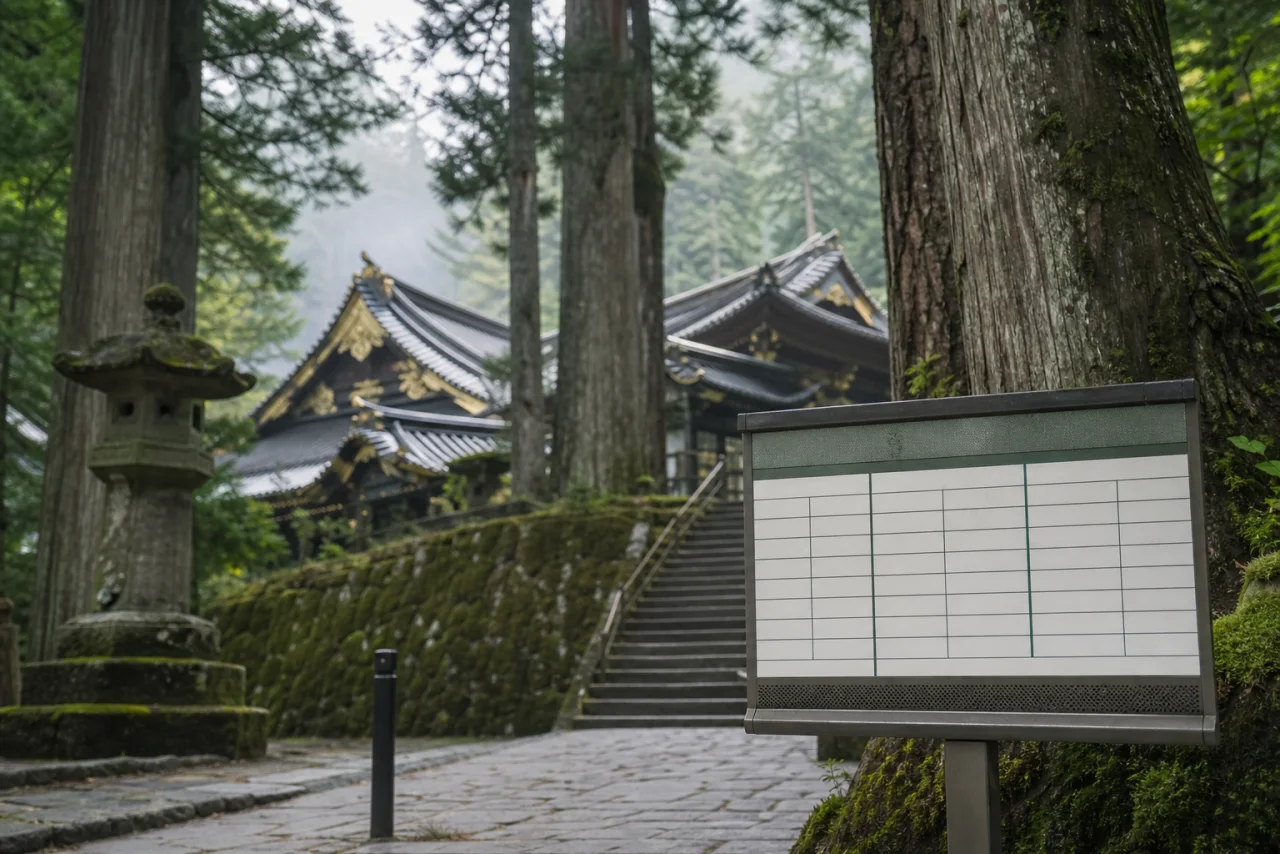
At a glance
- Toshogu Shrine, Rinnoji Temple, and Futarasan Shrine have different admission rules, maintenance schedules, events, and religious customs. Don’t treat them as a single attraction; check official opening information and choose two or three priority visits.
- Buses are convenient for getting from the station to the heritage area, but they can be crowded and delayed by traffic. If you walk, account for hills, roads, and your stamina.
- Lake Chuzenji and Kegon Falls require a separate trip into the mountains. Avoid trying to see both the heritage area and nature in depth on a day trip. If nature is your priority, check overnight options and seasonal transport.
- Follow guidance on worship, memorials, and photography at heritage sites. Learn about the meaning of the sculptures and architecture from official explanations, rather than relying only on commercial “power spot” descriptions.
Day by day
Suggested itinerary
See each day's route, highlights, background and stay together in one place.
Take the reserved Asakusa-to-Tobu-Nikko limited express. Check service for your visit date on the World Heritage bus departing from boarding point 2B, then get off at Omotesando or another stop recommended that day to reach Toshogu Shrine.
Toshogu Shrine, two hours → lunch and a break → either Rinnoji Temple or Futarasan Shrine. Check admission rules, photography restrictions, and event controls for each paid area; don’t add more buildings.
Start heading back toward the return bus at least 90 minutes before your train departs. If traffic is forecast, leave even earlier, arrive at the station 30 minutes before departure, and don’t add a bus trip to the nature area.
Places and meals
Check opening, maintenance, and visitor etiquette for each site.
Google MapsUse this as your reference point for bus crowds and your return train.
Google MapsHow to fit it in
Spend five to six hours exploring just the World Heritage area on a day trip. If you want to see nature too, consider an overnight stay in Nikko or Kinugawa, and check separately which area is convenient from your accommodation.
Reality check
Compare the Tobu route from 浅草 (Asakusa) to 東武日光 (Tobu-Nikko) with JR trains to JR日光 (JR Nikko) Station, depending on where you’re staying. Allow about two hours each way for the Asakusa limited express, and distinguish the basic fare from the limited express seat ticket. The World Heritage loop bus from Tobu-Nikko Station boards at stop 2B; stop 83, 表参道 (Omotesando), is a possible stop to get off at. If there are detours or service changes on your visit date, ask staff which stop provides access to Toshogu Shrine before boarding.
Allow about 10–15 minutes for the station-to-heritage-area bus, plus 30 minutes for queues and traffic. Two hours at Toshogu Shrine, 60–90 minutes at either Rinnoji Temple or Futarasan Shrine, and 1 hour 30 minutes for lunch and walking within the area add up to five or six hours on site. Leave 60 minutes for return bus waits and traffic, and arrive at the station 30 minutes before your reserved train. Shorten your last visit if needed. The mountain lake and waterfalls are not included in this day.
As of 2026-10-03, the official general admission ticket for an adult at Toshogu Shrine is 1,600 yen. The ticket that includes the museum is a separate product, and paid areas at Rinnoji Temple and Futarasan Shrine are not automatically included. Calculate the total using round-trip basic fares, round-trip Tobu limited express seat tickets, a local bus round trip or pass, tickets for selected sites, and food. Don’t assume a Tobu pass includes the limited express surcharge or every heritage site admission ticket; compare the booking page with each site’s price list.
Watch for stone steps, wet forest paths, roads, and icy conditions in winter. Respect religious ceremonies and photography restrictions. If you extend the trip into the mountains, check weather and wildlife guidance.
If plans change
Visit fewer sites in the heritage area and prioritize your return time. Don’t add a mountain bus; return to the station one or two buses earlier.
Don’t take detours to photograph restricted areas. Visit another open religious site and an official interpretation center, then end the day early.
Small tip
Instead of trying to visit a set number of famous buildings, choose one topic that interests you—an era, religion, or restoration—and explore it through official explanations. You’ll start to see how gates and shrines that look similar serve different roles.
Final check before departure
- Check each site’s opening, maintenance, events, and photography rules
- Save your seat reservations for the Tokyo round trip and the official local bus schedules
- Decide between a heritage-only day trip and an overnight nature extension
Opening and maintenance at religious sites, bus service, and mountain transport may change. Check official information for your visit date from Nikko tourism, the railways, and each temple and shrine. Consider cost, opening hours, and nighttime safety together. For sites under maintenance, use official explanations outside the restricted area as an alternative. Refill your water and get food at the station before returning, and arrive at your reserved train platform with time to spare.
Information checked: 2026-10-03