
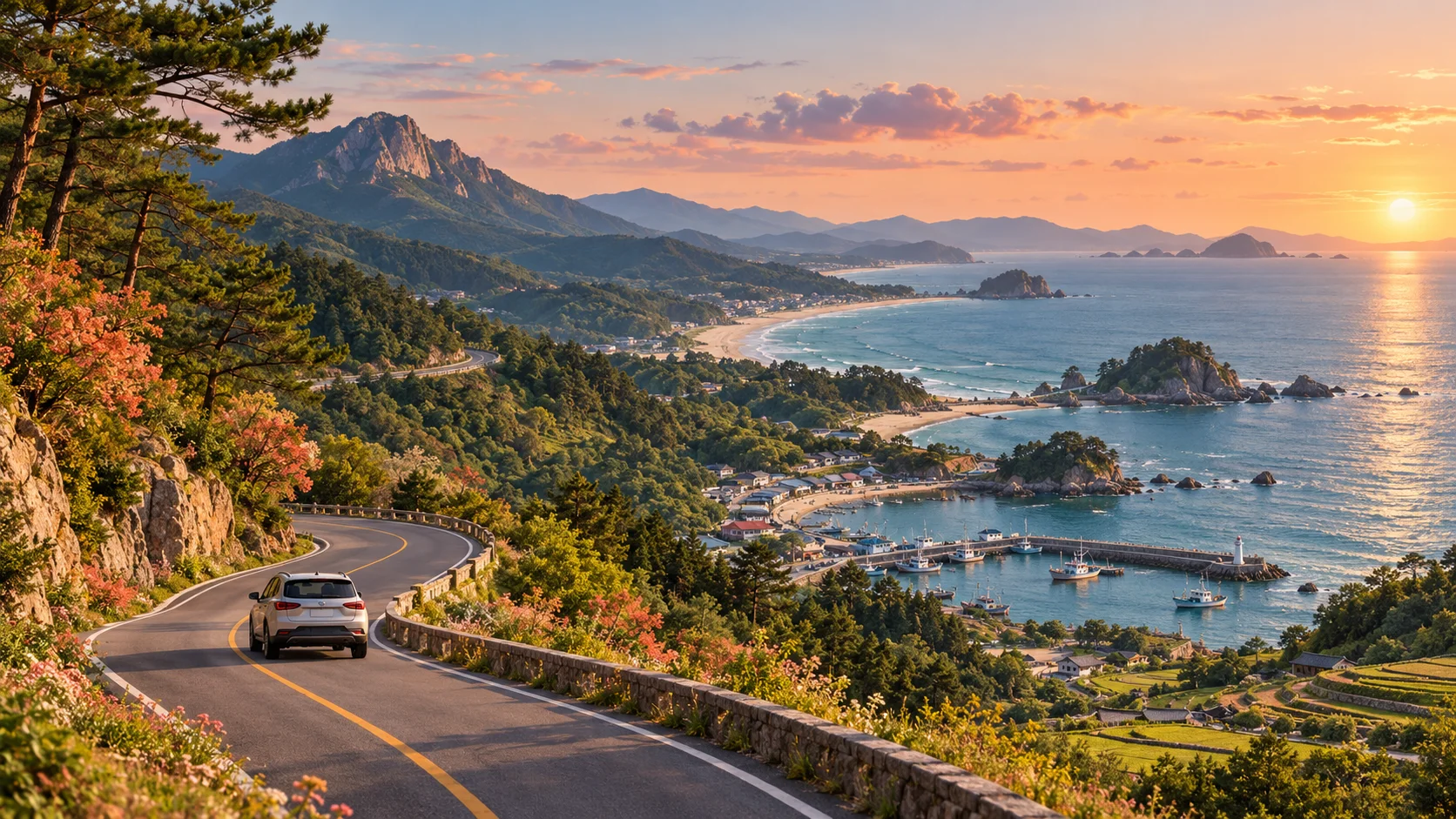
At a glance
- The full route is Seoul → Sokcho, 2 nights → Gangneung, 2 nights → Uljin, 1 night → Gyeongju, 2 nights → Busan, 3 nights → Geoje, 2 nights → Tongyeong, 1 night → Namhae, 2 nights → Yeosu, 2 nights → Suncheon, 2 nights → Mokpo, 2 nights → Damyang, 1 night → Jeonju, 2 nights → Gunsan, 1 night → Taean, 1 night → Gongju, 1 night → Danyang, 2 nights → Seoul. That totals 29 nights, with a return to Seoul on Day 30 and no additional overnight stay. Buyeo is an alternative to Gongju and is not part of the basic loop.
- On the East Coast, explore harbors and tofu and fish dishes; in Gyeongju, Silla-era sites and museums; and in Busan, the old downtown and coast on separate days. The South Coast stops each offer something different: Geoje's pebble beaches, Tongyeong's harbor, Namhae's villages, and Yeosu's islands and harbor. In the Jeolla region, connect Suncheon's gardens and wetlands, Mokpo's modern history district, Damyang's bamboo groves, and Jeonju's hanok houses and meals. Finally, travel through Gunsan and Taean to see Gongju's Baekje sites and Danyang's riverside. This adds inland scenery instead of taking the shortest route back to Seoul from Taean.
- In cities with multiple nights, stay at the same lodging and explore a different area each day. Namhae German Village and Boriam Temple with Daraengi Village are split across two days, as are Yeosu's harbor and Ungcheon with Jangdo Island. The basic plan does not include a boat trip to Oedo from Geoje, South Coast island tours, or a hike to a Seoraksan summit. To add one of these activities, remove that day's original sightseeing and separately account for weather and round-trip connections.
- On days when you change cities, leave half a day for driving and breaks, then explore just one area after arrival. Day 10 in Busan is for laundry, Day 19 in Suncheon has an open afternoon as a buffer, and Day 24 in Jeonju is for a short walk and rest. Do not fill these days with distant side trips because you have fallen behind. Time to organize your bags and get enough sleep also helps you sustain a month of travel.
- The main adjustments by travel month are walking times and food choices, rather than the cities you visit. In hot weather, walk wetlands and fortress walls in the morning, then spend midday at exhibitions or resting at your lodging. When daylight hours are short, finish coastal and mountain walks before dinner. If roads into Gangwon have snow or ice, or the South Coast has strong winds or heavy rain, delay your drive and skip outdoor sightseeing. Choose snow crab, cockles, brown croaker, or blue crab according to the season and availability. The route still works if a particular seasonal food is unavailable.
- When comparing lodging, prioritize parking and distance to dinner restaurants over views. Even if parking is listed as included, ask whether it is first come, first served or uses a mechanical system, whether vehicle size limits apply, and what the reentry rules are during a multiple-night stay. For lodging in a hanok village or harbor alley, vehicle access to the building and the actual parking location may differ. The overnight areas below suggest where to search; they do not guarantee room or parking availability.
30 days, 29 nights: overnight bases and route order
This overnight sequence follows the east and south coasts through the Jeolla region, then continues through the Chungcheong region and Danyang. Select a number to jump to that area's first-day itinerary.
Numbers follow the itinerary. Use the numbered list below to open each day, check stays and search places. A–E link to the first base in each region.
Overnight bases, in travel order
| Base | Stay | Plan this stop |
|---|---|---|
| 1Sokcho | Days 1 to 22 nights | |
| 2Gangneung | Days 3 to 42 nights | |
| 3Uljin | Day 51 nights | |
| 4Gyeongju | Days 6-72 nights | |
| 5Busan | Days 8-103 nights | |
| 6Geoje | Days 11-122 nights | |
| 7Tongyeong | Day 131 nights | |
| 8Namhae | Days 14-152 nights | |
| 9Yeosu | Days 16-172 nights | |
| 10Suncheon | Days 18-192 nights | |
| 11Mokpo | Days 20-212 nights | |
| 12Damyang | Day 221 nights | |
| 13Jeonju | Days 23-242 nights | |
| 14Gunsan | Day 251 nights | |
| 15Taean | Day 261 nights | |
| 16Gongju | Day 271 nights | |
| 17Danyang | Days 28-292 nights |
Use Google Maps to check locations. For driving directions within South Korea, set your origin and destination in Naver Map and select a driving route. Enter your actual accommodation and parking lot entrance as destinations, and check live routes, tolls, travel times, and road closures on the day of departure. If you open a search link, you must enter your starting point separately.
Local sights · Lunch and dinner · Tonight's lodging
A day-by-day guide to a 30-day road trip
Morning and afternoon are ways to divide the day. Follow each day's basic route first, choosing an alternative only when weather, closures, or your energy require a change. Map links are place searches; recheck the actual driving route and parking entrance on the day you leave.
Leave Seoul in the morning and drive to Sokcho. Avoid adding several coastal stops on the first day; take breaks at highway rest areas to stretch. Depending on your arrival time, have naengmyeon with seasoned pollock or makguksu buckwheat noodles in downtown Sokcho for lunch. In the afternoon, walk the alleys and waterfront of Abai Village. Make your way from the small alleys toward the harbor to see the village's everyday surroundings, and check for residents passing through before photographing walls or house fronts. For dinner, try Abai sundae blood sausage in the village or downtown. If sundae is unfamiliar, grilled fish is another option. After dropping your bags at your lodging, walk a nearby stretch of Cheongchoho Lake only if you still have energy, leaving a longer lake walk for the next day. This is the first of two nights in the Cheongchoho Lake or downtown Sokcho area. If you want to ride the gaetbae ferry, check service and wait conditions and plan your return before boarding.
On the first day, the time it takes to leave Seoul and traffic conditions matter more than sightseeing. If you reach Abai Village late, have dinner and head to your lodging. Do not drive at night to make up for the lake walk you missed. Check in and unload your luggage before deciding whether to go out briefly, so you do not overdo it on day one.
- Abai VillageGoogle MapsKeep your sundae meal and harbor walk in the same area. Walk slowly from the inner alleys toward the waterfront to see everyday village life, and leave your car in a designated parking lot. Decide whether to ride the gaetbae ferry based on service and wait conditions.
- Cheongchoho LakeGoogle MapsConsider this lake area alongside nearby dinner options when choosing your first lodging. On arrival day, walk only a stretch that is easy to reach and return from your lodging, without feeling obliged to circle the entire lake.
Start the morning with a walk at Yeongnangho Lake. Follow a stretch of the lakeshore, enjoying the breeze and sunlight, then return the way you came. Rather than circling the entire lake, choose a distance you can comfortably cover before lunch. Have mulhoe, a chilled raw fish soup, or grilled fish near Sokcho Tourist and Fishery Market for lunch. If you want to try several market snacks, keep lunch light so you still have room for dinner. In the afternoon, visit Sokcho City Museum to learn about local life and culture beyond the beach scenery. After the exhibits, rest over tea downtown instead of driving back to the sea. Choose braised fish or squid sundae stuffed with filling for dinner, then spend a second night at the same lodging. If the museum is closed, keep the basic rhythm of a market meal and rest downtown rather than extending your lake walk.
Yeongnangho Lake and the museum are separate stops that require moving the car. If you take a long walk around the lake in the morning, you can shorten the afternoon museum visit or rest. A hike to the summit of Seoraksan is not something to fit into a gap in this day's schedule. If hiking is a goal of your trip, dedicate the day to it instead of the lake and museum, and separately check the weather, trail restrictions, and required gear.
- Yeongnangho LakeGoogle MapsSpend the morning beside calm water with a different feel from the sea. Plan a short out-and-back walk from where you parked, adjusting the distance for shade, wind, and how your feet feel so you have energy left for the museum in the afternoon.
- Sokcho City MuseumGoogle MapsThis indoor stop connects the scenes you saw at the harbor and market with the area's everyday history. Allow time to read the exhibits instead of seeking another ocean view. If it is closed, scale back to a meal and rest downtown.
Leave your Sokcho lodging in the morning and drive to Gangneung. Instead of staying on the coastal road throughout, check driving directions to today's destination, Chodang-dong, and compare the faster and coastal routes. Have soft tofu for lunch in Chodang-dong. In the afternoon, walk through Heo Gyun and Heo Nanseolheon Memorial Park, then head to Gyeongpo Beach. Follow the marked route through the park, taking your time around the trees and buildings. At the beach, enjoy the sea from the sand and walking path rather than approaching the waves. Keep both visits manageable and leave time to sit and rest by the beach. Have jang-kalguksu, noodle soup in a spicy soybean paste broth, at a restaurant near your lodging for dinner. Choose somewhere in downtown Gangneung or the Gyeongpo area where going out for dinner is convenient, and stay the first of two nights. You will also drive between Chodang-dong and the beach, so after parking for your meal, save the beach parking entrance separately.
Full day itineraryThis is a travel day with lunch after arriving in Gangneung and brief visits to two places. If you spend a long time at the memorial park or check in late, shorten Gyeongpo to sitting and enjoying the sea view. You can skip the beach in strong winds. If you choose lodging in Gyeongpo, consider both tomorrow's round trip downtown and the actual distance to dinner restaurants.
- Heo Gyun and Heo Nanseolheon Memorial ParkGoogle MapsAfter lunch in Chodang-dong, take a walk without going far from the dining area. Read about the writers and enjoy the park, following designated paths so you do not disturb people resting quietly or nearby residential spaces.
- Gyeongpo BeachGoogle MapsSpend the afternoon looking out over the open East Sea. Stay along one stretch rather than walking to the end of the beach, leaving time to check in. If waves are high or windblown sand is strong, head to your lodging after the park.
Visit Ojukheon in the morning. Rather than only photographing the buildings, read the signs to understand how the spaces associated with Shin Saimdang and Yulgok Yi I connect. Have gamja ongsimi potato dumpling soup near Gangneung Jungang Market for lunch. Menus vary by shop, so first check that a restaurant serving ongsimi is open. In the afternoon, head to Anmok Beach for sea views and coffee. Avoid hopping between cafes while waiting for a seat with a view; rest at one with an available seat or walk the beach first. Finish with Chodang tofu dishes or grilled fish for dinner. Spend a second night at the same Gangneung lodging and organize your bags for the drive to Uljin the next day. Treat the historic spaces at Ojukheon and the afternoon's beachfront businesses as two distinct experiences to give the day variety.
Check Ojukheon's closing time and plan lunch first, then leave time to relax in Anmok. Do not keep moving between parking lots in search of an ocean-view seat or a particular cafe. If you are staying in downtown Gangneung, having dinner after returning is simpler. Check whether you need to refuel for tomorrow's drive to Uljin and when check-in closes at your next lodging.
- OjukheonGoogle MapsThis morning stop takes you through buildings and exhibits associated with historic figures. Allow time to read the information instead of rushing through the grounds, and check which areas are open and the last admission time before entering.
- Anmok BeachGoogle MapsEnjoy a cafe and beach walk in one place. Once parked, get around on foot. If the wait for a seat with a view is long, avoid driving to another beach. Spend more time resting indoors when visibility is poor.
Drive south from Gangneung to Uljin in the morning. This is a travel day, so do not try to stop at all of Samcheok's caves and beaches as well. Have mulhoe or grilled fish around Jukbyeon Port for lunch. In the afternoon, see ocean-themed exhibits at the National Ocean Science Museum, then take a short walk around Jukbyeon Port if the weather is good. When browsing seafood, stay clear of trading and work areas. Snow crab is an optional dinner choice. If the total cost exceeds your budget or your preferred ingredients are unavailable, switch to seafood stew or grilled fish. Stay one night in the Jukbyeon or Uljin-eup area. Skip an additional round trip to Hupo Port and prepare to head south to Gyeongju the next day. If you have spent plenty of time at the museum, limit the harbor walk to the route to dinner so the driving day does not leave you worn out.
Leave plenty of time for the drive south from Gangneung to Uljin. The coastal road is not always the fastest route, so check live directions. If you arrive late, head to your lodging first instead of rushing to beat the science museum's last admission. If you order snow crab, ask about the weight, origin, cooking fee, table-setting charge, and final total before ordering.
- National Ocean Science MuseumGoogle MapsSpend the afternoon learning about the ocean through science exhibits instead of taking several coastal walks. Check which exhibits are open and any reservation requirements before entering. If the museum is closed, switch to a walk at Jukbyeon Port and an early arrival at your lodging.
- Jukbyeon PortGoogle MapsThis harbor area is a place to look for lunch and dinner. Distinguish visitor walkways from fishing boat work areas, and view the harbor from open paths rather than heading to the end of the breakwater. Skip the harbor walk in strong winds.
Drive from Uljin to Gyeongju in the morning. Adding sightseeing in Pohang along the way reduces your time in Gyeongju, so keep downtown Gyeongju as today's destination. Have ssambap, rice with leafy wraps and side dishes, for lunch when you arrive. In the afternoon, follow the designated paths among the ancient burial mounds at Daereungwon. Notice the size of the mounds and the arrangement of trees and paths, and decide whether to enter Cheonmachong Tomb based on the last admission time. Then head to Hwangnidan-gil and explore its alleys slowly. Instead of entering every shop, look for somewhere to have dinner and breakfast the next morning. Have ssambap or hanjeongsik, a Korean set meal, in the Hwangnam-dong area for dinner. Stay the first of two nights in Hwangnam-dong or downtown Gyeongju. Walking around the burial mounds at Daereungwon and reading the exhibits inside take different amounts of time, so decide which areas to visit before entering.
Full day itineraryAfter driving from Uljin to Gyeongju, park once and explore the places within walking distance. If you miss the last admission to Daereungwon, postpone the interior visit until tomorrow or simply spend the evening downtown. Even if Hwangnidan-gil is crowded, do not park in undesignated spots in nearby alleys. Check official parking options and the reentry rules at your lodging first to reduce how often you move the car.
- DaereungwonGoogle MapsWalk among gently sloping burial mounds and trees to appreciate the scale of Gyeongju's downtown historic sites. Stay off the grass on the mounds and follow designated paths. Check separate operating information for indoor sites such as Cheonmachong Tomb.
- Hwangnidan-gilGoogle MapsContinue here for a meal and alley browsing after Daereungwon. Choose one dinner spot and a place to rest instead of joining every popular shop's line. Leave your car parked and explore the narrow alleys on foot.
Visit Bulguksa Temple in the morning. Take in the stone steps, stone structures, and arrangement of buildings in turn, and follow photography and access rules in prayer areas. Have soft tofu dishes for lunch near Bulguksa, then head to Gyeongju National Museum in the afternoon. Look for artifacts related to the tombs you saw the day before and exhibits on Buddhist culture to connect the historic sites' forms with their uses. Return downtown after the museum without adding Seokguram Grotto or Bomun Lake. Have a Korean set meal or ssambap, rice with leafy wraps, near your lodging for dinner. If nighttime views are a priority, choose Donggung Palace and Wolji Pond instead of the afternoon museum visit, and check last admission and your return to the lodging first. This is your second night at the same Gyeongju lodging. Seeing Silla tombs and temples, then reading about their artifacts, helps connect the visits without memorizing site names.
Bulguksa Temple and the museum are not connected by a single walking route. Allow for lunch and a drive between visits, and check each site's last admission time separately. In heavy rain, you can visit only the museum. If you choose to see Donggung Palace and Wolji Pond at night, adjust the afternoon schedule instead of adding a third visit at night, and get enough rest for tomorrow's drive to Busan.
- Bulguksa TempleGoogle MapsSpend the morning looking at stone steps, stone pagodas, and temple halls in turn. If stairs are difficult, ask on-site staff about accessible routes. Treat worship halls and ceremonial spaces with respect rather than using them simply as photo spots.
- Gyeongju National MuseumGoogle MapsSpend the afternoon adding context from artifacts to the sights you saw at Daereungwon Tomb Complex and Bulguksa Temple. Start with topics that interest you rather than rushing through every gallery, and check special exhibition reservations and closures for your visit date.
Travel to Busan in the morning and leave your bags at your lodging in Seomyeon. Check whether you can leave your car parked while out during your multiday stay, and explore the old downtown by subway and on foot. Have pork and rice soup for lunch in Seomyeon. In the afternoon, head to Nampo-dong and walk through Jagalchi Market and along Gwangbok-ro in that order. Take in the harbor and seafood market atmosphere at Jagalchi, then browse the shops and alleys along Gwangbok-ro and choose somewhere to rest. Browsing the market and eating raw fish are separate choices, so it is fine just to look around. Finish with grilled fish or a meal with Busan fish cakes near Nampo-dong. Return to Seomyeon without adding Songdo or Yeongdo. This is the first of 3 nights in the Seomyeon area. When choosing seafood at a market stall, ask whether purchase and cooking charges are quoted separately, and order once you agree on the total.
Full day itineraryIn Busan, it helps to plan parking at your lodging for your consecutive nights separately from travel around the city. First ask whether you can leave your car at your Seomyeon lodging while you go out, and save the actual subway route to Nampo-dong. You need time to walk through and around the markets and have dinner, so shorten the Gwangbok-ro visit if you leave Gyeongju late.
- Jagalchi MarketGoogle MapsExplore the old downtown where the seafood trade meets the harbor. Walk slowly through wet passageways, and if you eat here, ask about portion sizes, cooking methods, and extra charges before ordering. It is fine to browse and eat at another restaurant.
- Gwangbok-roGoogle MapsThis afternoon route leads from Jagalchi into Nampo-dong's shopping district. Leave time to rest between meals rather than trying to fit in shopping, snacks, and cafes. On your first day, do not add coastal sightseeing outside this area.
Travel from Seomyeon to Haeundae in the morning, walk along the beach, and continue onto the open walking paths on Dongbaekseom Island. Take your time enjoying views of the sea alongside city buildings, and leave time to sit and rest rather than completing every path. Have milmyeon, chilled wheat noodles, for lunch near Haeundae. Slow down in the afternoon with a cafe stop or a rest at your lodging, then head to Gwangalli toward evening. Choose raw fish or grilled fish for dinner in Gwangalli to suit your budget and tastes, then look toward Gwangan Bridge from the beach. Haeundae and Gwangalli require a separate transfer, so allow for that and the return to your Seomyeon lodging. If the travel feels cumbersome, skip Gwangalli and have dinner in Haeundae. This is your second night at the same Busan lodging. Enjoy the bridge views and beach life at Gwangalli without feeling you need to walk to the far end of the sand for a single photo.
Haeundae and Gwangalli are separate coastal stops that require travel between them. If you plan to visit both, account for the return to Seomyeon as well as travel between the beaches. Tourist trains and timed activities require separate reservations, so choose one only as a replacement for today's planned stops. If you plan to drink alcohol at dinner, leave the car behind and arrange your return transportation in advance.
- Haeundae Beach and Dongbaekseom IslandGoogle MapsExplore a broad sandy beach and seaside walking paths in one area. Follow on-site access notices, and save enough energy for the return rather than feeling you must reach the far end of Dongbaekseom Island.
- Gwangalli BeachGoogle MapsThis evening area combines a beachside meal with bridge views. Events may affect access restrictions and crowds. Plan your return from the beach to your Seomyeon lodging before finishing your walk.
Leave this morning free of sightseeing reservations. Sleep in, wash and dry your laundry, and clear trash and organize belongings in the car. If your lodging has no laundry facilities, find a nearby laundry service or laundromat and eat while your clothes are being washed. Have pork and rice soup or milmyeon in Seomyeon for lunch. In the afternoon, take a short walk through Jeonpo-dong's alleys and have coffee at one place, or stay at your lodging if you are tired. Think of Jeonpo-dong as a neighborhood for a brief outing before the next leg, rather than a route requiring multiple shop visits. Have a fish cake soup dish or another easy meal in Seomyeon for dinner. Save your route to Geoje and the parking entrance for your next lodging, then spend your third night at the same Busan lodging. Once all your laundry is dry, pack frequently used clothes separately from those for the next few days to make departure morning easier.
Today, allow time for laundry to dry completely, organize the car, and get enough sleep. If your sneakers are wet, give them time to dry, and pack your laundry as soon as it is dry. After the car has been parked for an extended period, check visible conditions such as the tires and dashboard warning lights before leaving for Geoje.
- SeomyeonGoogle MapsMake this area your base today for short trips between laundry, meals, and your lodging. Choose nearby restaurants and allow enough time for clothes to dry first. Do not add a distant beach in the afternoon just because you have done less sightseeing.
- Jeonpo-dong AlleysGoogle MapsAn easy option for a short walk from the lodging where you are staying several nights. Have coffee or dessert at one place, then return. If your body needs rest, skipping the alley walk will not affect the next day's plans.
Travel from Busan to Geoje in the morning. Check your actual route, including toll roads, using driving directions, and do not stop while driving to admire the sea. Have sea squirt bibimbap or seafood hot pot for lunch near Gohyeon. In the afternoon, visit the open exhibits at Geoje POW Camp Historic Park. This site covers war and the lives of prisoners, so spend time reading the information rather than focusing on entertaining photos. The park is not entirely indoors, so in rain, focus on indoor exhibition buildings that are open. Then head to your lodging in Jisepho, unpack, and rest near the harbor. Have grilled fish or seafood for dinner in the Jisepho or Irun-myeon area. This is the first of 2 nights in the Irun-myeon or Jisepho area, and today does not include a boat trip to Oedo.
On your arrival day in Geoje, visit one exhibition site before heading to your lodging in Jiseopo. Geoje POW Camp Historic Park includes outdoor areas, so do not expect it to provide complete shelter from rain. Check which indoor exhibition buildings are actually open before deciding how much to see. If you reach your lodging late, skip the harbor walk and just have dinner.
- Geoje POW Camp Historic ParkGoogle MapsSpend the afternoon learning about the Korean War and prisoners' lives through the exhibits. Distinguish outdoor routes from indoor exhibition buildings and adjust your visit to the weather. Start with areas that are open, and treat these records of war with respect rather than as simple entertainment.
- Jisepho HarborGoogle MapsThis harbor area is a place to find dinner after unpacking at your lodging. Take a short walk through open pedestrian areas, keeping clear of fishing boat work zones. Rest for tomorrow's trip to Hakdong instead of continuing farther down the southern coast today.
Head from your Irun-myeon lodging to Hakdong Black Pearl Pebble Beach in the morning. Unlike a sandy beach, this shore requires walking over pebbles, so watch your footing and move slowly. You can fully enjoy the stones and sea without going down to the water's edge where waves wash in and out. Have sea squirt bibimbap or grilled fish for lunch near Hakdong. In the afternoon, visit Windy Hill for views of the sea at Dojangpo. After parking, assess the slope of the walk and the wind, shorten your visit as needed, and avoid adding a string of coastal viewpoints. Return to Jisepho, where you are staying, for seafood stew or a simple Korean set meal. Return in daylight rather than rushing along winding roads to chase the sunset. Spend your second night at the same Geoje lodging. At the pebble beach, watch and listen as the waves move the stones, and finish your walk with enough daylight for the return.
On the southern coast, winding roads and waits for parking can extend travel time. After lunch in Hakdong, reassess whether you have time for Windy Hill, and skip the second stop if winds are strong. A boat trip to Oedo requires separate time for boarding waits and the round trip, so it must replace today's itinerary.
- Hakdong Black Pearl Pebble BeachGoogle MapsSpend the morning at a stone beach that differs from the sandy beaches of the east coast. Wet stones can be slippery, so wear stable shoes and limit approaches to the water's edge. Leave the pebbles in place and follow on-site conservation guidance.
- Windy HillGoogle MapsEnjoy views linking Dojangpo Harbor and the sea. Park before walking up along the designated pedestrian route, and avoid lingering in narrow spots for photos during strong winds or heavy crowds. Do not combine this with a boat trip to Oedo on the same day.
Travel from Geoje to Tongyeong in the morning. Have Chungmu gimbap for lunch near Tongyeong Jungang Market. It comes with spicy side dishes, so it is best not to fill up on several snacks beforehand. In the afternoon, climb through Dongpirang's alleys, then descend to Gangguan for a harbor walk. Take in the changing elevations and sea views rather than rushing from mural to mural, and avoid blocking residents' doorways or stairs. Rest on level ground at Gangguan while watching the fishing boats and harbor. Have a Tongyeong-style seafood spread or grilled fish for dinner. Do not squeeze a cable car ride or island trip into today's spare time. Stay 1 night near Gangguan or downtown Tongyeong. Descending from the hilly mural village to the flat harbor lets you appreciate the difference in elevation and views.
Walk uphill in Dongpirang first, then relax on level ground at Gangguan Harbor. If your knees or feet are uncomfortable, you can leave out the hill and still spend the day enjoying Tongyeong's harbor. With no island boat trip or cable car ride booked for the same day, you have plenty of time for meals. After parking at your lodging, plan your evening walking route first.
- DongpirangGoogle MapsThis village combines uphill alleys with harbor views. Give people and their living spaces priority over your mural photography plans. If the slopes are difficult, shorten the hill visit and spend more time walking below at Gangguan.
- Gangguan and Tongyeong Jungang MarketGoogle MapsDescend to this level area to rest after lunch and your hill walk. Connect market browsing and a harbor stroll on foot, and divide food stops between a meal and a snack so you still have room for dinner.
Travel from Tongyeong to Namhae in the morning. Even after entering the island, you will need to drive between destinations, so stay in the eastern Samdong-myeon area today. Have anchovy ssambap, rice with anchovies and leafy wraps, for lunch. In the afternoon, walk through Namhae German Village and visit the open exhibits at the Namhae German Emigration Exhibition Hall. Reading about the lives of those who went to Germany for work helps explain how the village came to be, beyond photos of rooftops and sea views. Choose places to pause on the sloping streets and follow access notices for shops and homes. Have anchovy dishes or grilled fish for dinner in Samdong-myeon. Make this the first of 2 nights in the Samdong-myeon or Namhae-eup area, leaving Boriam Hermitage and Daraengi Village for tomorrow's southern route. German food in the village is optional; if you have already had a local meal, you can simply choose dessert or a cup of tea.
Arriving in Namhae does not mean all the villages are close together. Focus on Samdong-myeon today and stay at the same lodging for consecutive nights so you can explore the southern coast tomorrow. Village slopes and exhibition visits can add to your walking, so include breaks along the way. If your lodging is in Namhae town, having dinner along the route back is simpler.
- Namhae German VillageGoogle MapsEnjoy houses on the coastal slope alongside sea views. Distinguish tourist shops from actual homes, and explore on foot after parking in a designated area. Focus on the eastern village today to reduce trips to and from the southern coast.
- Namhae German Emigration Exhibition HallGoogle MapsConnect the stories of Koreans who went to Germany as miners and nurses with the village scenery. Plan to see the exhibits after a photo walk through the German Village, following that day's opening and admission guidance.
Visit Boriam Hermitage on Geumsan Mountain in the morning. Follow on-site guidance on how far vehicles can go, parking queues, and the remaining walk. Limit the visit to Boriam and nearby sea views without adding a summit hike. Have anchovy ssambap or another Korean meal for lunch along your route in the Sangju-myeon area. In the afternoon, head to Daraengi Village, view the terraced fields and sea from the upper village, and walk along designated paths. Do not enter farmland or use field embankments as shortcuts. Choose grilled fish or seafood for dinner on the way back to your lodging. Both areas involve walking today, so only descend toward the coast at Daraengi Village if you have energy left. This is your second night at the same Namhae lodging.
A visit to Boriam Temple is not finished as soon as you step out of the car. First check that day's vehicle access, parking waits, and remaining walking distance, and shorten the visit if fog is thick or walking is difficult. Daraengi Village also requires an uphill return after walking down, so you can choose to view it from above. Do not rush along dark coastal roads to catch the sunset.
- Geumsan Boriam HermitageGoogle MapsSpend the morning viewing the sea around Namhae from above. Ask first about the actual walk between the parking area and the temple, and do not overexert yourself waiting for views in fog or strong winds. Observe proper etiquette in worship halls and prayer areas.
- Gacheon Daraengi VillageGoogle MapsVisit a village where hillside fields meet the sea. Take in the full view from above, then use only designated walking paths. Every descent requires a climb back up, so prioritize the energy needed to return over reaching the shore.
Travel from Namhae to Yeosu in the morning. Have a marinated crab set meal downtown for lunch. Check the selection of soy sauce-marinated and spicy marinated crab and how many diners the order serves before ordering. If you are uncomfortable with uncooked seafood, choose a cooked dish such as grilled fish. In the afternoon, visit Odongdo Island, cross the connecting walkway, and follow the island's open walking paths. Enjoy the wooded paths and coastal scenery without treating it as a place worth visiting only when particular flowers are blooming. In the evening, head toward Jongpo Marine Park for harbor views toward Dolsan Bridge and dinner. Allow for separate travel between Odongdo and the evening harbor area. This is the first of 2 nights in one chosen area: Yeosu Expo Station, Jongpo, or the old downtown. Enjoy the evening cityscape with islands and bridges overlapping across the harbor; tomorrow, spend time along Ungcheon's low-lying coast.
After traveling from Namhae to Yeosu, divide the day between Odongdo Island and an evening by the harbor. If you walk a lot on Odongdo, keep Jongpo to dinner and a short stroll. This itinerary does not depend on flowers being in bloom or a particular nighttime event. Save an evening return route based on whether your lodging is near Expo Station or in the old downtown.
- Odongdo IslandGoogle MapsCross the walkway from the mainland and explore the island's walking paths. Enjoy the woods and sea regardless of flowers, and allow enough time to walk back the same distance. Follow closures on the connecting walkway and trails during strong winds.
- Jongpo Marine ParkGoogle MapsThis area combines dinner near the harbor with a waterfront walk. Do not venture onto breakwaters or roadway edges for nighttime views. Plan your return to the lodging, then choose a comfortable stretch to walk.
Travel from Yeosu's old downtown to Ungcheon in the morning and see any exhibitions open that day at Yeulmaru. If there are no exhibitions, start with a walk through the open pedestrian areas of Ungcheon Waterfront Park. Have a dolmuneo samhap platter featuring local octopus, or grilled fish, for lunch in Ungcheon. In the afternoon, cross to Jangdo when official island access hours and Jinseom Bridge opening times allow. Walk the island paths, enjoy the sea and art spaces, and visit only exhibitions open to visitors. If the bridge is closed, finish at Ungcheon Waterfront Park and open exhibition spaces on the mainland rather than delaying your schedule while waiting. Jangdo is not always accessible on foot, so establish the access hours for your actual visit date first. Return downtown for a marinated crab set meal or braised fish for dinner. This is your second night at the same Yeosu lodging.
Plan to visit Jangdo Island only during the bridge's access hours. Check the date-specific island access times in Yeulmaru's official guidance, and decide when you will leave before crossing over. If the bridge is closed, finish at Ungcheon Waterfront Park or an open exhibition on the mainland. Yeulmaru performances and exhibitions vary by schedule, so do not assume indoor exhibits are always available.
- Yeulmaru and Ungcheon Waterfront ParkGoogle MapsSpend the day exploring Ungcheon's sea views and exhibition spaces, a change from the old downtown harbor. Start indoors if an exhibition is running; otherwise, take a short walk along the waterfront park's open paths. Include a performance only if you have booked it separately.
- Jangdo IslandGoogle MapsCross Jinseom Bridge during permitted island access hours to walk and see open exhibitions. Tides and other conditions can restrict bridge access, so check the official guidance for your visit date. If it is closed, stay in Ungcheon and do not cross barriers.
In the morning, leave your lodging in Yeosu and head to Suncheon. Have a cockle set meal downtown for lunch. Check the side dishes and minimum order size, and switch to a Korean home-style set meal if ingredients are unavailable or you want a break from seafood. In the afternoon, stroll through Suncheon Bay National Garden, starting with the areas that interest you. Choose your entrance and return exit on the map first, without aiming to rush around the entire garden. Take bench breaks and notice how the spaces, trees, and waterways are arranged, rather than focusing only on flower varieties. Suncheon Bay Wetland is a separate destination despite the similar name, so do not add it today. For dinner downtown, have mudskipper soup or another Korean meal. Spend the first of 2 nights near Suncheon Station or downtown. Save the exact destination name and parking entrance on your map so you do not mistake the garden and wetland for places with a shared entrance.
Full day itineraryThe amount of walking at Suncheon Bay National Garden depends on your entrance and the areas you want to see. Save a parking location and return exit that match, and bring water after lunch. If you arrive too late to enter, you can postpone the garden until tomorrow, but then choose either the garden or the wetlands. Do not visit both on the same day simply to fill the remaining time.
- Suncheon Bay National GardenGoogle MapsChoose the gardens and resting areas that interest you instead of trying to cover every section. Save the correct entrances, exits, and parking locations together, and prioritize shade and indoor breaks on hot days.
- Suncheon Station and Downtown Dining AreaGoogle MapsThis is the area to look for lunch and lodging for consecutive nights. Decide where to eat today before making overlapping reservations at restaurants in or around the garden and downtown. Consider your evening outing and the route to the wetland the next day.
In the morning, walk the open trails at Suncheon Bay Wetland. Take your time observing the reeds, tidal flats, water, and birds. Reaching the observatory is optional. Depending on trail conditions, sunlight, and fatigue from yesterday's garden walk, you can stick to the flat section near the entrance. Have mudskipper soup or a cockle dish near the wetland for lunch, then return to your downtown lodging. Leave the afternoon for laundry, a nap, and organizing the car. If rain kept you from visiting the national garden yesterday, choose either the garden or the wetland today rather than trying to catch up on both. Have rice soup for dinner in the Utjang Market area. Skip additional sightseeing in Naganeupseong Folk Village, Boseong, or Yeosu, and spend a second night at the same Suncheon lodging. At the wetland, stay on the trails rather than following distant birds, keep your voice low, and take in the surrounding landscape.
This is a buffer day with a morning wetlands visit and a free afternoon. In heavy rain, heat, or trail closures, you can shorten the visit and rest at your lodging. If sunset is your goal, move the wetlands visit from morning to afternoon and keep the rest period free of other sightseeing. If dinner will be late, check both Utjang restaurant hours and your return to your lodging.
- Suncheon Bay WetlandGoogle MapsUnlike the garden, this site centers on tidal flats, reeds, and walking trails. Observe quietly from designated paths and stay out of restricted areas. Choose the round trip to the observatory only if your energy and the weather allow.
- Suncheon Utjang MarketGoogle MapsThis is the area for dinner after your afternoon rest. Check the individual restaurant's hours rather than assuming the entire market operates on the same schedule. Today, prioritize returning to your lodging over waiting in a long restaurant line.
In the morning, travel from Suncheon to Mokpo. For lunch in the old downtown, choose a Korean home-style set meal or a croaker dish. In the afternoon, walk through the Mokpo Modern History and Culture District and see the exhibitions open that day at the Mokpo Modern History Museum. Read the historical information to understand how the port city's past and the colonial period remain visible, rather than treating old buildings only as photo backdrops. Check the day's opening arrangements for Buildings 1 and 2 separately; if the interiors are closed, just walk the surrounding streets. For dinner in the old downtown, have an octopus dish or grilled fish. Do not add a Yudalsan hike or the marine cable car on arrival day. Choose either the old downtown or Peace Square as your evening base for the first of 2 nights, and allow time to reach your lodging. After yesterday's natural scenery in Suncheon, make today about the port city's history, taking the exhibitions and street walks slowly.
After arriving in Mokpo, explore only the Modern History and Culture District. If you cannot enter the individual exhibition buildings, finish with a walk through the alleys and past the exteriors, and do not bring tomorrow's Gatbawi area visit forward. Your choice of a croaker meal depends on the day's ingredients and menu. If it is unavailable or requires ordering too much food, choose a homestyle set meal in the same area.
- Mokpo Modern History and Culture DistrictGoogle MapsWalk among the buildings and streets around the port, reading the historical information. Watch for vehicles and respect residents' daily routines. Treat viewing building exteriors and entering exhibitions as separate activities, and combine them at a comfortable pace.
- Mokpo Modern History MuseumGoogle MapsThis museum is an option for exploring the history behind the buildings you saw along the streets. Check opening arrangements and last admission for each building on your visit date. If you cannot see the exhibitions, finish with a walk through the nearby historic streets, viewing the exteriors and reading the information signs.
In the morning, walk along the shore if the Gatbawi overwater footbridge is open and the weather is suitable. Take in the rock formations and waterfront scenery, and keep the walk short if waves are splashing or the walkway is wet. Have braised cutlassfish or a Korean home-style set meal for lunch in the Gatbawi or Hadang area. In the afternoon, head to the Mokpo Natural History Museum to explore its exhibitions. This day combines coastal scenery with exhibits on biology and geology in one area. Afterward, rest at a cafe or your lodging instead of heading out again to the cable car or Gohado Island. For dinner, choose croaker soup or an octopus dish based on the day's menu. Switch to a Korean home-style set meal if the available ingredients or order size do not suit you. Spend a second night at the same Mokpo lodging. Seeing Gatbawi outdoors before moving to indoor exhibits limits prolonged exposure to sun and wind.
Group the Gatbawi walk and the Natural History Museum into one area today to avoid moving the car far. If the pedestrian bridge is closed, see the exhibits first. If the museum is also closed, keep only meals and rest. Do not use the marine cable car as a bad-weather alternative today. In strong winds or heavy rain, reduce outdoor travel itself.
- Mokpo Gatbawi RockGoogle MapsSpend the morning viewing the rocks and sea up close from the overwater footbridge. If the bridge is closed, do not try to enter by another route. In strong winds or rough waves, skip the walk and visit only indoor attractions in the same area.
- Mokpo Natural History MuseumGoogle MapsContinue from the Gatbawi area to indoor exhibitions in the afternoon. Start with the natural history topics that interest you, without aiming to cover every gallery. If the museum is closed, rest instead of forcing another exhibition into the schedule.
In the morning, leave Mokpo for Damyang. Have tteokgalbi, grilled short rib patties, for lunch in Damyang town. Check whether side dishes and rice are included and whether single-person orders are accepted before deciding how much to order. In the afternoon, walk the open bamboo forest paths at Juknokwon. Choose one route based on shade and slopes rather than feeling you must cover every path. Then head to Gwanbangjerim to see the large riverside trees. Finish with a restful walk, noticing the contrast between the narrow bamboo paths and the open riverside views. Do not add both Metasequoia Road and Soswaewon Garden. For dinner in Damyang town, choose noodles or rice cooked in a bamboo tube, then head to your lodging. Stay 1 night in Damyang town or an area convenient to Juknokwon. The bamboo forest and riverside offer different path widths and views, giving each walk a distinct feel despite their similarly green scenery.
After arriving in Damyang from Mokpo, divide your time between a short bamboo grove visit and a riverside walk. If you walk a lot at Juknokwon, simply sit and rest at Gwanbangjerim. If rain continues, consider any open exhibition space or the literary arts cafe at Dambit Arts Warehouse, but check the actual exhibition schedule. Do not try to fit every garden and tree-lined road in Damyang into a one-night stay.
- Juknokwon Bamboo ForestGoogle MapsWalk among the bamboo to enjoy the shade and breeze. Choose one comfortable section from the available paths. After rain, watch for wet surfaces and slopes, and take your time.
- Gwanbangjerim ForestGoogle MapsAfter the bamboo forest, take a restful walk beneath the large riverside trees. Enjoy the more open scenery compared with Juknokwon, and choose a section you can comfortably return from before dinner. Avoid stepping on tree roots or entering protected areas.
In the morning, travel from Damyang to Jeonju. If your lodging is inside Hanok Village, ask about vehicle access and the exact parking location before moving your luggage. Have Jeonju bibimbap for lunch. In the afternoon, visit Gyeonggijeon Shrine, then walk through the Hanok Village streets. Distinguish the shrine's ceremonial and historical spaces from the nearby shopping streets. If you want a hands-on activity, choose one craft and schedule it separately from sightseeing. You do not need to fit hanbok rental, souvenir shopping, and snacks into one day. For dinner in the Nambu Market area, have bean sprout rice soup or a Korean home-style set meal. Check regular restaurant hours without relying on the night market being open. Spend the first of 2 nights within walking distance outside Hanok Village or in downtown Jeonju. In the village's residential streets, keep your voice low, avoid photographing into homes, and distinguish shop entrances from residents' passageways.
Full day itineraryIn Jeonju, park first and explore the alleys on foot. Road access to your hanok lodging and the location of its separate parking lot may differ, so ask before driving into the alleys with your luggage. If your Gyeonggijeon Shrine visit runs late, save the craft activity for another day and just walk around the Hanok Village. Adjust your dinner portion so it does not overlap with meals and snacks.
- Gyeonggijeon ShrineGoogle MapsVisit the historical site inside Hanok Village before heading into the surrounding streets. Take time to look at the buildings and read the signs, rather than seeking only photo spots. Plan your visit around the areas actually open and the last admission time.
- Jeonju Hanok VillageGoogle MapsAfter visiting Gyeonggijeon Shrine, leave the car parked and explore on foot. Distinguish residential areas from activity venues and shops, and choose one or two shops and a place to rest. Save the walking route to your lodging so you do not need to find parking again in the evening.
In the morning, take a short walk through the Hanok Village streets that were crowded yesterday and visit the accessible areas of Jeondong Cathedral. If Mass or an event is taking place, skip the interior and pass quietly. Have bean sprout rice soup for lunch. In the afternoon, buy a few side dishes for dinner or some snacks at Nambu Market, then return to your lodging. Museums and drives outside the city are not part of today's basic plan. Do laundry, organize your luggage, and check lodging reservations and cancellation deadlines for Taean, Gongju, and Danyang after Gunsan. For dinner, choose a Jeonju-style home-style set meal within walking distance outside Hanok Village. If you had plenty of snacks yesterday, a lighter meal is fine. Spend a second night at the same Jeonju lodging, without searching for shops late into the night. This is another day to rest and reorganize during the latter part of your monthlong trip, so it is fine to walk less than yesterday.
This is a day for short walks and rest in the Hanok Village. Visitor routes at Jeondong Cathedral may change with services and events. Even if you cannot see the interior, follow the guidance rather than lingering to take photos. Do laundry and organize your luggage in the afternoon to prepare for the remaining drives. If you choose an activity you missed yesterday, pick just one within this rest period.
- Jeondong CathedralGoogle MapsThis is a place to quietly view the building and its surroundings during your Hanok Village walk. As it is an active religious site, give priority to services and worshippers' access. Follow entry and photography rules, and do not extend your schedule if you cannot go inside.
- Jeonju Nambu MarketGoogle MapsVisit after lunch to pick up a few everyday necessities rather than filling the day with sightseeing until dinner. Market days, night market hours, and individual shop hours may differ. Do not leave large amounts of takeout food in the car for long.
In the morning, travel from Jeonju to Gunsan. Have jjamppong, spicy seafood noodle soup, for lunch around Modern Culture Street or Wolmyeong-dong. Eat at an open restaurant rather than making a long line at one particular place the focus of your trip. In the afternoon, learn about the port city's history at the Gunsan Modern History Museum, then walk around the Gunsan Modern Architecture Exhibition Hall and nearby streets. Rather than entering every exhibition, learn the background at one museum before looking at the buildings along the streets. Read the historical information alongside the Japanese colonial-era buildings instead of viewing them only as a romantic old streetscape. Do not add a sightseeing round trip to the Gogunsan Islands. For dinner in Wolmyeong-dong or downtown Gunsan, have fish soup or a Korean home-style set meal. Stay 1 night in Wolmyeong-dong or somewhere convenient to Modern Culture Street. Reading about buildings once used as banks and other institutions can help you compare this port city with the modern history district you saw in Mokpo.
Full day itineraryThis one-night stay in Gunsan focuses on the downtown modern cultural district. Adding a round trip to the Gogunsan Islands or Seonyudo Island would leave little time for exhibitions, street walks, and meals. Keep the plan of learning the history at one museum before walking past the surrounding buildings. If the wait at a jjamppong restaurant is long, choose another restaurant so the line does not cause you to miss last admission.
- Gunsan Modern History MuseumGoogle MapsLearn about the port city's modern history before walking its streets. Spend time at one exhibition, then explore the nearby buildings on foot. If the museum is closed, scale back to viewing building exteriors and having a meal, without adding a trip outside the city.
- Around the Gunsan Modern Architecture Exhibition HallGoogle MapsWalk around and compare the buildings' former uses with their current roles as exhibition spaces. Check whether interiors are open and plan separately for viewing the exteriors. Keep your meal in Wolmyeong-dong within the same area to reduce repeated car trips.
In the morning, leave Gunsan for the Anmyeondo area of Taean. Set aside half the day for driving and rest-stop breaks without adding more coastal stops. Have clam kalguksu, knife-cut noodle soup, for lunch in Anmyeon town or near Kkotji Beach. In the afternoon, walk along Kkotji Beach and enjoy the view of Halmi and Harabi Rocks. Do not try to reach the rocks simply because the tide is out. Observe how the scenery changes with the tides from a safe walking area. Stay for sunset if it fits your schedule and the weather; if it is cloudy or you are tired, head to your lodging first. Have ge-gukji, crab and cabbage soup, or blue crab soup for dinner. Skip the round trip north to Mallipo and Sinduri, and stay 1 night in Anmyeon town or the Kkotji Beach area. Unlike the East Sea waves earlier in the trip, the focus here is how the same beach changes with the water level.
Today you travel from Gunsan to the Anmyeondo area of Taean. Even if you reach Kkotji late, do not rush for sunset photos. The northern coast around Mallipo and Sinduri is not included in the same afternoon. Exposed tidal flats are not the same as a safe walking path, so do not wander between the rocks. In strong winds, rest at your lodging instead of going to the beach.
- Kkotji BeachGoogle MapsLate in a trip that began on the East Sea, this beach offers a chance to observe the West Sea's tides and rocks. Consider the weather and your arrival at the lodging as well as sunset time. Follow on-site restrictions and safety guidance when approaching tidal flats and rocks.
- Anmyeon Town Dining and Lodging AreaGoogle MapsFinish dinner and settle in here after the beach without another long drive. Check crab dish order sizes and lodging parking conditions in advance so you do not end up driving to the northern coast in search of dinner.
In the morning, travel from Taean to Gongju. For lunch downtown, have rice soup or a rice dish served with chestnuts. In the afternoon, walk around Gongsanseong Fortress. Instead of circling the entire fortress, choose a section you can comfortably return from and enjoy the Geum River and views inside the walls. Then visit the exhibits related to the Tomb of King Muryeong at Gongju National Museum to gain a fuller understanding of Baekje culture after seeing the fortress. Allow for driving between the two sites and check last admission times. If you arrive late, prioritize the museum. Have a Korean home-style set meal or rice soup for dinner in the Sanseong Market area. Stay 1 night in downtown Gongju without making a round trip to Buyeo today. If Buyeo interests you more, replace the entire Gongju visit with a Buyeo itinerary. Comparing the exhibits and explanations with the Silla sites you saw earlier in Gyeongju adds interest to exploring another ancient city.
Today you head inland from Taean to Gongju. Visit Gongsanseong Fortress and the museum, but reduce the plan to the museum alone if you arrive late. If you want to see Buyeo, replace the entire Gongju day, stay overnight in Buyeo, and recalculate the onward route to Danyang. Today's guiding rule is to avoid turning this into a travel day that squeezes in both Buyeo and Gongju.
- Gongsanseong FortressGoogle MapsWalk through scenery where the fortress walls meet the river. Consider the climbs and descents when choosing a short out-and-back route, and do not lean over the wall edges for photos. In rain or icy conditions, visit the museum first.
- Gongju National MuseumGoogle MapsExplore the background of Gongju's Baekje culture through artifacts related to the Tomb of King Muryeong. Allow separately for travel from Gongsanseong Fortress, and decide whether to start with the permanent collection rather than a special exhibition based on your interests. Check closure days in advance.
In the morning, leave Gongju for Danyang. Even within the Chungcheong region, today's drive needs time, so do not add sightseeing stops along the way. Depending on your arrival time, have a garlic dish or a Korean meal served with garlic for lunch in Danyang town. On arrival, check in and organize your luggage first, then walk the open sections of the Danyang River Cliffside Walk in the afternoon. Enjoy the views from the walkway between the river and cliffs. If your feet are tired or the weather is poor, do not try to walk the entire route and back. Instead of adding Mancheonha Skywalk and Guinsa Temple, relax with tea by the river. For dinner in Danyang town, choose a garlic set meal or spicy mandarin fish stew. Choose the stew only if the order size and price suit you. Spend the first of 2 nights in the Danyang town area.
On the day you travel from Gongju to Danyang, leave at least half the day for driving and breaks. Check in first, then decide whether to walk the Danyang Riverside Boardwalk based on your arrival time and fatigue. If it is dark or raining, keep only a riverside meal and see Dodamsambong tomorrow. This route adds inland river scenery during the final two days instead of taking the shortest route home from Taean.
- Danyang River Cliffside WalkGoogle MapsThis walkway offers close views of the river and cliffs. Check current opening status and restrictions before entering, and shorten your walk when surfaces are slippery. You can enjoy plenty of riverside scenery without adding an observation deck visit.
- Danyang Town RiversideGoogle MapsThis is the area to find your final lodging for consecutive nights and your evening meals. On this travel day, rest near the river and save the places you plan to visit tomorrow. Avoid taking the car out again to search for distant viewpoints.
In the morning, visit Dodamsambong to see the three peaks rising above the river. Walk along the designated waterfront paths and enjoy views accessible without taking a boat. Choose the stairway walk toward Seongmun only if your fitness and the path conditions allow, and do not feel you must reach the top to complete the visit. Return to Danyang town for garlic dumplings or a garlic set meal for lunch. In the afternoon, see freshwater creatures at Danuri Aquarium. Add a look at life underwater to the riverside scenery you walked through the day before. Check the last admission time and allow plenty of time to explore, rather than arriving late simply because it is indoors. Do not add an observatory or Guinsa Temple. Finish with garlic dishes or a homestyle set meal in Danyang town. Spend a second night at the same Danyang lodging and pack for tomorrow's return to Seoul.
Spend the full day in Danyang. Divide your time between waterfront views at Dodamsambong and indoor exhibits at Danuri, keeping the Seongmun stairway walk optional. In heavy rain, skip the outdoor visit and see only Danuri. Pack in the evening to leave plenty of time for tomorrow's return to Seoul.
- DodamsambongGoogle MapsView the three peaks in the Namhan River and the surrounding mountains from designated waterfront areas. Do not climb down toward the water or enter restricted areas for photos. The Seongmun walk is optional, and a sightseeing cruise is not included in the main itinerary.
- Danuri AquariumGoogle MapsAfter your riverside walk, head indoors to see freshwater creatures. Allow for a separate drive from Dodamsambong and leave enough time for the exhibits. If it rains, you can skip the outdoor stops and make the aquarium the focus of the day.
In the morning, load your luggage and check out without getting a late start. Before leaving, have an early meal of garlic dumplings or gukbap, rice soup, around Danyang Gugyeong Market, choosing a place that is actually open. If you plan to stay in Danyang until lunchtime, have a simple breakfast at your lodging and save the market meal for lunch. Return to Seoul in the afternoon. Allow for traffic and rest area stops on this final day, and do not book another attraction. When buying packaged garlic products or snacks, prioritize your departure time over joining a long line. Buy foods that need refrigeration only if you can keep them properly chilled. Have dinner nearby after arriving home. If you are returning a rental car, allow time to refuel, unload your luggage, and reach the return location. Your 30-day, 29-night trip ends today with no additional overnight stay.
Check the actual driving route from Danyang to Seoul on your departure day. If a market meal would delay your return, change restaurants or eat at a safe rest area. With a month's worth of fatigue still lingering, do not cut breaks to stay on schedule. If you have a car return reservation, set your departure time based on reaching the final destination with time to refuel and unload your luggage.
- Danyang Gugyeong MarketGoogle MapsThis is an area for a meal and a little shopping before heading home. Eat at an open restaurant and keep to your departure time for Seoul. If you miss the market, do not detour to another attraction.
- Return to SeoulGoogle MapsEnter your home or car return location as the destination in your driving directions. Crossing into Seoul is not the same as reaching your final destination, so allow time for city traffic and unloading luggage, and take a final break somewhere safe.
Places and meals
Base yourself around Cheongchoho Lake or downtown to rest after the first long drive, then visit Abai Village, Yeongnangho Lake, and the museum on separate outings. Compare both parking arrangements and options for evening walks.
Google MapsChoose downtown or Gyeongpo based on where you want to spend your evenings. Visit Chodang-dong and Gyeongpo on arrival day, then Ojukheon and Anmok on your full day to reduce backtracking by car.
Google MapsVisit the harbor and marine science museum around Jukbyeon and Uljin-eup, then rest. Skip a round trip to Hupo and keep heading south toward Gyeongju the next day.
Google MapsLook for lodging in Hwangnam-dong or downtown where evening walks are easy. Schedule a stroll through the lanes around Daereungwon and drives to Bulguksa Temple and the museum on different days.
Google MapsUse Seomyeon as a base for outings to the old downtown and coast, and set aside the last day for laundry and rest. Check parking arrangements so you can leave the car parked and travel by metro.
Google MapsStay both nights in Irun-myeon or Jisepo, see the exhibits on arrival day, and explore the Hakdong and Dojangpo coasts on the second day. Plan to return to your lodging in daylight to avoid driving along the coast at night.
Google MapsCombine Chungmu gimbap with a harbor walk around Gangguan and downtown. If Dongpirang's slopes feel too demanding, spend the day on the flat streets below the hill.
Google MapsStay both nights in Samdong-myeon or Namhae-eup, spending one day at the German Village and the other along the southern coast. If your lodging is remote, check the actual driving route to dinner first.
Google MapsChoose one area around Expo Station, Jongpo, or the old downtown that makes returning in the evening convenient. Visit Odongdo Island and the harbor on one day, and Ungcheon and Jangdo Island on the other, returning to the same lodging each night.
Google MapsStay downtown and visit the garden and wetlands on separate days. Leave the second afternoon open for laundry and rest without extending the itinerary to Naganeupseong Folk Village or Boseong.
Google MapsChoose the old downtown or Peace Square area based on where you want to spend your evenings. Explore the historic lanes separately from Gatbawi Rock and the natural history museum, and return to the same lodging.
Google MapsStay in Damyang-eup or within easy reach of Juknokwon, combining the bamboo grove, riverside, and meals into one outing. Metasequoia Road and Soswaewon Garden are not included in the base itinerary.
Google MapsCompare parking and evening outings at lodging just outside Hanok Village within walking distance, or downtown. Keep the second day flexible for a short walk and organizing your luggage.
Google MapsStay in Wolmyeong-dong or within easy reach of the Modern Culture Street, linking museums, historic buildings, and meals. This day is not intended to fit in Seonyudo Island or the Gogunsan Islands as well.
Google MapsSee the West Sea around Anmyeon-eup and Kkotji Beach, then stay overnight. Leave out the northern coast around Mallipo and Sinduri to reduce long round trips between beaches.
Google MapsVisit Gongsanseong Fortress and Gongju National Museum, then stay downtown. Buyeo is an alternative to the day in Gongju, rather than an additional stop on the base route.
Google MapsSpend your final two-night stay in Danyang-eup. Allow arrival day for check-in and the riverside, visit Dodamsambong Peaks and Danuri the next day, and return to Seoul on Day 30.
Google MapsFood and restaurants
- Along the east coast, vary the textures with Sokcho blood sausage and chilled raw fish soup, Gangneung Chodang tofu and potato dumpling soup, and Uljin seafood. If consecutive meals of raw or cold food feel like too much, choose warm tofu, noodles, or cooked fish. Avoid round trips to another city just to try a different dish from the same region.
- Busan pork rice soup and wheat noodles make convenient meals between outings, while Geoje sea squirt bibimbap, Tongyeong Chungmu gimbap, and Namhae anchovy wraps with rice offer a chance to taste the main ingredients alongside side dishes. A familiar dish name does not guarantee the same heat, aroma, or accompaniments. Check the actual menu and portion sizes, then choose a meal you can comfortably finish.
- The cost of Yeosu marinated crab and rock octopus samhap, Suncheon cockle set meals, and Mokpo octopus and brown croaker dishes can vary widely with group size and minimum orders. If traveling alone, look for single-serving meals first. If your preferred dish requires ordering several servings, choose a nearby set meal or rice soup instead. For snow crab and blue crab, check the weight, cooking fees, and extra charges before ordering.
- Damyang grilled short rib patties and bamboo rice, Jeonju bibimbap and bean sprout rice soup, and Gunsan Chinese-style noodle dishes come in many forms even within the same city. Choose restaurants that fit your sightseeing route rather than following rankings. If you have had several market snacks, eat a smaller dinner and avoid leaving leftovers in the car for long.
- Dishes featuring Gongju chestnuts and Danyang garlic bring different flavors to the final inland stretch. Look beyond the specialty name and check the listed ingredients and portion sizes. Buy only as many food souvenirs as you can properly store and transport home.
- If you have a seafood allergy, ask whether seafood is used in the broth, salted seafood condiments, or side dishes as well as the main ingredients. On days when you drink, leave the car at your lodging and arrange transportation back. Anyone driving must not drink. Recheck map listings for hours and parking against the shop's own information for your visit date.
How to fit it in
This itinerary suits travelers setting out from Seoul by car who want a month of regional food, walks, and history. It uses multi-night bases for daily outings to different areas instead of rushing through major sights. If you want daily hiking or outdoor activities, or a trip that includes Jeju, allocate separate time and cut back on other cities. Solo drivers can start by trimming afternoon sightseeing on arrival days.
Reality check
Travel between cities by car; no travel times or distances are provided. Actual routes vary with your lodging location, departure time, traffic, and weather. On each travel day, leave half a day for driving and breaks, and compare the previous day's plan with live directions that day. In Busan and Jeonju, leave your car at your lodging and combine walking with public transit. Travel in daylight on the winding coastal roads of Geoje and Namhae and the mountain roads of Gangwon and Danyang. To enjoy coastal views, park in a designated parking area before getting out.
The trip totals 30 days and 29 nights, with no overnight stay on Day 30 when you return to Seoul. Keep sightseeing stops especially limited between Uljin → Gyeongju, Busan → Geoje, Gunsan → Taean, and Gongju → Danyang. Map app estimates may exclude meals, rest stops, parking waits, and check-in, so add extra time. On the day you arrive in Danyang from Gongju, keep only check-in and the cliffside walkway, and visit Dodamsambong the next day. For Jangdo, first establish the island access window for your visit date, then arrange the other stops around it.
The following hypothetical example illustrates the calculation method; it is not current pricing or an actual quote. Assume two people travel in their own car and share one room, using inputs of 90,000 KRW per room per night, 60,000 KRW per day for meals for two, fuel economy of 12 km/L, and fuel at 1,700 KRW/L. Lodging for 29 nights at 2,610,000 KRW + meals for 30 days at 1,800,000 KRW + fuel for an assumed 3,500 km at about 496,000 KRW + tolls and parking at 220,000 KRW + admission at 180,000 KRW + laundry at 60,000 KRW gives a total of about 5,366,000 KRW before contingency funds. Adding 10% of that total, about 537,000 KRW, as a contingency brings the total for two to about 5,900,000 KRW, or about 2,950,000 KRW per person if costs are split equally. The final total and per-person share are each rounded to the nearest 10,000 KRW. The 3,500 km figure is not a measured distance for this route; replace it with the navigation total using your actual lodging and destinations. Replace room, meal, and fuel inputs with actual values at booking and refueling, and recalculate tolls, parking, and admission for your chosen routes and facilities. Rental car fees, insurance, and additional driver fees are separate. There is no guarantee your actual costs will be lower.
If you feel sleepy or lose focus, resting somewhere safe takes priority over sightseeing reservations. Do not operate navigation or take photos while driving; park in a designated parking area before getting out to view scenery. Follow on-site restrictions and designated walking paths at beaches, breakwaters, tidal flats, wetlands, and mountain trails. Do not cross Jinseom Bridge to Jangdo when it is closed. For a winter departure, check snow, ice, vehicle equipment, and restrictions before entering Gangwon and traveling through Danyang. In severe weather, skip outdoor sightseeing or delay travel.
If plans change
Keep Sokcho Municipal Museum, the National Ocean Science Museum in Uljin, Gyeongju National Museum, Mokpo Natural History Museum, Gunsan Modern History Museum, Gongju National Museum, and Danuri Aquarium in Danyang as indoor options in their respective cities. Visit just one that fits its opening hours, reservation requirements, and last admission, then rest at your lodging. Do not drive to other cities to visit multiple museums.
In Geoje, focus on indoor exhibition buildings that are open at the Historic Park of Geoje POW Camp. The entire park is not indoors. In Damyang, choose the exhibition space or literary cafe at Dambit Art Warehouse based on what is actually operating. Do not assume all outdoor areas offer shelter from rain; stay at your lodging if getting around is difficult.
Check Yeulmaru's island access notice for your date and remove Jangdo from the itinerary. Finish with open paths at Ungcheon Waterfront Park or an operating exhibition on the mainland. If rain persists, compare Aqua Planet as a paid indoor option, checking actual operating hours and admission fees. Do not treat the marine cable car as a guaranteed alternative in severe weather.
Cancel coastal walks in Gangneung, Uljin, Geoje, Yeosu, and Taean, along with the Gatbawi pedestrian bridge in Mokpo. Do not detour onto breakwaters or rocks; finish the day with a meal and rest near your lodging. If driving to the next city is also unsafe, prioritize postponing travel and checking lodging change conditions before addressing canceled sightseeing.
On your second day in Namhae, check the access route to Boriam Temple and skip strenuous walking. At Darangyi Village, enjoy the view from a designated area near the top. Do not make visiting both places a requirement. If slopes are a concern, replace the day with another restful day in the eastern area you visited the day before.
On Day 27, visit Buyeo National Museum and Gungnamji Pond instead of Gongsanseong Fortress and Gongju National Museum, and stay one night in Buyeo. Consider lotus leaf rice for lunch. Do not include both Gongju and Buyeo; recalculate the actual route from Buyeo → Danyang and your lodging arrival time for the next day. Only the overnight base changes from Gongju to Buyeo, so the total remains 29 nights.
Replace snow crab in Uljin with grilled fish, a large seafood spread in Yeosu with an individual meal, cockles in Suncheon with gukbap, a rice soup, croaker in Mokpo with baekban, a rice set meal, and ge gukji crab and cabbage soup in Taean with kalguksu, a noodle soup. Changing only the meal within the same city lets you keep your lodging and next day's travel as planned. Do not drive to another port because you missed a seasonal dish.
Start by dropping that afternoon's sightseeing, and protect your rest time in Busan, Suncheon, and Jeonju. If you need more rest, check change and cancellation conditions for your remaining lodging, then add days at one base or cut cities later in the route. Do not push yourself to finish all 30 days just because you have already booked them.
Small tip
Before booking, mark the 17 overnight bases and 29 nights on your calendar. Choose lodging while keeping Busan's laundry day and the lighter days in Suncheon and Jeonju. Before departure, save your next lodging, a designated parking lot, and lunch options to your map together. Each evening, you can then simply recheck the next day's weather and facility opening information. Leaving some days lighter helps make this route sustainable over the full month.
Final check before departure
- Mark your Seoul departure on Day 1 and Seoul arrival on Day 30 on a calendar, and confirm that overnight stays across all bases total 29 nights.
- Ask whether you can keep the same room for consecutive nights, how parking works, what vehicle restrictions and reentry conditions apply, and whether laundry is available.
- Check the walk or drive to dinner restaurants in each city, and make a separate meal plan for remote lodging.
- Check closures, reservations, last admission, Jangdo access windows, and coastal restrictions for your travel dates at the places you will actually visit.
- If renting a car, compare the same terms for a 30-day rental, insurance, mileage limits, additional drivers, and return time.
- Save your next lodging, a designated parking area, and a lunch option, then recheck the weather and live driving directions on departure day.
- Buy refrigerated foods only after checking how you can safely store them in the car, and do not delay your return to shop at a market.
This is a basic 30-day, 29-night overland itinerary with no travel month specified. It does not include Jeju or visits to every city and province. Facility operations, exhibitions, last admission, trails, coastal restrictions, and restaurant hours vary by visit date. For Jangdo in Yeosu, follow Jinseom Bridge restrictions and the island access window for your date. If road or weather conditions are poor, prioritize delaying travel and resting over sightseeing.
Information checked: 2026-10-18