
At a glance
- For 3 nights and 4 days, limit yourself to two bases, such as 1 night in Lucerne and 2 nights in Grindelwald or Interlaken. If you arrive at Zurich Airport late, shorten the first day's travel, and don't schedule a high-altitude viewpoint on your departure day.
- A basic 6-night, 7-day plan is 2 nights in Lucerne, 3 nights in the Bernese Oberland, and 1 night in a city with easy access to your departure airport. During your consecutive nights in the Jungfrau region, visit one mountain destination on a clear day and leave the other days for weather backups and walks at lower elevations.
- If Zermatt is a priority, create a separate plan that reduces your stay in Lucerne or the Jungfrau region and gives Zermatt at least two nights. Instead of trying to fit every region into a week, first decide which mountains you want to see and how much flexibility you need for the weather.
- In your pass comparison, list intercity rail, each mountain transport option, lake boats, and separate reservations individually. Don't assume every mountain route is free just because a pass is called a Swiss Travel Pass or a regional pass; compare actual route coverage and surcharges.
Day by day
Suggested itinerary
See each day's route, highlights, background and stay together in one place.
Day 1: Arrive in Lucerne and stay overnight → Day 2: Travel to Interlaken or Grindelwald and stay overnight → Day 3: Visit one mountain destination if the weather is suitable, then stay at the same accommodation → Day 4: Depart or travel to your next city. This short itinerary has no spare day for a viewpoint, so if the weather is poor on day three, switch to a walk at a lower elevation. If mountain views are a priority for your trip, allow an extra day.
Days 1–2: 2 nights in Lucerne → Days 3–5: 3 nights in Interlaken or Grindelwald, with a mountain day and a weather backup day → Day 6: 1 night in a city with convenient departure transport, such as Zurich → Day 7: Depart
History and context
Mountain terrain and traditions of autonomous communities have a strong influence on Swiss cities and transport networks.
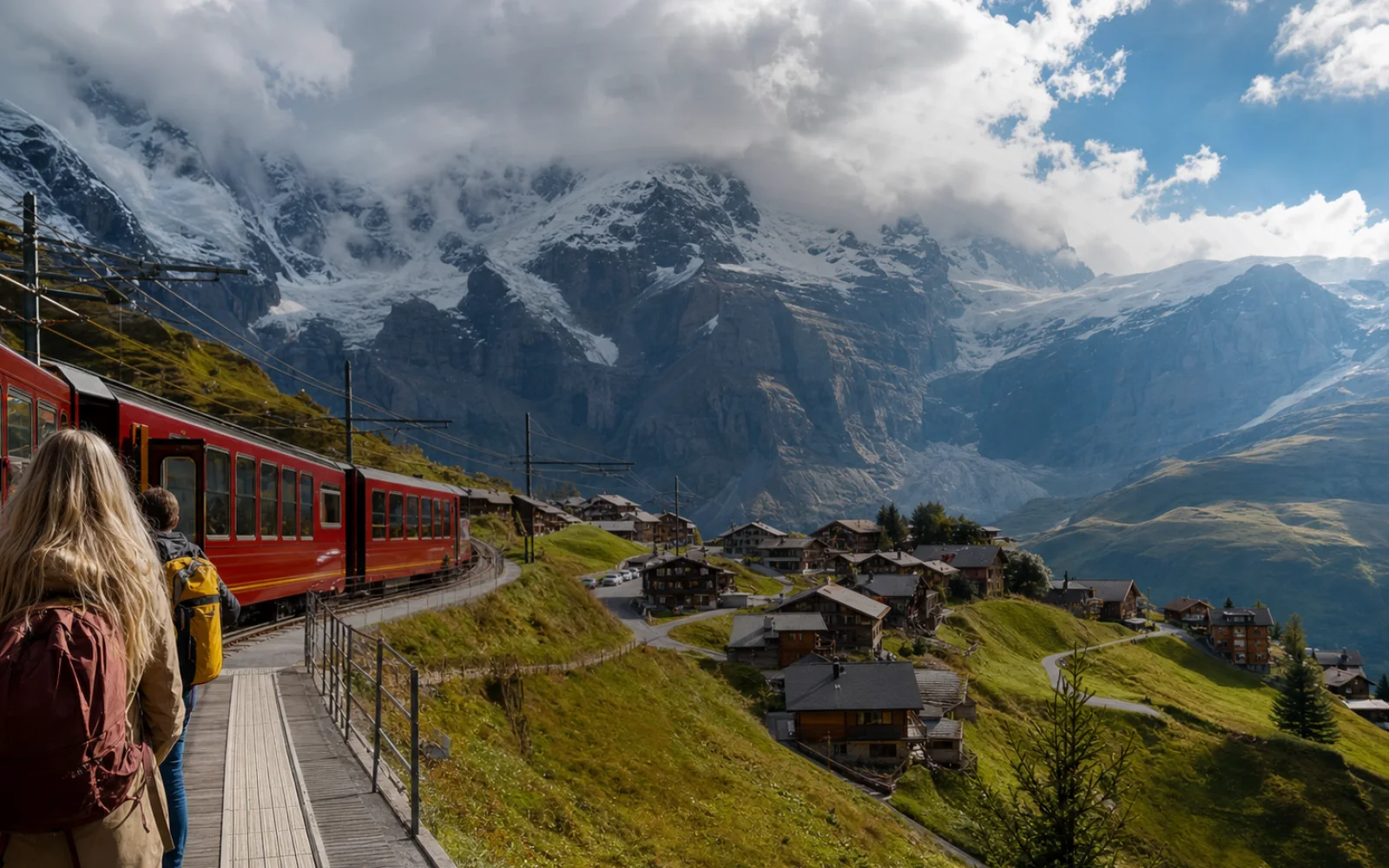
In the Alps, railways, cable cars, and viewpoint infrastructure are part of the travel experience itself.
The cities' finance, international organizations, and museums show another side of modern Switzerland.
Places and meals
A starting point for walks around Lucerne's Old Town and lake.
Google MapsA viewpoint that is most rewarding in good weather, so leave a spare day for it.
Google MapsAn Alpine village route with striking waterfalls and cliff scenery, well suited to walking.
Google MapsA classic rail route from Zermatt for views of the Matterhorn.
Google MapsFood and restaurants
- Fondue and raclette are good local experiences, but plan to have them once rather than at every meal.
- Dining options can be limited in mountain areas, and restaurants may close early, so check dinner options near your accommodation in advance.
- Supermarket sandwiches and bakery food are practical ways to cut high dining costs.
A good option for a meal in Lucerne's Old Town. Check opening hours.
Lucerne Google MapsAn option to consider for a mountain village meal during your stay in Zermatt.
Zermatt Google MapsA good option for a meal while passing through Zurich. Known for its strong vegetarian menu.
Zurich Google MapsHow to fit it in
In Switzerland, an itinerary that improves your chances of getting clear views of the high mountains is better than adding more cities.
Reality check
Choose your cities and mountain destinations first, then check the full-price fares for each leg on SBB without applying Swiss Travel Pass or Half Fare Card discounts. If the search results show half-price fares by default, turn off the discount setting. Then compare the purchase cost of the Swiss Travel Pass, Half Fare Card, and regional passes, adding the extra fares after discounts separately for each option.
Keep a spare day so you can visit viewpoints like Jungfraujoch when the weather is clear, and use city sightseeing to fill the gaps.
Mountain trains and viewpoint tickets are the main expenses, so mix supermarket sandwiches and bakery food into your meals to eat out less often.
High elevations can be cold even in summer, and the weather can change quickly. Bring an outer layer, stick to marked hiking trails, and plan your hike so you can catch the last cable car.
If plans change
Spend more time in the cities, exploring the old towns and museums of Zurich, Bern, and Lucerne, as well as the lakeshores.
Keep just one expensive viewpoint, reduce hotel changes, and mix in free walks and supermarket meals.
Small tip
Decide whether to visit a viewpoint by checking the webcams and operating information the day before and the morning of your visit. First check the official ticket sales page to see whether your preferred mountain train requires a separate seat reservation. Good weather does not guarantee that tickets or seats will still be available.
Final check before departure
- Compare confirmed route fares and the total cost of passes with Swiss Federal Railways (SBB).
- Check MeteoSwiss and facility webcams before buying tickets.
- Check the latest check-in time and luggage storage at each accommodation.
Seasonal hours for mountain facilities and lake boats, railway construction, and weather at different elevations change daily. Spread out bookings so you can swap sightseeing days and travel days.
Information checked: 2026-07-18