
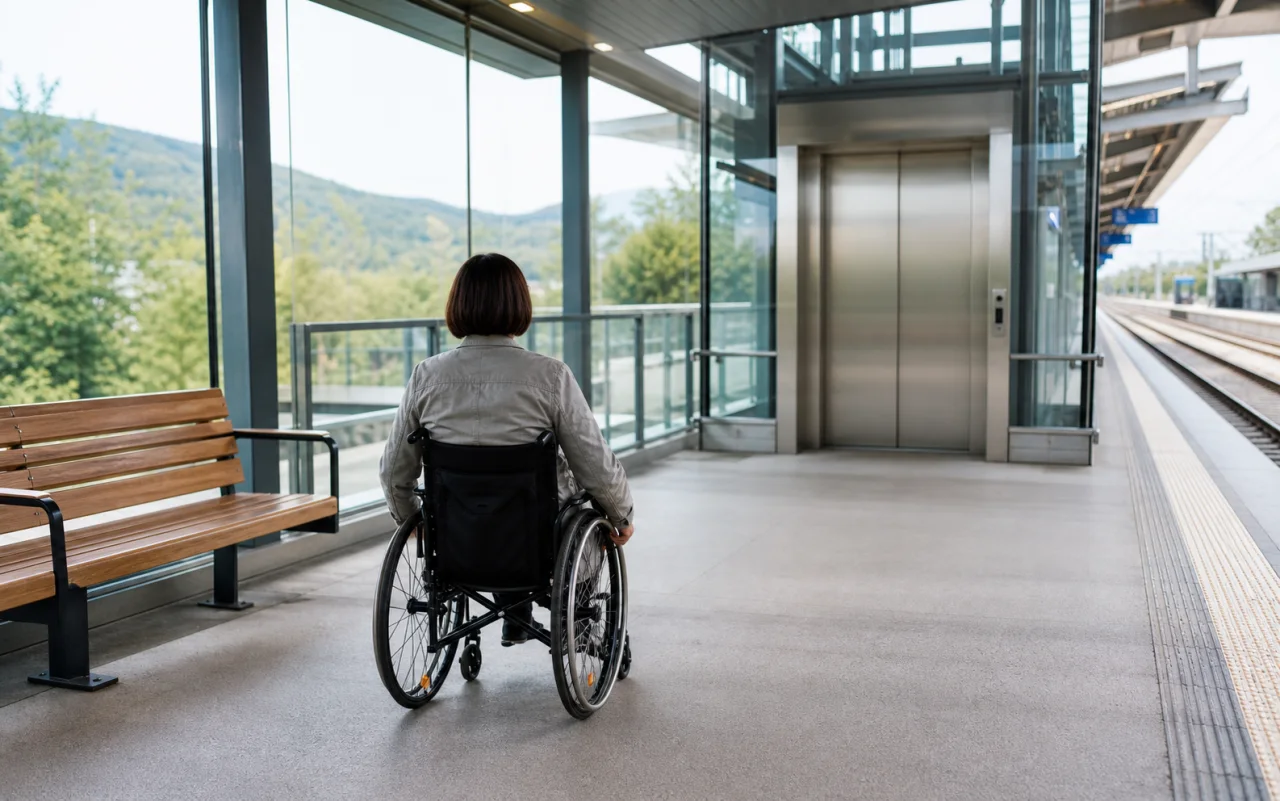
At a glance
- If you use a wheelchair or stroller, or find walking difficult, prioritize elevator connections, station staff assistance, and accessible restrooms over the shortest route. Before comparing prices for paid attractions, check for companion discounts, mobility aid rentals, and reservation assistance.
- Plan just one neighborhood per day and start from a step-free station exit. Take an indoor break every two hours, travel before crowds build, and leave the last activity easy to cancel. Add 20–30 minutes to each leg for elevator detours and restroom waits.
- At older stations, elevator detours can be long even when a transfer looks short on a map. During rush hour, boarding can also take longer.
- If an elevator is under maintenance or the station is extremely crowded, look for a step-free exit at a nearby station or a low-floor transport option. Do not try to carry a wheelchair or stroller on stairs.
- For a half-day in Ueno, start at the JR Park Gate (Koen Kaizatsu) or the park exit, then travel about 500 meters to the museum’s main entrance. Elevator connections vary depending on the line and platform you use, so check the official JR Ueno Station layout for a step-free route from your platform to the Park Gate. If the connection is unclear, show your platform number to station staff and ask for an alternate route.
- The Tokyo National Museum’s Main Hall has wheelchair-accessible restrooms and places to rest. According to the official information, an ostomy facility is on the first floor of the Main Entrance Plaza or on basement level 1 of the Main Hall. The ramp at the Main Hall entrance is steep, and there may be small thresholds of 1–2 cm inside. Before setting out, check the official accessibility map for the restrooms and places to rest you plan to use, and ask staff for help on site.
Day by day
Suggested itinerary
See each day's route, highlights, background and stay together in one place.
Use the official JR Ueno Station layout to check the step-free route from the platform you will actually use, via the elevator, to the Park Gate. Mark restrooms and resting areas on the museum accessibility map.
Allow 20–30 minutes for the roughly 500 m walk from the Park Exit to the main entrance. Ask staff for help with the entrance ramp and small thresholds, then spend 60–90 minutes on the 1st floor. Rest at the restroom and sofa on the same floor.
Check access to an open dining area in the museum and have a meal. For ostomy facilities, use the 1st floor of the Main Gate Plaza or the Main Hall’s basement level 1. If the rain gets heavy, decide with your companion whether to return to the station or use a pre-booked taxi pickup point; do not add an afternoon attraction.
Places and meals
Mark the two accessible restrooms on the 1st floor and the rest area between galleries 5 and 6 first. Ask staff for help with the entrance ramp and small thresholds.
Google MapsCheck the elevator route from the Yamanote Line platform to the 3rd-floor Park Gate. The museum’s main entrance is about 500 m from the exit.
Google MapsHow to fit it in
Plan just one neighborhood per day and start from a step-free exit that connects the platform to street level. Rest indoors every two hours somewhere with an accessible restroom. Travel before crowds build, and leave the last activity easy to cancel.
Reality check
Set JR Ueno Station’s Park Gate (公園改札) and Park Exit as your destination exits. From the Yamanote Line platform, use the station layout to locate the elevator that goes up to the third floor. Following the nearest stairs to a different exit may mean a steeper route and a detour to the museum. The roughly 500 m from the Park Exit to the museum entrance is outdoors, so it is not a fully indoor route in rain or extreme heat. Ask station staff for assistance when equipment is being inspected. When booking a taxi, first say whether you can transfer to a seat. If you cannot transfer, check whether the vehicle can take you while you remain seated in your wheelchair. Also ask about ramps or lifts and restraints, wheelchair size and weight limits, and help getting in and out.
Allow 20–30 minutes more than usual guidance suggests to get from the platform to street level, and set aside 30 minutes to sit and rest every two hours. Leave at least an hour between reservations to account for accessible restroom waits and elevator detours. Keep the last afternoon stop easy to skip.
General admission to the Tokyo National Museum’s regular collection is ¥1,000 for adults; special exhibitions cost extra. Read the official guidance for disability discounts and companion requirements, and ask in advance whether overseas documentation is accepted. In addition to transport and meals, set aside a taxi budget in case you become tired, but do not assume that standard taxis can accommodate every wheelchair.
For safety, do not try to carry a wheelchair or stroller on stairs. Check mobility aid brakes and battery level, and keep well back from the platform edge. If you need help, ask station staff rather than trying to manage on your own.
If plans change
If an elevator is under maintenance, ask station staff about a step-free route via a nearby station or another way they can help you travel.
If maintenance or fatigue makes travel harder, switch to a step-free route via a nearby station or an accessible taxi, and shorten the itinerary.
Small tip
At older stations, elevator detours can be long even when transfers look close on a map, and rush-hour crowds can make boarding take longer. It is safer to check again on the day of travel whether facilities are under maintenance and when station staff can assist.
Final check before departure
- Before departure · Check official operating and booking information for accessible travel in Tokyo
Official guidance was checked on 2026-07-29. At older stations, elevator detours can be long even when transfers look close on a map, and rush-hour crowds can make boarding take longer. For your visit date, recheck official guidance for step-free routes at the stations you will use, elevator maintenance, station staff assistance, and accessible restroom hours at attractions. Contact the departure station and operator directly if your transport requires a wheelchair space or boarding assistance reservation. Also check slopes and construction closures between alternate exits and your destination. Agree with your companion on a meeting point in case you have to use a different exit, and confirm how you will stay in touch.
Information checked: 2026-10-03