
At a glance
- In Marunouchi, see the brick station building and the business district layout; in Omotesando, see the facades of modern commercial architecture. Even when the exteriors are free to view, access to interiors, exhibition admission fees, and photography rules vary by building. Choose just one paid space.
- The basic plan is to spend half a day in each area on separate days. In Marunouchi, compare three stops: Tokyo Station’s ground-level plaza → KITTE → Naka-dori. In Omotesando, compare Omotesando Station → Omotesando Hills → Prada Aoyama. The Omotesando route crosses both sides of the station, so it is not a one-way walk. Don’t schedule a reservation between the two routes.
- Commercial building interiors and private property are not open for unrestricted visits. If construction barriers or event controls change the pedestrian route, follow on-site directions.
- If it rains or the streets are crowded, limit your visit to the station building and one gallery. Don’t block roads or entrances to take photos.
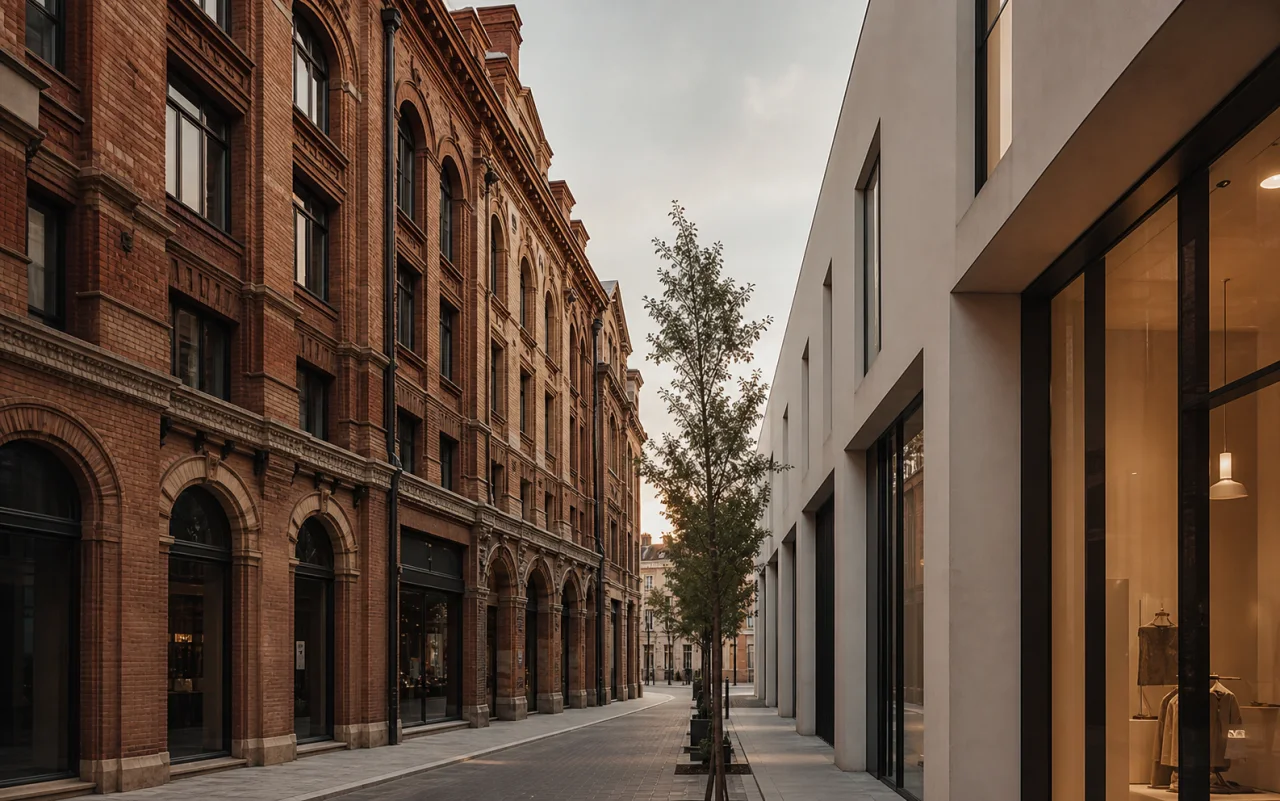
- In Marunouchi, compare the red-brick Tokyo Station building’s symmetry and domes with KITTE: its lower section preserves the old Central Post Office, with a high-rise behind it. In Omotesando, look for the sloping interior route at Tadao Ando’s Omotesando Hills and the diamond-patterned glass facade of Herzog & de Meuron’s Prada Aoyama.
Day by day
Suggested itinerary
See each day's route, highlights, background and stay together in one place.
Walk less than about 1 km from Tokyo Station’s Marunouchi ground-level plaza to the exterior and open interior of KITTE, then along Naka-dori. Choose any indoor observation within this half-day.
Walk from Omotesando Station to Omotesando Hills, then to the exterior of Prada in Aoyama on the opposite side of the station. Use crosswalks between the two areas; shopping is optional.
Visit Plan A in the morning, then Plan B in the afternoon after allowing 90 minutes for a meal and subway travel. The day will run 5 hours 30 minutes to 7 hours 30 minutes, so don’t add a separate museum reservation or a long evening trip.
Places and meals
View the red brick, domes, and long bilateral symmetry from the plaza. Keep passenger routes clear.
Google MapsSee where the old post office exterior meets the new high-rise. Visit during the commercial facility’s opening hours.
Google MapsSee the interior route as it follows the slope from floor to floor.
Google MapsView the diamond-shaped glass and the curves of each side of the building from the sidewalk outside.
Google MapsHow to fit it in
Spend a half-day on each route, on separate days: Plan A covers Tokyo Station plaza, KITTE, and Marunouchi Naka-dori; Plan B covers Omotesando Station, Omotesando Hills, and Prada Aoyama. Allow 2–3 hours per route and choose just one interior after checking its opening hours. On both days, travel from your accommodation to that day’s starting station; the basic plan has no transfers between the two areas.
Reality check
Take the train to Tokyo Station on your Marunouchi day and to Omotesando Station on your Omotesando day. Since the basic plan uses separate days, you don’t need to travel between the areas in the morning and afternoon. Only if you combine them on the same day, save the route for the day’s subway trip from Tokyo Station to Omotesando Station and allow 90 minutes for the meal and travel.
The basic plan allows 2–3 hours for each route on separate days. Within that time, choose three exterior stops and one open interior on a route. If combining both on the same day, plan for 5 hours 30 minutes to 7 hours 30 minutes total: 2–3 hours in Marunouchi in the morning → 90 minutes for a meal and subway travel → 2–3 hours in Omotesando in the afternoon. Don’t add another museum reservation.
The examples above follow public sidewalks and view the exteriors and shared spaces of commercial facilities that are open to visitors, so there is no admission fee for the architecture walk. Budget for subway fare, lunch, and drinks. If you add museum interiors or gardens, separate tickets are required, and access to restricted areas of commercial facilities is not allowed.
For safety, don’t walk toward the road while looking up at building exteriors. Stop completely to take photos, keep pedestrian routes and entrances clear, and follow private property boundaries and construction notices.
If plans change
If construction or an event blocks a pedestrian route, follow the detour and view only the exteriors of buildings open to the public.
If it rains or walking becomes difficult, visit only the Tokyo Station building or one indoor gallery, then end the day.
Small tip
Commercial building interiors and private property are not public sightseeing spaces. If opening hours have ended or an event or construction has restricted access, don’t ask staff to let you in; follow the designated pedestrian routes.
Final check before departure
- Before departure, check the official operating hours and reservation requirements for the Tokyo architecture walk
- Save round-trip routes to Marunouchi and Omotesando, including your return route, in case you need them
Official information was checked on 2026-07-29. Commercial building interiors and private property are not public architecture sightseeing spaces, and construction barriers or event controls may change pedestrian routes. On the day of your visit, recheck official information for the opening hours, closures, and photography rules of the one building you plan to enter, as well as event and pedestrian access restrictions in both areas. Don’t assume that Tokyo Station’s public interior areas have the same hours as its shops. Check Omotesando exhibition spaces separately from the overall opening hours of commercial facilities. If it rains, choose one open indoor space before planning an exterior walk. At sidewalks under construction, follow signs for temporary walkways and crossings; nighttime lighting hours are also separate. Check day-of notices.
Information checked: 2026-10-03