
At a glance
- In a standard hotel or apartment, cold water from the bathroom sink is generally safe to drink if it is connected to the public water supply and no restriction or boil-water advisory is posted. At a restaurant, ask first whether you can order tap water or refill your bottle, and whether there’s a charge.
- For a public fountain, its water management information matters more than whether water is flowing. Use it if it’s marked as drinking water or confirmed as such on the city map or facility information. Don’t assume that no sign means either it’s allowed or prohibited.
- Ponds, decorative recirculating water, and water from rivers and streams are not public drinking water sources. Don’t drink from basins or tanks where water collects; fill your bottle only at a managed spout.
Quick guide for on-site decisions
What to check when filling your bottle
What matters is whether the water manager identifies it as drinking water, not the fountain’s appearance or whether water is flowing.
At a standard hotel or apartment, run the cold water briefly at the room or bathroom sink, then fill a clean cup or bottle. If the water remains cloudy or smells unusual, do not drink it; check with the front desk. If your accommodation has water shutoff or construction notices, or you are staying at a mountain lodge that uses an independent water supply, first ask whether the water is safe to drink. If you cannot confirm, choose bottled water. Ask the accommodation staff directly whether the cold tap water in your room is safe to drink.
Look for signs saying the water is drinkable in German, French, or Italian, or for a drinking-water symbol. Zurich provides a map of its fountains, and Lausanne marks drinking-water fountains with a symbol so pedestrians can identify them. In other cities, use that city's map or on-site signs.
A sign saying the water is not drinkable in German, French, or Italian means you should not drink it. If there is no sign, check the city's official map or facility information to confirm that it is a drinking fountain. If you cannot confirm, or the fountain appears connected to a pond or decorative pool, do not fill up. Get water at a nearby managed facility such as a café, shop, station, or museum.
The most practical choice while traveling
The easiest options are tap water at your accommodation or a restaurant, or a public fountain that the city or facility identifies as drinking water. Some cities, such as Zurich, maintain many fountains as drinking water sources, but you shouldn’t assume the same applies to fountains in other cities or along walking paths.
Signs and hygiene
The terms for drinking water and non-drinking water vary across German-, French-, and Italian-speaking areas. Use a translation app to check unfamiliar signs. At a restaurant, ask first whether tap water is available and whether it is free.
Zurich provides a map of fountain locations, and Lausanne uses pictogram signs to identify drinking fountains. These examples show how to find official guidance for a destination; they don’t mean the same rules automatically apply to fountains in other cities.
Refilling a reusable water bottle can help cut the cost of buying bottled water while you’re out. Zurich Tourism also says that bringing a bottle and filling it at fountains can save money and reduce single-use plastic. There’s no need to drink water from a fountain with unclear signs just to save money.
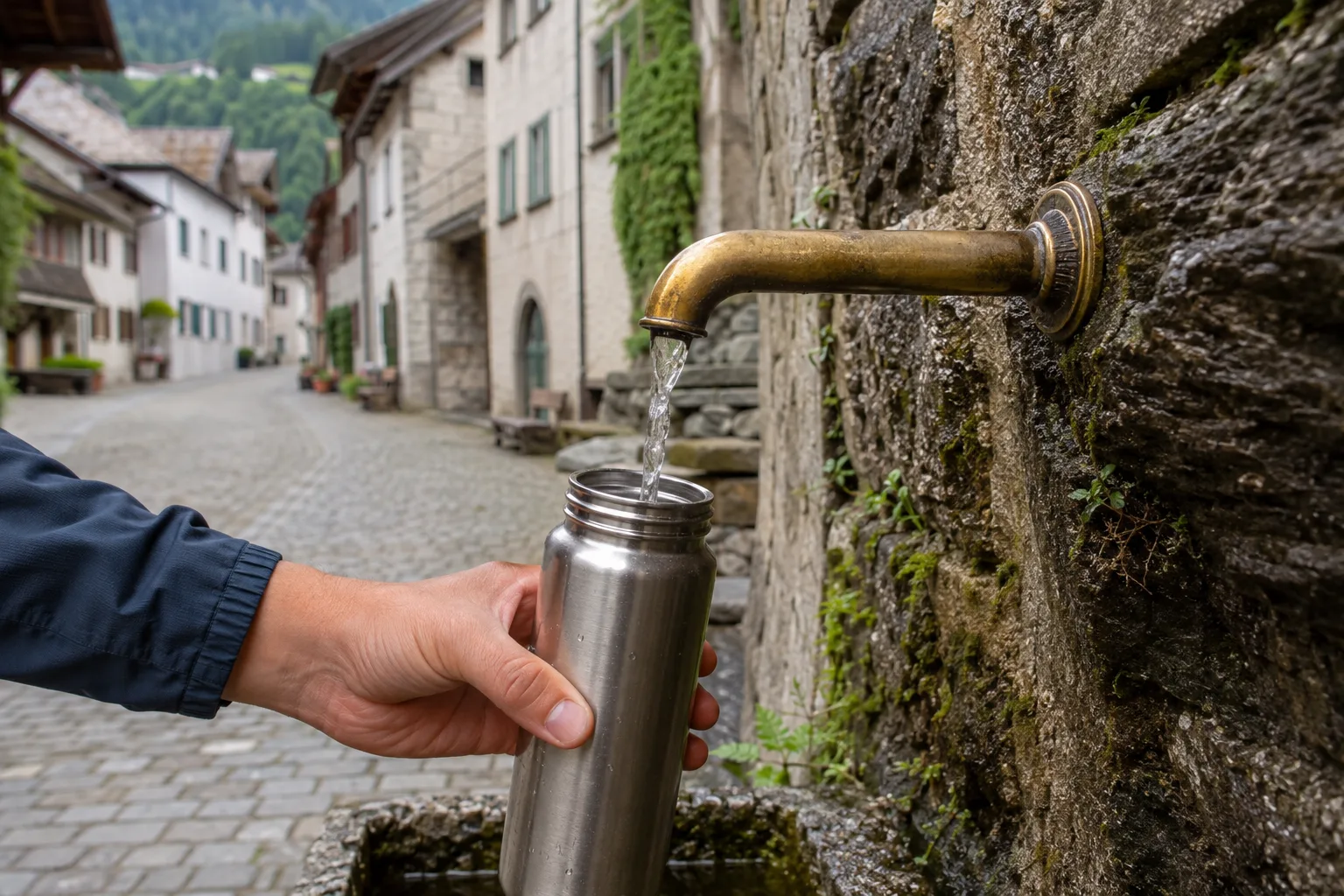
For hygiene, keep the bottle opening and your hands away from the spout. Fill your bottle from the running water. Don’t scoop water from a basin, tank, pond, or other place where it collects. It’s best not to use a fountain as a drinking water source if pets or people enter the water. Zurich city also says its fountains are primarily for drinking and advises against letting dogs into them for hygiene reasons.
If plans change
First, check with the city tourist office or on an official map to see whether the fountain is a drinking water source. If you can’t confirm, get water somewhere with a clear manager, such as your accommodation, a restaurant, or a shop.
Don’t assume that stream or spring water is safe to drink. Bring enough water to reach a managed refill point in the next village, mountain hut, or station, and check official guidance for your route before setting out.
If the basin is empty or the spout is blocked, don’t spend time searching for another fountain. Buy bottled water at a shop or ask whether you can use tap water at your accommodation or a restaurant.
Small tip
Keep the bottle opening away from the tap or fountain spout. Hold it a little below the running water as you fill it; this also makes it easier for the next person.
Final check before departure
- Bring a lightweight, leakproof reusable water bottle.
- Check the official tourism or city map for drinking fountain locations in the city where you’re staying.
- Have a phone translation app ready to check drinking-water and non-drinking-water signs in the local language.
- Before a walk or hike, work out how much water you’ll need to reach the next managed refill point.
- Start each day of walking with a full bottle from your accommodation. Check opening hours and closures before counting on indoor water refill points at museums or cafés.
- If you’ll be walking a long distance on a hot day or making several train connections, bring enough water to reach your next refill point instead of relying only on street fountains.
How fountains are maintained and what their signs say can vary by city, facility, and season. Not all unmarked water in Switzerland is safe to drink. Follow signs on site and guidance from the local authorities.
Information checked: 2026-09-06