
At a glance
- If you have a buckwheat allergy, don’t assume soba is safe to replace with udon. If you can’t confirm with the restaurant whether the same kitchen creates a risk of cross-contact, choose another meal.
- Choose one restaurant with an address listed on its official locations page: for soba, Fuji Soba Otakibashi; for udon, Marugame Seimen Shinjuku Mitsui Building.
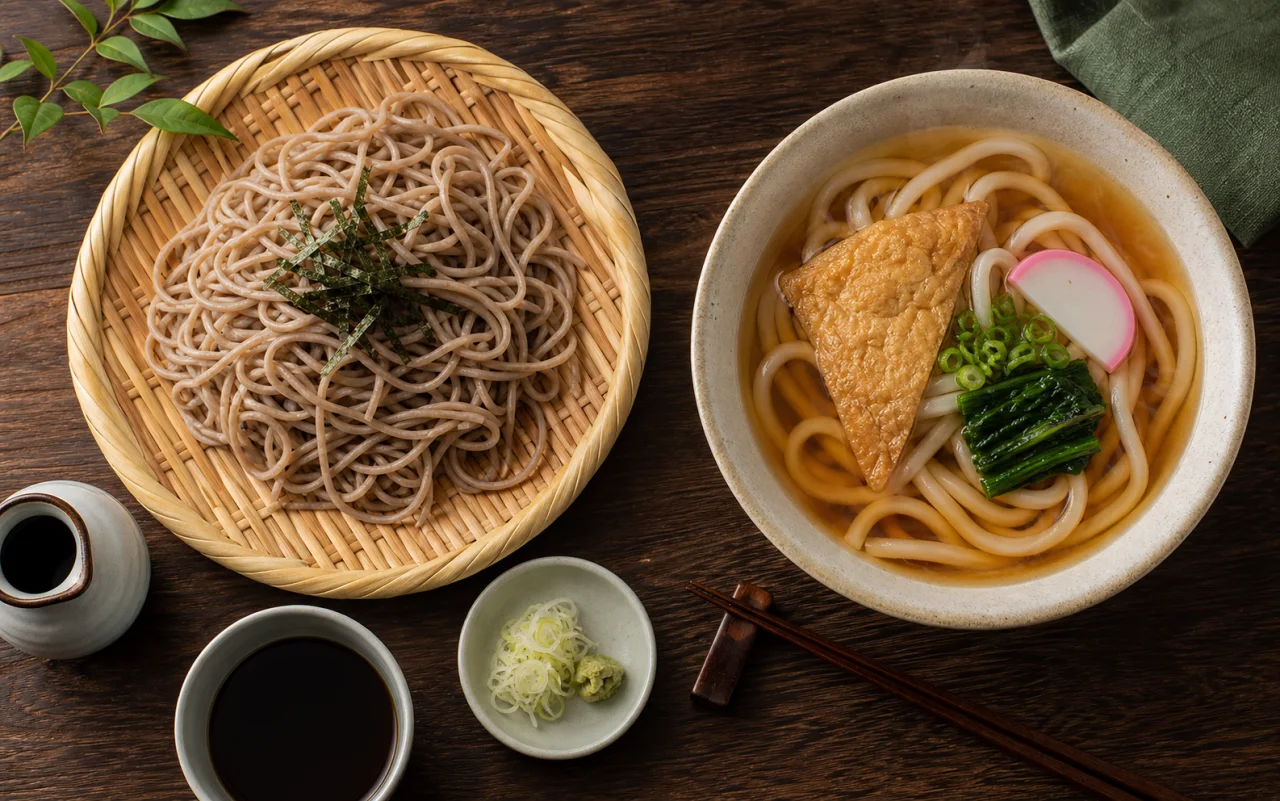
- Cold zaru or mori (ざる・もり) noodles are dipped into a separate bowl of tsuyu sauce. Hot kake (かけ) noodles are served in broth. Bukkake (ぶっかけ) noodles are topped with a small amount of concentrated broth. Choose the temperature and style you want, then add no more than one tempura item. Follow the on-site instructions for ordering and returning dishes.
- Don’t infer allergy or vegetarian suitability from a menu name. Check the restaurant’s published information and ask staff on site.
- These two locations are separate options based on whether you want soba or udon, not a route that visits both.
Day by day
Suggested itinerary
See each day's route, highlights, background and stay together in one place.
Decide whether you want cold noodles or hot broth and which ingredients to avoid → check the menu’s noodle and broth descriptions
Read the instructions at the entrance and seating area, then order a basic menu item → add tempura or a larger portion based on your appetite and next activity
Follow the restaurant’s instructions for returning dishes and paying → if the broth or noodle temperature didn’t suit you, choose a different style next time
Places and meals
A soba option whose address and operating information are listed on its official locations page.
Google MapsA real option for udon and tempura as a meal.
Google MapsHow to fit it in
Before visiting, check the official location page for seating and hours. At the restaurant, choose either cold noodles or hot broth and start with a basic noodle dish. Follow the on-site instructions for ordering and returning bowls.
Reality check
If eating at a station restaurant, check whether it’s inside or outside the ticket gates. If you’re eating between train connections, leave at least 30 minutes before your next train. Store large bags so they don’t block the passageway.
Allow 45–60 minutes, including the wait and meal. If the line is long, don’t switch immediately to another noodle shop in the same station; choose a meal where you can confirm allergies and broth ingredients. Leave at least 30 minutes to travel to your next activity.
First check the official menu price for basic kake soba or udon, or mori soba or udon. Then check the order board to see whether larger portions, tempura, fried tofu, or a small rice bowl cost extra. A low-priced basic dish can approach the price of a set meal once you add several sides. A restaurant with posted prices along your current route often costs less overall than paying to travel out of your way to a famous shop.
Even small amounts of cross-contact can trigger a buckwheat allergy. Don’t order if you can’t confirm whether the kitchen and noodle-boiling water are shared. Before carrying a hot bowl through a narrow passageway, put away large bags. If staff can’t understand your allergy explanation, switching to a rice dish is safer.
If plans change
If your preferred noodles are sold out or you can’t confirm the ingredients, switch to a rice dish with ingredients you can verify. If you need to avoid buckwheat cross-contact, choose a rice bowl restaurant that clearly prepares it separately rather than switching to udon at the same noodle shop.
If standing to eat is difficult or you can’t confirm ingredients, switch to a rice restaurant with seating and a clear menu.
Small tip
Soba broth often contains fish stock, and udon can’t automatically be considered vegetarian. Show the restaurant a note explaining your dietary restrictions.
Final check before departure
- Choose either soba or udon and save one nearby restaurant on your map.
- If you have an allergy, choose only dishes you can verify using information published by the restaurant.
- If someone in your group needs a seat, check the seating arrangement before entering.
Official information was checked on 2026-07-29. Soba broth often contains fish stock, and udon can’t automatically be considered vegetarian. Show the restaurant a note explaining your dietary restrictions. Ask the restaurant directly about broth ingredients and possible buckwheat cross-contact before ordering.
Information checked: 2026-07-29