
At a glance
- For a crime or traffic accident involving immediate danger, call the police at 110. For a fire or medical emergency, call 119.
- The JNTO Visitor Hotline can help with travel information and guidance during accidents or disasters, but it is not a rescue service and does not replace 110 or 119.
- If you lose your passport, check with the facility’s lost-and-found desk and report it to the police. Then check the Ministry of Foreign Affairs’ Overseas Safety website for the current procedures at the Republic of Korea mission responsible for the area.
Day by day
Suggested itinerary
See each day's route, highlights, background and stay together in one place.
Save a passport copy, insurance certificate, and diplomatic mission contact details - Set up JNTO safety alerts
Move to safety - Call 110 or 119 - Contact your insurer and the JNTO hotline
If you lost a payment card, immediately freeze it through your card issuer’s app or phone line → check with the facility’s lost-and-found desk and report it to the police → if you also lost your passport, contact the mission responsible for the area. If you lost your phone, ask your carrier to suspend service as well.
Follow local instructions - If on the coast, move to higher ground - Check official disaster information
How to fit it in
Save these contacts on your phone before leaving for Japan. In an actual emergency, follow official guidance first.
Reality check
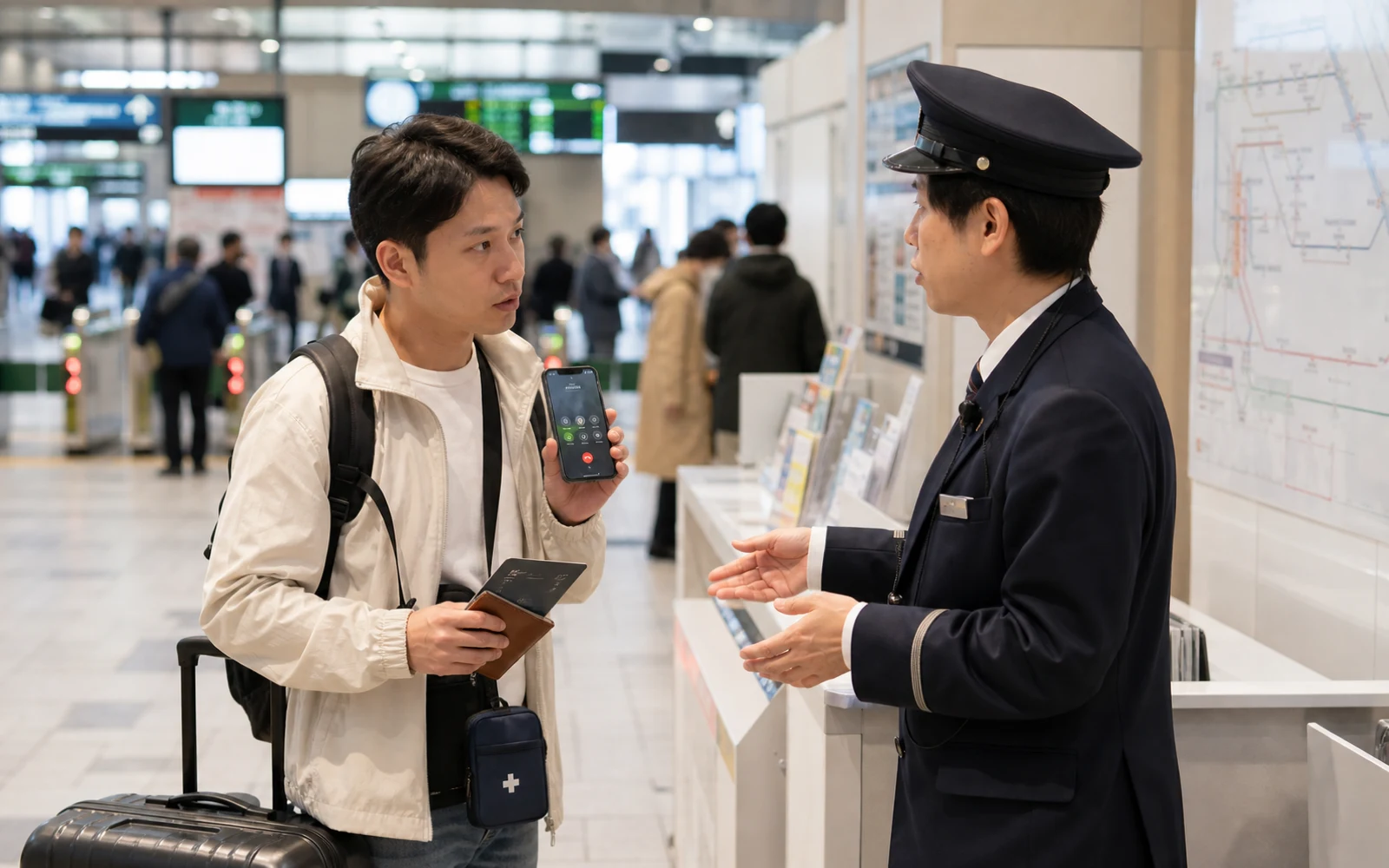
If a train stops, follow station staff’s guidance and check the railway’s official service updates. Do not get off the train or enter the tracks without staff instructions.
During a disaster, prioritize getting to safety and contacting family and your insurer over salvaging your itinerary. Decide on your next leg after service resumes.
Check your travel insurance for coverage and upfront payment requirements in case you need medical care or an ambulance in Japan.
If you’re indoors during an earthquake, protect your head and follow instructions. If you feel strong shaking on the coast, move to higher ground without waiting for a tsunami warning.
If plans change
Ask an employee at a nearby station office, hotel, or convenience store to call 110 or 119 and explain your location.
Don’t follow unofficial advice to move elsewhere. First check the railway’s or local government’s evacuation guidance and whether you can extend your stay.
Small tip
Older contact lists may include numbers that have changed or serve a different purpose. Save these three essentials: police 110, ambulance 119, and the JNTO hotline.
Final check before departure
- Save 110, 119, the JNTO hotline at 050-3816-2787, your insurer’s number, and your lodging address for offline access.
- Keep a copy of your passport, insurance certificate, medication details, and allergy information somewhere safe.
- Check your relevant diplomatic mission’s business hours and passport-loss appointment process, and set up disaster alerts.
- For a replacement passport, check the diplomatic mission’s business hours, appointment requirements, and processing time. Coordinate any changes to your return flight with your airline.
Verified as of 2026-07-30. 110 is for police; 119 is for fire and ambulance. Mission phone numbers, passport documents, and train service vary by location and circumstances, so check official guidance again.
Information checked: 2026-07-30