
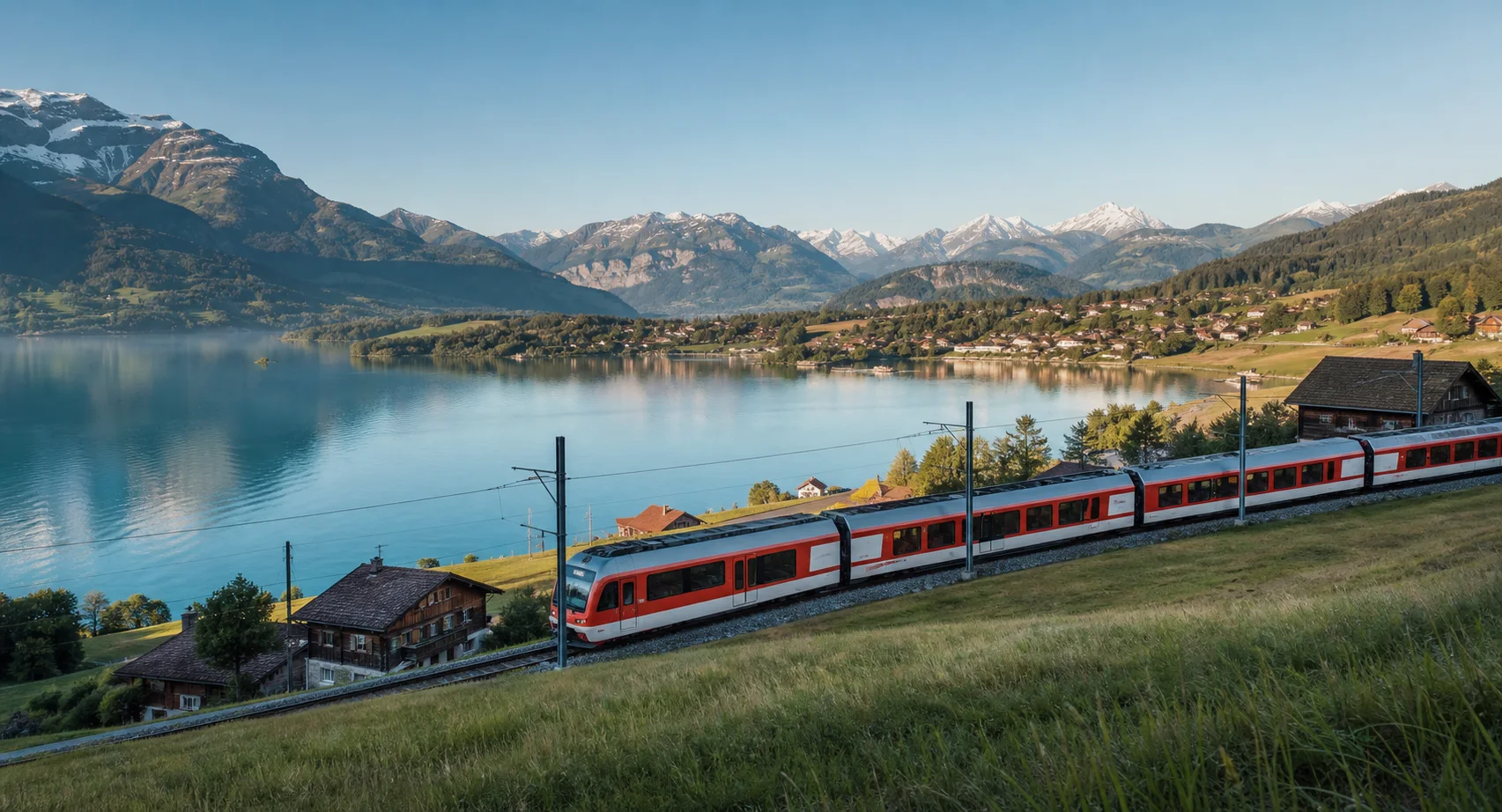
At a glance
- This 28-day example covers 27 nights: Zurich for 3 nights → Lucerne for 4 → Interlaken for 5 → Zermatt for 3 → Vevey for 3 → Geneva for 5 → Bern for 3 → Kloten for 1. You’ll change accommodation 7 times. If you want a month-long stay with just two or three bases, start by reducing the number of cities in this example.
- Prioritize a kitchen and laundry facilities when choosing accommodation. Mountain villages can look close on a map but have steep slopes, so check the actual route and elevation change from the station or bus stop with your luggage. Confirm long-stay discounts, tourist tax, and cancellation terms before paying.
- First calculate individual fares for your actual travel dates on SBB, then compare the Swiss Travel Pass, Swiss Travel Pass Flex, Swiss Half Fare Card, and regional passes for visitors. Long-term season tickets may have different residence, eligibility, and validity requirements, so they are not automatically the right choice for visitors.
- The Swiss Museum of Transport in Lucerne is not free for Swiss Travel Pass holders. The official facility price list lists the Museum (exhibitions + Hans Erni Museum) at CHF 37 for adults, with a 50% on-site discount for pass holders, bringing it to CHF 18.50. The Day Pass, which includes the cinema, planetarium, and chocolate experience, is a different product; the adult pass-holder price is CHF 44.50. If using Flex, show your active-day document. Discounts cannot be stacked.
- For each day, read the schedule and accommodation details first, then continue to that day’s rail details and meal options if needed. You don’t need to turn every historical note or all 28 restaurant suggestions into reservations. The faster route and mountain railway on Day 13 are alternatives, as are castle visits and the panoramic round trip on Day 17. Weather alternatives replace the basic plan; they are not extra outings to add on.
장기 체류의 한 장 요약
28 days, Eight check-ins
도시를 매일 바꾸지 않고 숙박 거점을 중심으로 이동합니다.
- 숙박
- 27 nights
- 거점
- 8 accommodation bases
- 숙박 총액
- Add the total for all 27 room nights plus tourist taxes in CHF
- 평균 1박
- Total accommodation cost above ÷ 27 nights · meals and transport not included
이동 경로
숙박 거점 이동
실선은 숙소를 옮기는 열차 이동입니다.
- 1Zurich
- 2Lucerne
- 3Interlaken
- 4Zermatt
- 5Vevey
- 6Geneva
- 7Bern
- 8Kloten
- 9Zurich Airport
- Zurich HB → Lucerne
- Lucerne → Interlaken
- Interlaken → Zermatt
- Zermatt → Vevey
- Vevey → Geneva
- Geneva → Bern
- Bern → Kloten
- Kloten → Zurich Airport
-
Days 1–3 · 3 nights
Zurich
MEININGER Hotel Zürich Greencity Check the nightly room rate and tourist tax for your dates at this base, then add up the cost for all nights booked. Convert to Korean won separately using the exchange rate on the payment date.
예약 보기 지도 -
Days 4–7 · 4 nights
Lucerne
Hotel Alpha Luzern Check the nightly room rate and tourist tax for your dates at this base, then add up the cost for all nights booked. Convert to Korean won separately using the exchange rate on the payment date.
예약 보기 지도 -
Days 8–12 · 5 nights
Interlaken
Hotel Rössli Interlaken Check the nightly room rate and tourist tax for your dates at this base, then add up the cost for all nights booked. Convert to Korean won separately using the exchange rate on the payment date.
예약 보기 지도 -
Days 13–15 · 3 nights
Zermatt
Hotel Bahnhof Zermatt Check the nightly room rate and tourist tax for your dates at this base, then add up the cost for all nights booked. Convert to Korean won separately using the exchange rate on the payment date.
예약 보기 지도 -
Days 16–18 · 3 nights
Vevey
Vevey Hotel & Guesthouse Check the nightly room rate and tourist tax for your dates at this base, then add up the cost for all nights booked. Convert to Korean won separately using the exchange rate on the payment date.
예약 보기 지도 -
Days 19–23 · 5 nights
Geneva
MEININGER Hotel Genève Centre Charmilles Check the nightly room rate and tourist tax for your dates at this base, then add up the cost for all nights booked. Convert to Korean won separately using the exchange rate on the payment date.
예약 보기 지도 -
Days 24–26 · 3 nights
Bern
ibis budget Bern Expo Check the nightly room rate and tourist tax for your dates at this base, then add up the cost for all nights booked. Convert to Korean won separately using the exchange rate on the payment date.
예약 보기 지도 -
Day 27 · 1 night
Kloten
Hotel Welcome Inn Zürich Airport Check the nightly room rate and tourist tax for your dates at this base, then add up the cost for all nights booked. Convert to Korean won separately using the exchange rate on the payment date.
예약 보기 지도
여행 패스 비교
A month-long stay doesn’t mean there’s one obvious pass
Swiss Travel Pass Flex works well for major travel days, while the Swiss Half Fare Card is worth comparing if you’ll use regular and mountain transport many times. If you’re staying longer in the Bernese Oberland, separately compare regional pass coverage and which mountain transport is included.
구매 방법Match the name on your passport to the name on your pass document, and have your mobile document, QR code, and ID ready together. Follow the current instructions on the official sales page for buying and activating visitor passes.
꼭 확인할 점Passes differ in which mountain transport, including Jungfraujoch, Gornergrat, and First, is free, discounted, or excluded. Check applicable routes, reservation requirements, and surcharges on the official sales page for your departure date.
Day by day
See all 28 days
See each day's route, highlights, background and stay together in one place.
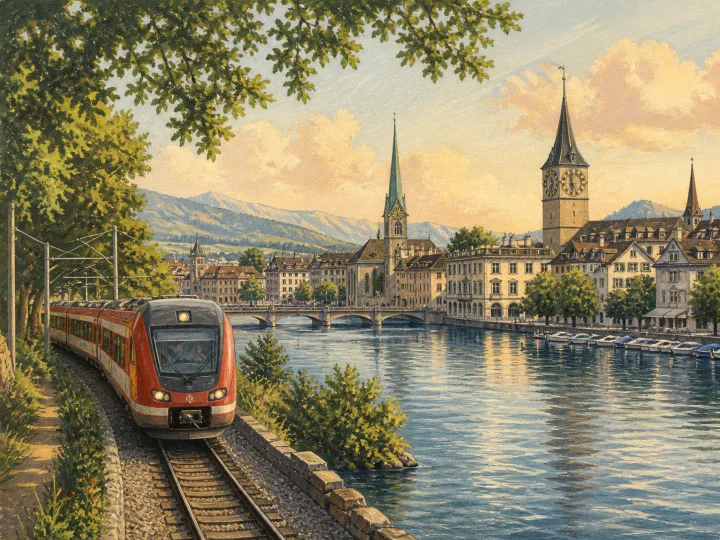
개별권Example before calculation · unused · use individual tickets for the airport–Zurich and local sections
Leave your luggage at your accommodation, then walk along the Limmat and through the old town. Keep the first day easy: take in the view across the river from Lindenhof and call it an early night.
Zurich’s old town preserves traces of a city where medieval guilds shaped commerce and politics. Lindenhof became a civic square after serving as a Roman fort and later a royal palace site, making it a good place to see the city’s layers of history on your first day.
Take an SBB train from Zurich Airport station to Zurich main station, then an S-Bahn to Manegg station. After checking in, explore the old town by S-Bahn and on foot. Google Maps 길찾기
- LindenhofGoogle MapsA hill with views over the old town and Limmat River.
- LimmatquaiGoogle MapsA riverside walk that’s easy on your first day.
- GrossmünsterGoogle MapsA landmark in Zurich’s old town; start with the exterior.
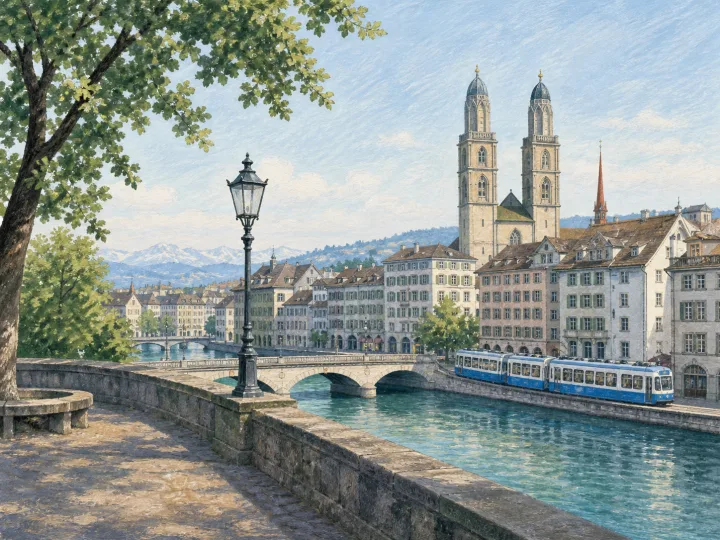
개별권Example before calculation · unused · compare a Zurich city ticket or 24-hour pass
Spend the morning in the old town and at one museum, then head to Lake Zurich in the afternoon. Choose the museum that interests you most instead of trying to see both the National Museum and Kunsthaus in depth.
Grossmünster was a center of Zwingli’s 16th-century Reformation. Together, the riverside guild houses and dense tram network show how an old trading city developed into a modern financial center.
Take the S-Bahn from your accommodation to Zurich main station. Around town, combine Zurich public transport (ZVV) trams and walking. Use Bürkliplatz as your reference stop for the lakeshore. Google Maps 길찾기
- Swiss National MuseumGoogle MapsChoose this if you’re interested in Swiss history and everyday life.
- Kunsthaus ZürichGoogle MapsChoose this instead of the National Museum if you’re interested in modern and contemporary art.
- BürkliplatzGoogle MapsA starting point for a walk along Lake Zurich or a short boat trip.
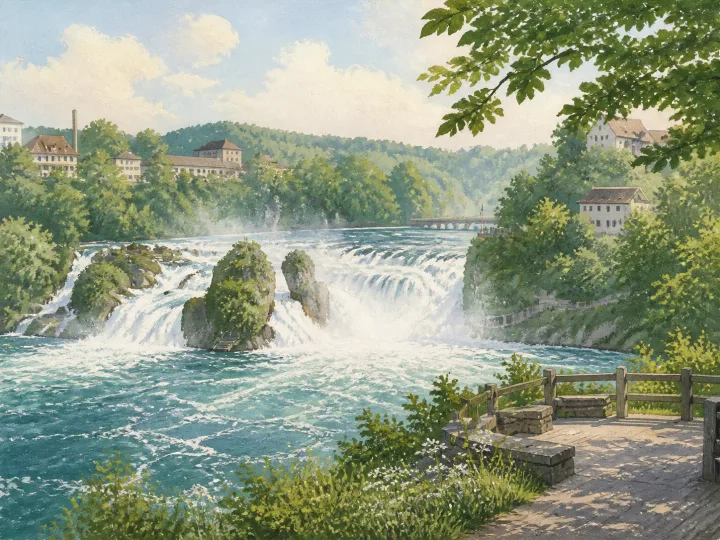
Flex 사용Example before calculation · Use 1/15 · round trip to Rhine Falls + Zurich local transport + National Museum
This is the first day of using your Flex pass. In the morning, make a round trip to the Rhine Falls, then visit the Swiss National Museum in the afternoon. If you already visited the National Museum on Day 2, skip a return visit and take a leisurely walk along Lake Zurich and through the Old Town. In that case, exclude the National Museum admission savings when comparing the Flex pass with individual tickets.
The Rhine Falls formed after the Rhine’s course changed following the Ice Age. In the afternoon, explore the formation of the Confederation, guild life, and regional clothing and crafts at the National Museum, connecting natural history with everyday life over the course of the day.
Take an SBB train from Zurich main station to Neuhausen Rheinfall station and back. Walk from the main station to the National Museum in the afternoon. If you have time, check ZVV for a tram to Bürkliplatz and take a short walk by Lake Zurich and the old town. Google Maps 길찾기
- Rhine FallsGoogle MapsA half-day outing when water levels and weather are good.
- Swiss National MuseumGoogle MapsA relaxed indoor option for a rainy day.
- Bürkliplatz on Lake ZurichGoogle MapsA flat lakeside walk to fit in only if there’s daylight left after the falls and museum. Don’t add a mountain trip to Uetliberg.
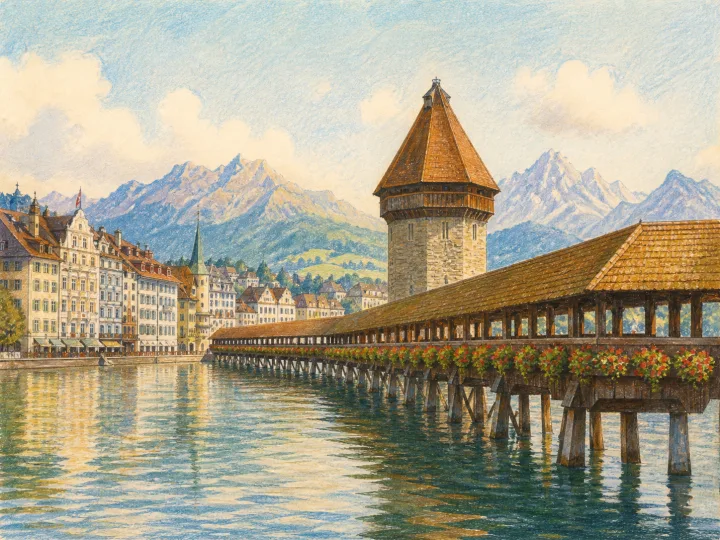
Flex 사용Example before calculation · Use 2/15 · Zurich–Lucerne + Lucerne local transport + one museum
After arriving in Lucerne, walk in one direction past Chapel Bridge, the old town, and the Lion Monument. Climb to the Musegg Wall only if you have energy left.
Lucerne grew as a city connecting the lake and overland routes along the Gotthard trade route. Walk past the 14th-century Chapel Bridge, old-town guild buildings, and the Lion Monument to see medieval trade and the later memory of mercenary soldiers side by side.
Take a direct SBB train from Zurich main station to Lucerne station. From Lucerne station to your accommodation, it’s one or two bus stops or about a 10-minute walk. Google Maps 길찾기
- Chapel BridgeGoogle MapsMake this your first stop on the way from the station to the old town.
- Lion MonumentGoogle MapsSee it while walking to the north end of the old town.
- Musegg WallGoogle MapsA walking route with views over the rooftops and lake.
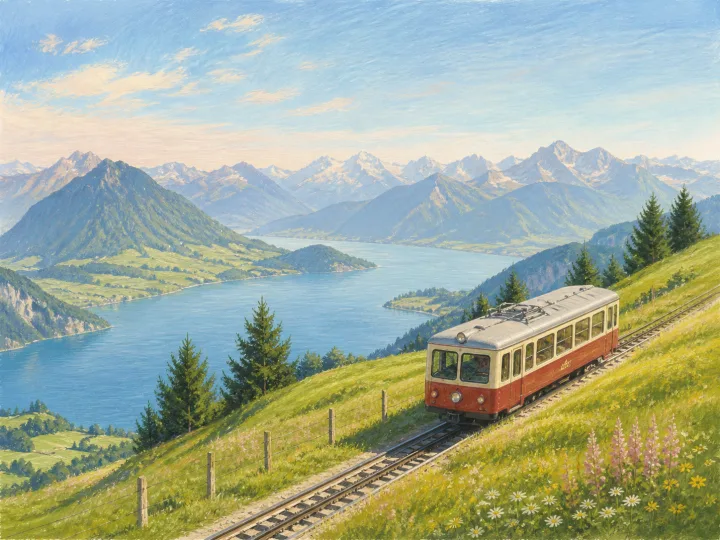
Flex 사용Example before calculation · Use 3/15 · scheduled Lake Lucerne boat + Vitznau + Mount Rigi included; check separate discounts and tickets if choosing Pilatus
If the weather is clear, choose either Mount Rigi or Mount Pilatus. Rigi is an enjoyable combination of boat and mountain train, while Pilatus has steeper mountain scenery.
The Vitznau line on Mount Rigi began operating in 1871 as Europe’s first mountain railway. The route itself—linking a lake boat with a cogwheel train—is close to the original model for 19th-century mountain tourism in Switzerland.
For Rigi, take a boat from the Luzern landing stage to Vitznau, then ride the cogwheel train up to Rigi Kulm. For Pilatus, take bus 1 from stop A at Lucerne station toward Kriens/Obernau and get off at Kriens, Zentrum Pilatus. Follow the red signs and walk about 5 minutes to the lower station. Take the panoramic gondola via Krienseregg to Fräkmüntegg, then ride the Dragon Ride cable car up to Pilatus Kulm. The Google Maps directions for this day open with Rigi Kulm as the default destination. If you choose Pilatus, don't use this button; open the Pilatus Kulm place card and check round-trip service for your visit date. Google Maps 길찾기
- Rigi KulmGoogle MapsA summit with wide views of the lake and Alps.
- VitznauGoogle MapsA lakeside village where you change from the boat to the mountain train.
- Pilatus KulmGoogle MapsThe Lucerne-area mountain you can choose instead of Rigi.
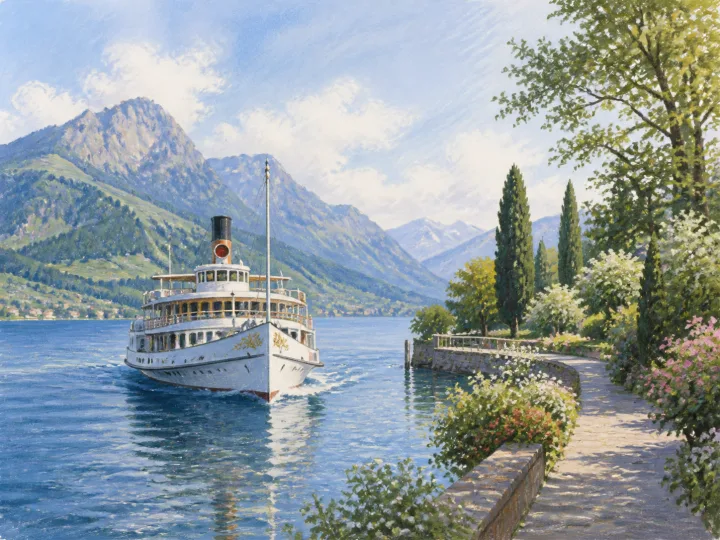
Flex 사용Example before calculation · Use 4/15 · long Lake Lucerne cruise + round trip to Weggis and Brunnen
Use a Flex day for a long boat trip from Lucerne to Weggis and Brunnen. If you’re tired from the mountain the day before, stop at Weggis. If it rains, switch to the Museum of Transport and city buses.
Lake Lucerne was a working route linking early Confederation regions such as Uri, Schwyz, and Unterwalden. Look at the old piers, excursion boats, and village of Brunnen, and consider how the lake was a transport route before it was a tourist destination.
Take a scheduled boat from the Luzern pier via Weggis to Brunnen. For the return, use a boat or the SBB train from Brunnen station. If it rains, take bus 6 or 8 from Lucerne station to the Museum of Transport. Google Maps 길찾기
- WeggisGoogle MapsA lakeside village for a leisurely walk after a day in the mountains.
- Swiss Museum of Transport in LucerneGoogle MapsA good place to spend half a rainy day.
- Lake Lucerne pierGoogle MapsA starting point to check boat times and destinations.
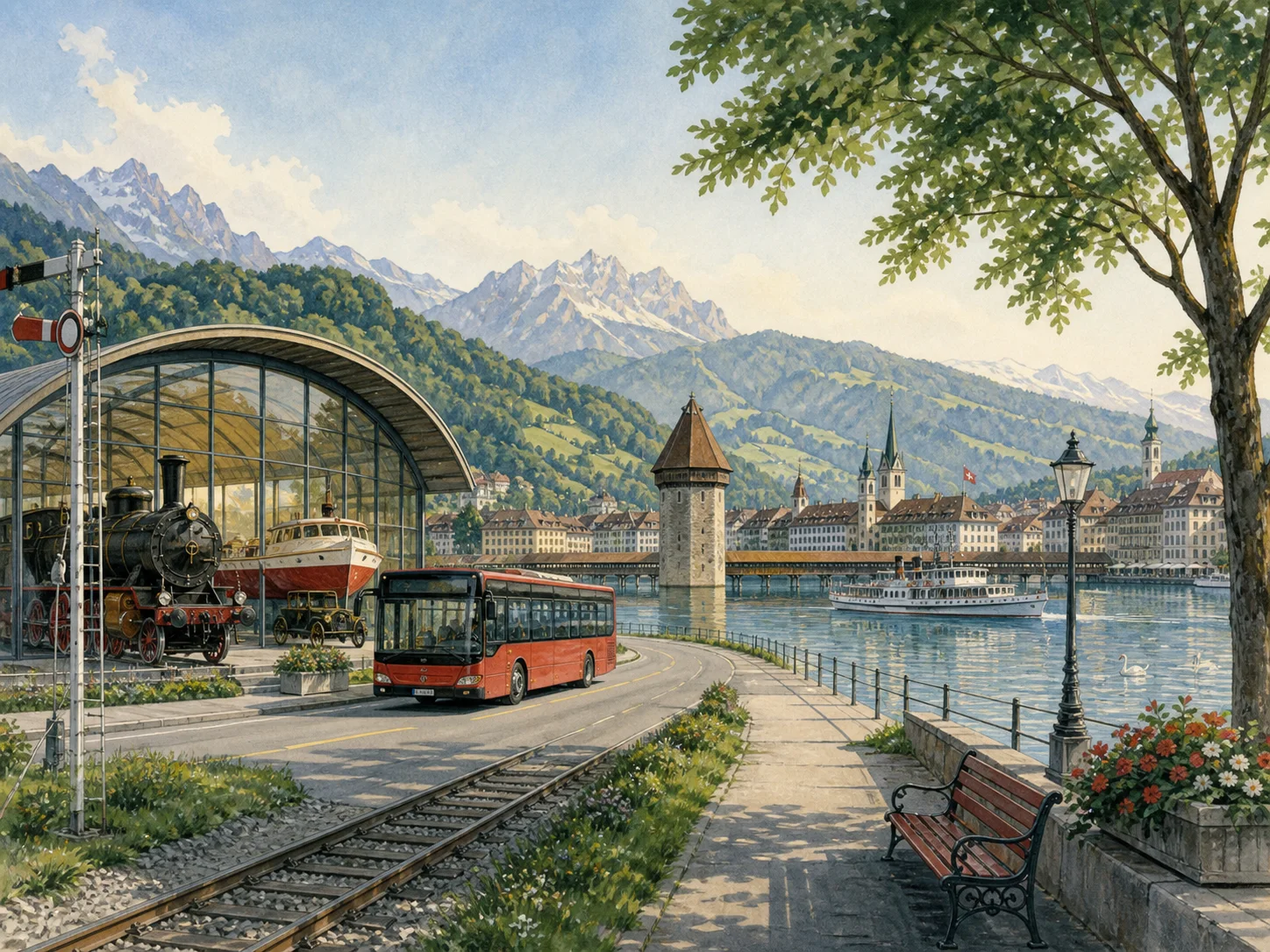
Flex 사용Candidate use day before calculation · Add up local transport and the actual Museum of Transport discount. If you visited on Day 6, the Day 7 admission discount is 0. Compare this day with the individual fares for Days 24 and 27; assign an active day to whichever saves more.
If you haven’t been to the Museum of Transport, visit in the morning, then relax by Chapel Bridge and the lakeshore in the afternoon. If you already went as a rainy-day alternative on Day 6, don’t pay for another visit; do laundry, shop for groceries, or rest at your accommodation instead.
Lucerne’s Museum of Transport shows how rail, boat, road, and air travel connected communities across Switzerland. Before a long journey, take another walk through the old town and along the lake to reflect on Central Switzerland’s transport history.
Take bus 6 or 8 from Lucerne station to the Museum of Transport. From there, take a bus or walk along the lake to the old town. Google Maps 길찾기
- Swiss Museum of TransportGoogle MapsSee the development of rail, boat, and air travel in one place.
- Chapel BridgeGoogle MapsTake your time with the interior paintings and water tower, more so than on your first day.
- Lucerne lakeshoreGoogle MapsTake a short, flat walk before traveling the next day.
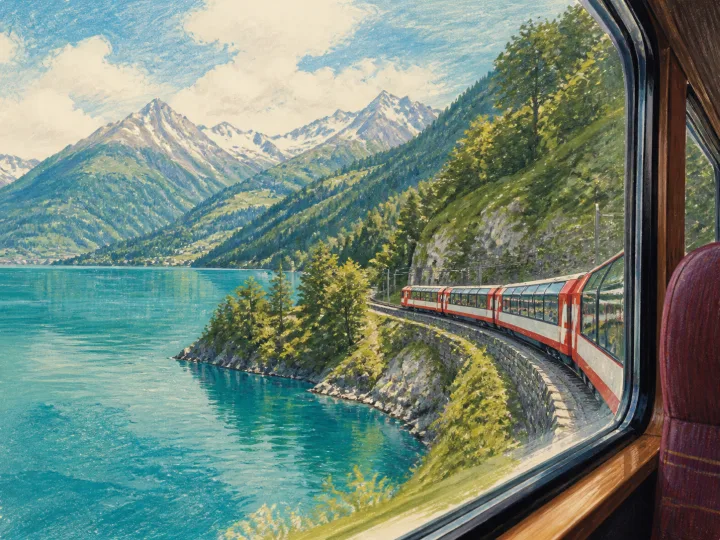
Flex 사용Example before calculation · Use 6/15 · Lucerne–Interlaken panoramic route + Lake Brienz boat
Cross the Brünig Pass on the panoramic train, then leave your luggage at your accommodation. In the afternoon, take a boat on Lake Brienz or ride one section of the lakeside railway, then end the day at Höhematte.
The Brünig railway connects Central Switzerland with the Bernese Oberland and became a travel route for Alpine tourism. Look out for wooden farmhouses through the train windows and notice Brienz’s woodworking tradition.
Take the Luzern–Interlaken Express from Luzern station to Interlaken Ost. After dropping off your luggage, take a boat toward Brienz from the Interlaken Ost pier. Return by boat or regional train. Google Maps 길찾기
- Höhematte ParkGoogle MapsA central meadow in Interlaken, open toward the Jungfrau.
- Aare riverside pathGoogle MapsA flat, short walk after check-in.
- Interlaken Ost pier on Lake BrienzGoogle MapsAfter leaving your luggage, take one section of the Lake Brienz boat route only if the service fits your date. If it doesn’t, finish with a walk in the town park or along the river.
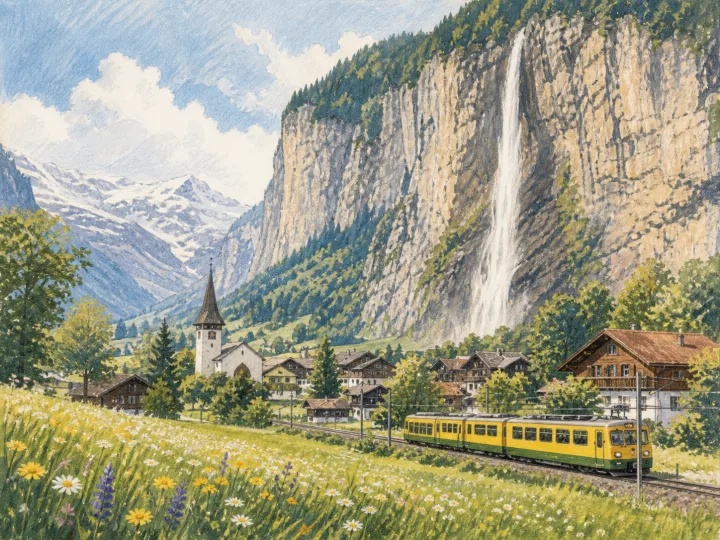
Flex 사용Example before calculation · Use 7/15 · Lauterbrunnen + loop through Mürren or Wengen
See Staubbach Falls, then choose either Mürren or Wengen. This is a day to take in the valley and cliffs at a slower pace, so don’t try to visit both mountain villages.
Villages in the Lauterbrunnen Valley have long relied on livestock farming and mountain agriculture. Waterfalls and glacial valleys drew travelers and artists in the 18th and 19th centuries. The car-free village layouts of Mürren and Wengen are also worth noticing.
Take a regional train from Interlaken Ost to Lauterbrunnen. For Mürren, take the Grütschalp cable car and mountain train; for Wengen, take the mountain train from Lauterbrunnen station. Google Maps 길찾기
- Staubbach FallsGoogle MapsA signature waterfall in the valley, within walking distance of Lauterbrunnen station.
- MürrenGoogle MapsA village on the cliff edge with views toward the Eiger and Mönch.
- WengenGoogle MapsA car-free mountain village you can choose instead of Mürren.
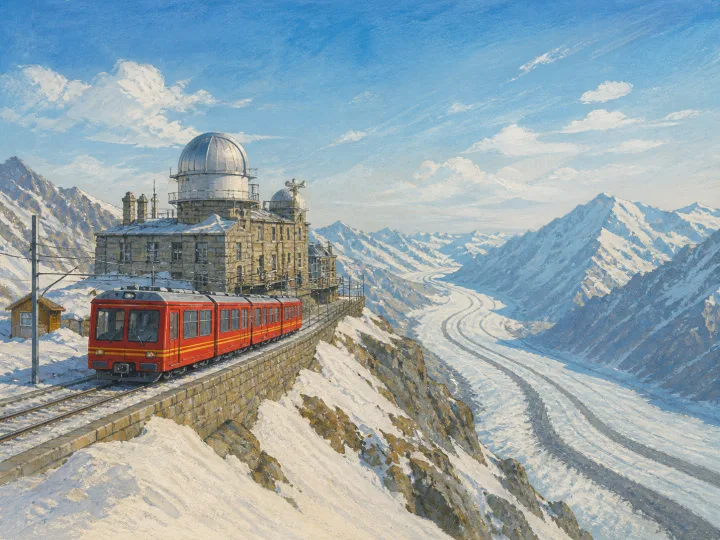
Flex 사용Example before calculation · Use 8/15 · travel to Jungfraujoch + check applicable mountain-route discounts and separate reservations
Go to Jungfraujoch when visibility is good. See the Sphinx Observatory and Ice Palace, and head back down without staying long if you’re struggling with the altitude.
The Jungfrau Railway reached its summit station in 1912. The landscape of the UNESCO World Heritage Site, including the Aletsch Glacier, matters as much as the railway engineering. From the viewing platform, look at the glacier’s length and signs of retreat.
Travel by train from Interlaken Ost to Grindelwald Terminal, take the Eiger Express to Eigergletscher, then transfer to the Jungfrau Railway. From May 1 through October 31, 2026, a round-trip time-slot seat reservation is mandatory for the Eigergletscher or Kleine Scheidegg ↔ Jungfraujoch section. Secure a reservation through the official sales page separately from your valid ticket or pass. If moving to a backup date, first check whether your existing reservation can be changed and confirm a new time slot. Google Maps 길찾기
- JungfraujochGoogle MapsThe day’s main destination for its high-altitude station and glacier views.
- Sphinx ObservatoryGoogle MapsAn outdoor viewpoint overlooking the Aletsch Glacier.
- Ice PalaceGoogle MapsAn attraction you can visit even in bad weather, but the floor is slippery.
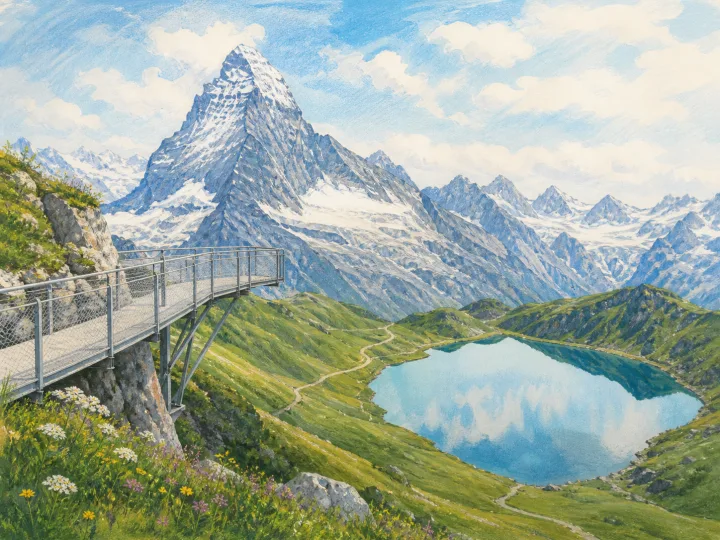
Flex 사용Example before calculation · Use 9/15 · Grindelwald and First discounts, or a round trip to Thun + boat
If the weather is clear and the trail is open, visit First and Bachalpsee. This is a high-altitude hike, so check for snow, ice, and visibility; if conditions are poor, switch to Thun’s old town and castle. If Day 10 was cloudy, go to Jungfraujoch today and skip First.
Grindelwald grew from an agricultural village into a center for mountaineering and winter tourism. The pastures, mountain huts, and small-scale cheese production visible beyond First’s mountain facilities still reflect local traditions.
Take a train from Interlaken Ost to Grindelwald, then a village bus or walk to Firstbahn. For a rainy-day alternative, take an SBB train from Interlaken West to Thun. The Google Maps route button for this day opens the clear-weather basic plan, with Grindelwald Firstbahn as the destination. If you switch to Thun, open the Thun Old Town place card and change the departure station to Interlaken West. For another Jungfraujoch attempt, follow the place card and connection instructions for that destination on Day 10. Google Maps 길찾기
- First Cliff WalkGoogle MapsA short walk from the upper gondola station to a viewpoint.
- BachalpseeGoogle MapsThe official guide estimates about 2 hours round trip from the First summit station to Bachalpsee and back to the First summit station. Allow extra time to stay at the lake and wait for the gondola, and decide in advance when to turn back from the lake to catch the last gondola.
- Thun Old TownGoogle MapsA low-altitude alternative when it’s raining in the mountains.
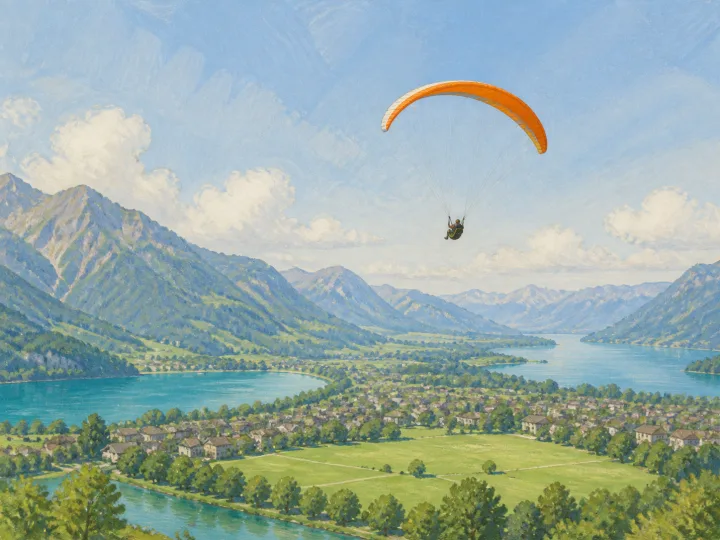
개별권Example before calculation · Unused · use individual tickets for booked activities and local Interlaken trips
Choose just one activity from the promotions: paragliding, rafting, or canyoning. If you skip activities, rest at Höhematte or take a short boat trip on Lake Brienz.
Interlaken means “between the lakes.” It grew from a settlement around a medieval monastery into a tourist town. Höhematte’s broad meadow is where a traditional landscape meets modern paragliding culture.
Travel by bus or on foot to the Interlaken meeting point listed on your booking voucher. Before paying for a water or canyon activity, check whether the operator includes equipment and shuttle service and what its weather cancellation terms are. Google Maps 길찾기
- Höhematte ParkGoogle MapsA central park where you can relax and watch paragliders land.
- Outdoor InterlakenGoogle MapsUse your voucher to confirm the actual meeting point for your chosen activity.
- Lake BrienzGoogle MapsA lake option for a slow afternoon instead of an activity.
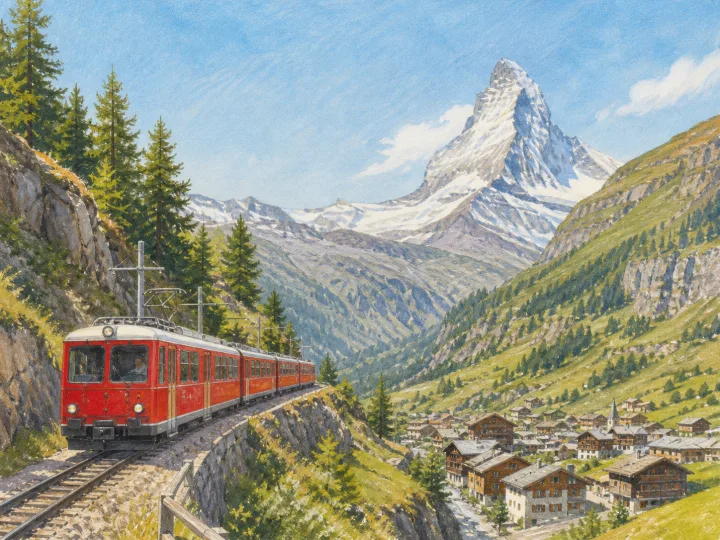
Flex 사용Example before calculation · Use 10/15 · long-distance travel from Interlaken to Zermatt + Zermatt local bus
On the day you arrive in Zermatt, limit your walk to Bahnhofstrasse and Kirchbrücke. If the Matterhorn is visible, take your first photo from the bridge and save the high-altitude trip for the next day.
Zermatt is a car-free village with traces of Valais mountain farming and Walser culture. It became a center of mountaineering after the Matterhorn’s first ascent in 1865. Old wooden granaries and the mountaineers’ cemetery tell part of that story.
Take an SBB train from Interlaken Ost via Spiez to Visp, then continue from Visp to Zermatt on the Matterhorn Gotthard Bahn. Google Maps 길찾기
- BahnhofstrasseGoogle MapsA pedestrian street from the station to the village center.
- Kirchbrücke viewpointGoogle MapsA photo spot in the village with an open view toward the Matterhorn.
- Matterhorn MuseumGoogle MapsVisit if the weather is cloudy or you have time to spare.
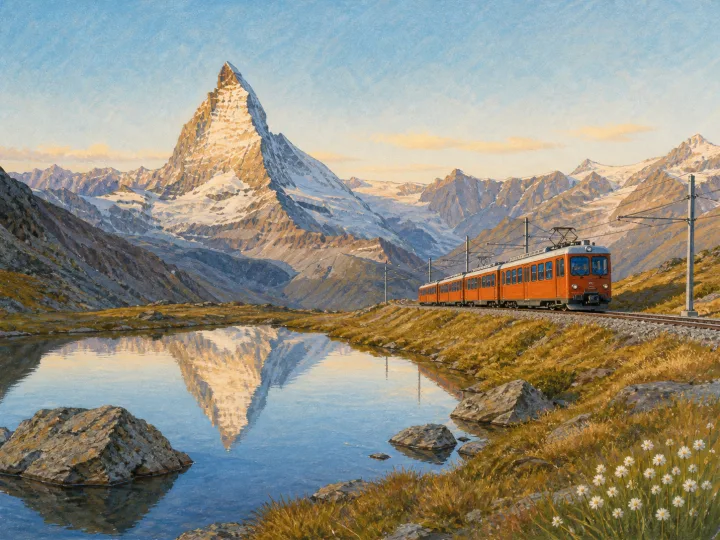
Flex 사용Example before calculation · Use 11/15 · Gornergrat mountain railway discount + Zermatt local bus
Head up to Gornergrat on a clear morning. The official guide says the walk from Rotenboden station to Riffelsee takes about 10 minutes. Choose either a short visit and return to the same station, or, if the trail is open and your fitness allows, continue past the lake on the official route down to Riffelberg station, which takes about 1 hour. Skip the walk and descend by train if snow, ice, or poor visibility make walking conditions unsuitable.
The Gornergrat Railway opened in 1898 and greatly changed mountain tourism in Zermatt. At Rotenboden and Riffelsee, look beyond the railway views to the terrain where glaciers meet high Alpine pastures.
Across from Zermatt station, board the cogwheel train at Gornergrat Bahn. If you choose the round trip to the lake, board the return train at Rotenboden. If you choose the route downhill to Riffelberg, board the return train at Riffelberg. Do not assume the two routes use the same return boarding station. Google Maps 길찾기
- GornergratGoogle MapsA viewpoint for the Matterhorn and glaciers.
- RotenbodenGoogle MapsThe station where the short walk down to Riffelsee begins.
- RiffelseeGoogle MapsOn a calm day, the Matterhorn is reflected in the lake.
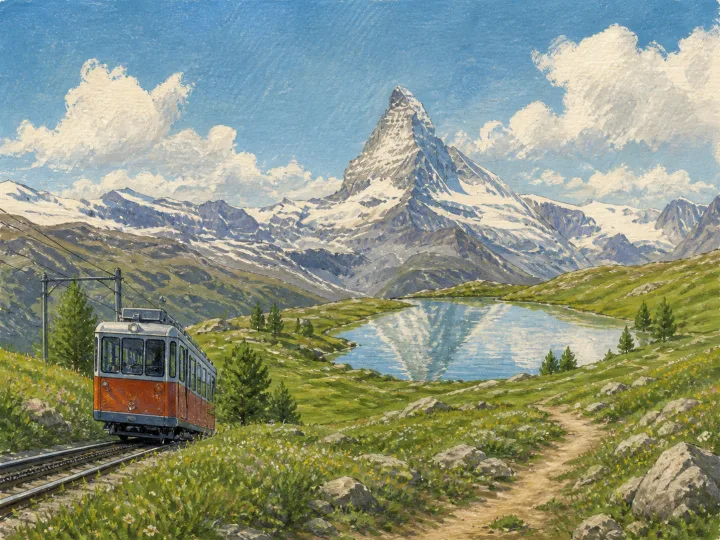
Flex 사용Candidate use day before calculation · Compare the mountain discount and individual fare only on a day you actually choose to retry Gornergrat or visit Sunnegga. If you rest in town, don’t include a mountain discount.
If the previous day was cloudy, try Gornergrat again. If you’ve already been, take it easy at lower elevations with Sunnegga and a walk in the village. Walk a short lakeside trail only if you feel up to it.
The small settlements and wooden houses around Sunnegga show mountain herding life from before tourism. Along the Leisee trail, look at the layout of Valais stone roofs, granaries, and seasonal pastures.
If you’re retrying Gornergrat because the previous day was cloudy, check the visit-date train service and weather for the Gornergrat Bahn opposite Zermatt station. If you’ve already been, either take the Sunnegga funicular in the village to the viewpoint or rest in town; walk the short lakeside trail only if it’s open. The Google Maps route button for this day opens the Sunnegga rest option. If you’re retrying Gornergrat, don’t use this button; open the Gornergrat retry place card and check departures from the Gornergrat Bahn opposite Zermatt station. Google Maps 길찾기
- Retry GornergratGoogle MapsCheck weather, service, and ticket conditions again only if you didn’t get a view the previous day. If you did, switch to a village or Sunnegga rest day.
- SunneggaGoogle MapsA viewpoint with a short travel time, suitable for a buffer day.
- LeiseeGoogle MapsA lake a short walk below Sunnegga.
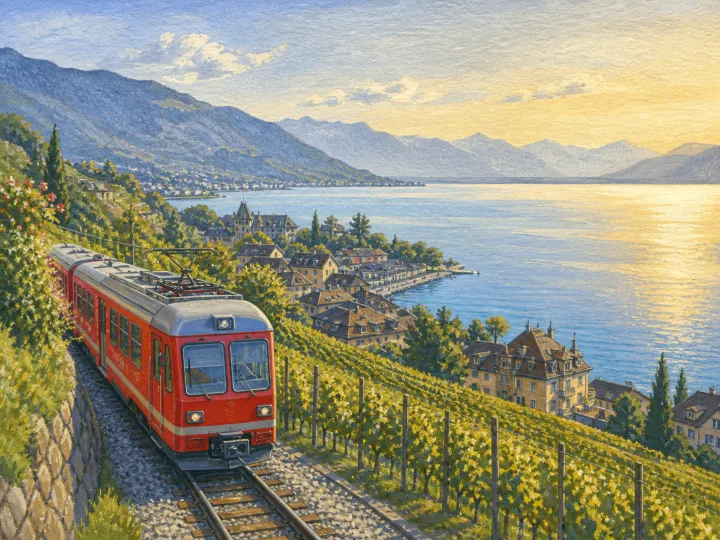
Flex 사용Example before calculation · Use 13/15 · long-distance travel from Zermatt to Vevey + Lake Geneva regional transport
Leave your luggage at your accommodation in Vevey, then walk along the lakeshore and through the old town. After coming down from Zermatt, don’t try to fit in Chillon Castle; take time to adjust to the slower pace of Lake Geneva.
Traveling from Zermatt to Vevey takes you from German-speaking Valais to French-speaking Vaud. Vevey’s market square and lakeshore connect the history of medieval markets and wine trading with the modern food industry.
Take the Matterhorn Gotthard Bahn down from Zermatt to Visp, then an SBB train to Vevey station. After leaving your luggage, connect the Vevey lakeshore and old town on foot. Save transport to Montreux and Chillon Castle for Day 17. Google Maps 길찾기
- Vevey lakeshoreGoogle MapsA flat walk with views of the Alpine ridges and Lake Geneva.
- Vevey Old Town and Market SquareGoogle MapsAfter dropping off your luggage, take a short walk along the lakeshore and through the old town. Don’t add a castle or nearby city to the same afternoon.
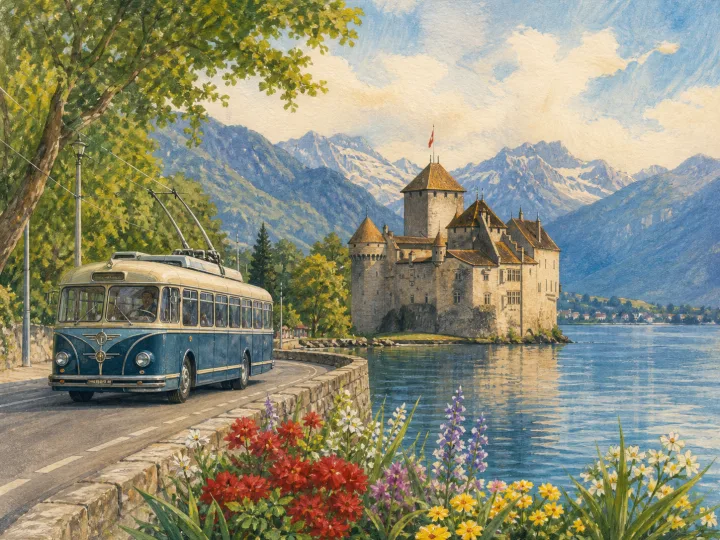
Flex 사용Example before calculation · Use 14/15 · Vevey–Montreux + bus 201 + check Chillon Castle admission benefit
Walk along the Montreux lakeshore, then take bus 201 to Chillon Castle. After touring the interior, return to your accommodation in Vevey by the same bus or by train.
Chillon Castle was a fortress from which the House of Savoy controlled Alpine passage and lake routes. The hotels and gardens along Montreux’s lakeshore connect to the resort culture of the Belle Époque in the late 19th century and, later, its jazz tradition.
Take an SBB train from Vevey station to Montreux, then bus 201 from Montreux to the Chillon Castle stop. Google Maps 길찾기
- Montreux lakeshoreGoogle MapsA flat walking path with views of Lake Geneva and the mountains.
- Freddie Mercury statueGoogle MapsA landmark on the Montreux lakeshore route.
- Chillon CastleGoogle MapsSee the lakeside fortress and the exhibits inside.
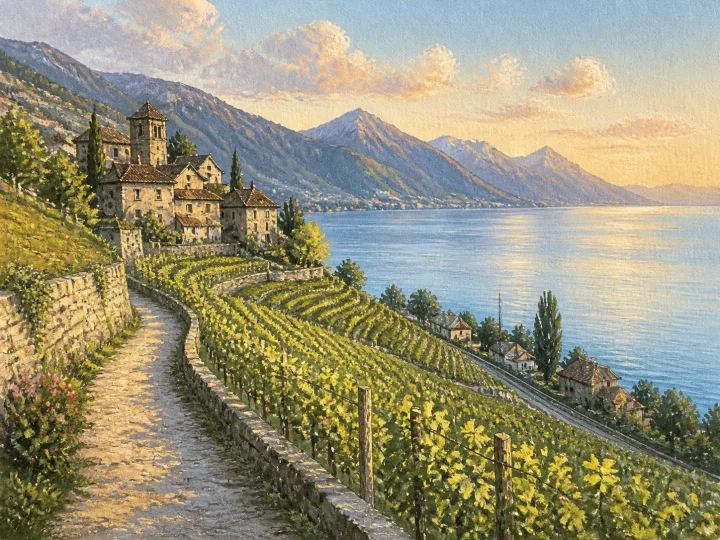
개별권Example before calculation · Unused · use individual tickets for local trains and buses in Lavaux
If the weather is clear, walk through the Lavaux vineyards and small villages. If it rains, stay in Vevey for the Alimentarium. Take it easy along the Vevey lakeshore in the evening.
Lavaux’s vineyards build on traces of Roman-era cultivation. Monasteries in the 11th century shaped the terraced fields into the landscape seen today. The stone walls, drainage channels, and small villages are part of a winemaking tradition stretching back nearly a thousand years.
From Vevey, take an SBB train to Chexbres-Village station. The official Montreux Riviera Chexbres→Rivaz→St-Saphorin→Chexbres loop starts and ends at the station and is about 5.1 km, with about 1 hour 30 minutes of walking time and about 204 m of ascent and descent. Allow 2–3 hours including photos and breaks, and check for a connecting train back to Vevey from the same Chexbres-Village station. On a rainy day, walk to the Alimentarium in Vevey; travel to Geneva is the following day. Google Maps 길찾기
- Lavaux vineyardsGoogle MapsChoose a gentle section with views of both Lake Geneva and the vineyards.
- AlimentariumGoogle MapsA food museum in Vevey that’s a good fit for a rainy day.
- Vevey lakeshoreGoogle MapsSpend the last relaxed evening of your long trip here.
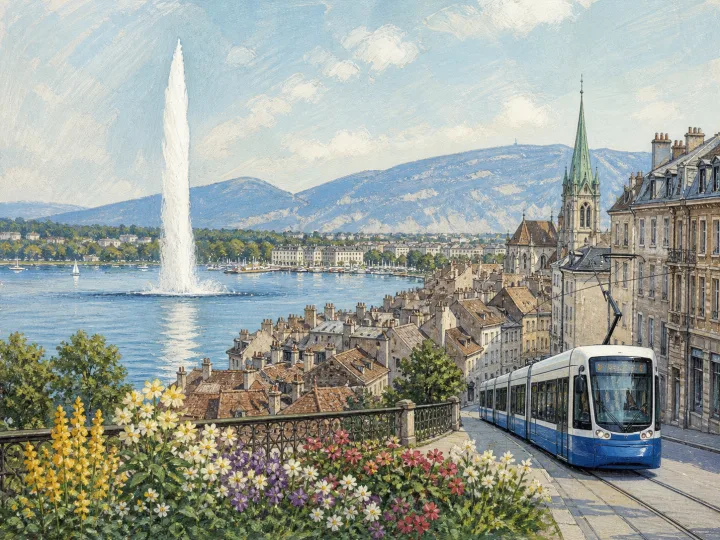
Flex 사용Example before calculation · Use 15/15 · Vevey–Geneva + Geneva local transport + museum
Travel from Vevey to Geneva, leave your luggage, then take a short walk around the English Garden, lakeshore, and old town. Geneva is a 5-night base; the move to the airport area before your Zurich departure is on Day 27.
Geneva’s old town was a center of the Reformation, and artisans who arrived as refugees helped the watchmaking and jewelry industries grow. Follow the city’s development from St. Pierre Cathedral to the lakeshore and international district.
Take a direct SBB train from Vevey station to Geneva Cornavin station. From Cornavin, take a Geneva public transport (TPG) bus or trolleybus to your accommodation. Get around the city by public transport and on foot. Google Maps 길찾기
- English Garden, GenevaGoogle MapsA place to start with both the Flower Clock and a lakeside walk.
- Jet d’EauGoogle MapsCheck the wind direction and view it from the side with less spray.
- St. Pierre CathedralGoogle MapsWalk the hill and lanes of Geneva’s old town.
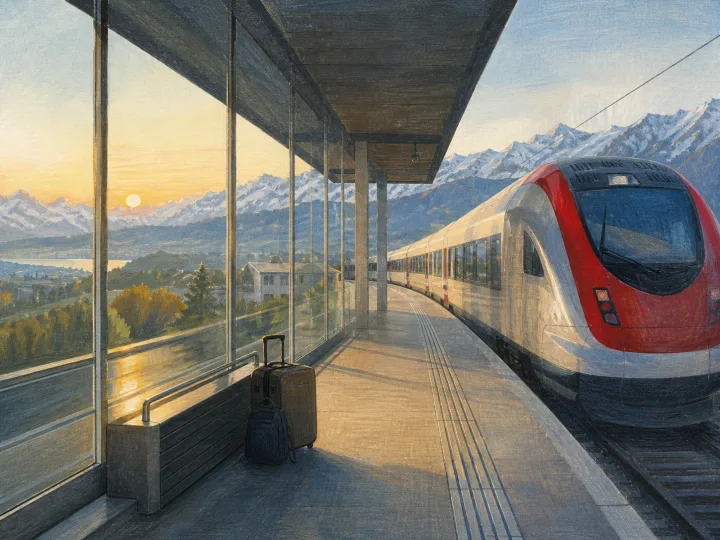
개별권Illustrative estimate · Not used · If your Geneva accommodation provides a valid Geneva Transport Card, exclude Zone 10 city transit from separate costs. Calculate individual tickets only if you do not have the card, and calculate trips outside Zone 10, such as to Lausanne or Nyon, separately.
Take a leisurely walk around St. Pierre Cathedral and the Reformation Wall. If you saw enough of the lakeshore yesterday, have lunch at Place du Bourg-de-Four and choose just one museum.
Geneva’s Reformation history remains visible at St. Pierre Cathedral and the Reformation Wall in the old town. Walking between the medieval lanes and university park brings the city’s religious and civic history together on one route.
Take a TPG bus or trolleybus from your accommodation to Bel-Air, then walk uphill through the old town. For the return, take a tram or bus from Place Neuve. Google Maps 길찾기
- St. Pierre CathedralGoogle MapsA key place to understand the Reformation and Geneva’s old town.
- Reformation WallGoogle MapsSee figures and events from the Reformation in the university park.
- Place du Bourg-de-FourGoogle MapsAn old square and a good spot to take a break during your old-town walk.
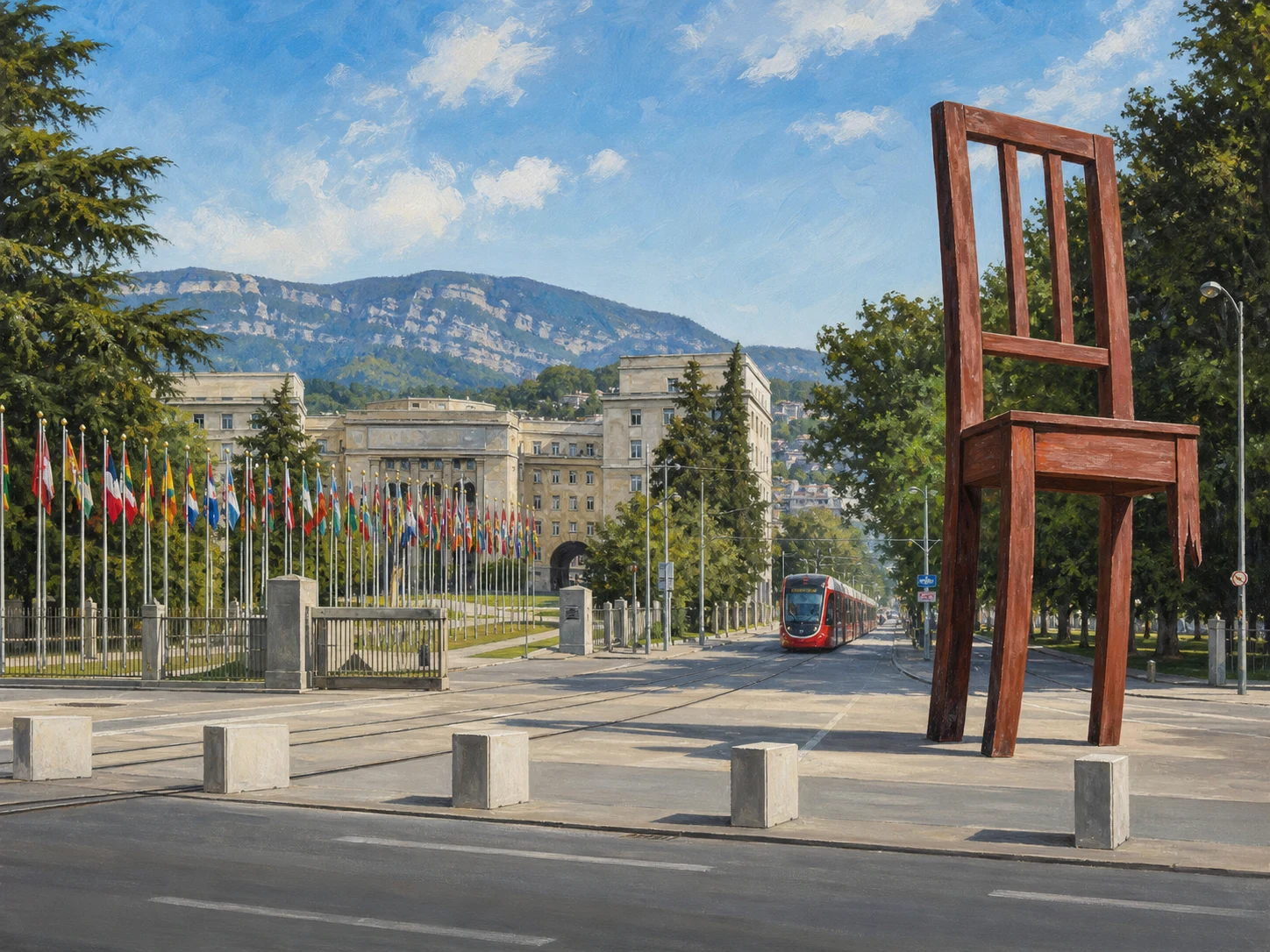
개별권Example before calculation · Unused · local transport in Geneva’s international district and Carouge
In the morning, go to the visitor entrance at Pregny Gate (14 Avenue de la Paix) only if you have booked the official interior tour of the Palais des Nations. Arrive at the meeting place shown on your confirmation 30 minutes before the tour, and go through ID checks and security screening. If you do not have a reservation, see the exterior from Place des Nations, a public pedestrian area, then go to the Red Cross Museum. Walk around Carouge in the afternoon.
Geneva became a diplomatic city as the League of Nations and the UN Office at Geneva took shape there. Around the Palais des Nations and at the Red Cross Museum, you can see institutions and records of international cooperation after war.
Take tram 15 from Cornavin station to Nations. In the afternoon, transfer to another tram and get off at Carouge Marché. Google Maps 길찾기
- Palais des NationsGoogle MapsOnly visitors with a reservation for the official tour may enter the building through Pregny Gate. Without a reservation, view the exterior from the public square at Place des Nations.
- International Red Cross and Red Crescent MuseumGoogle MapsA museum documenting international humanitarian work.
- CarougeGoogle MapsWalk through a neighborhood with a lower-rise scale than central Geneva.
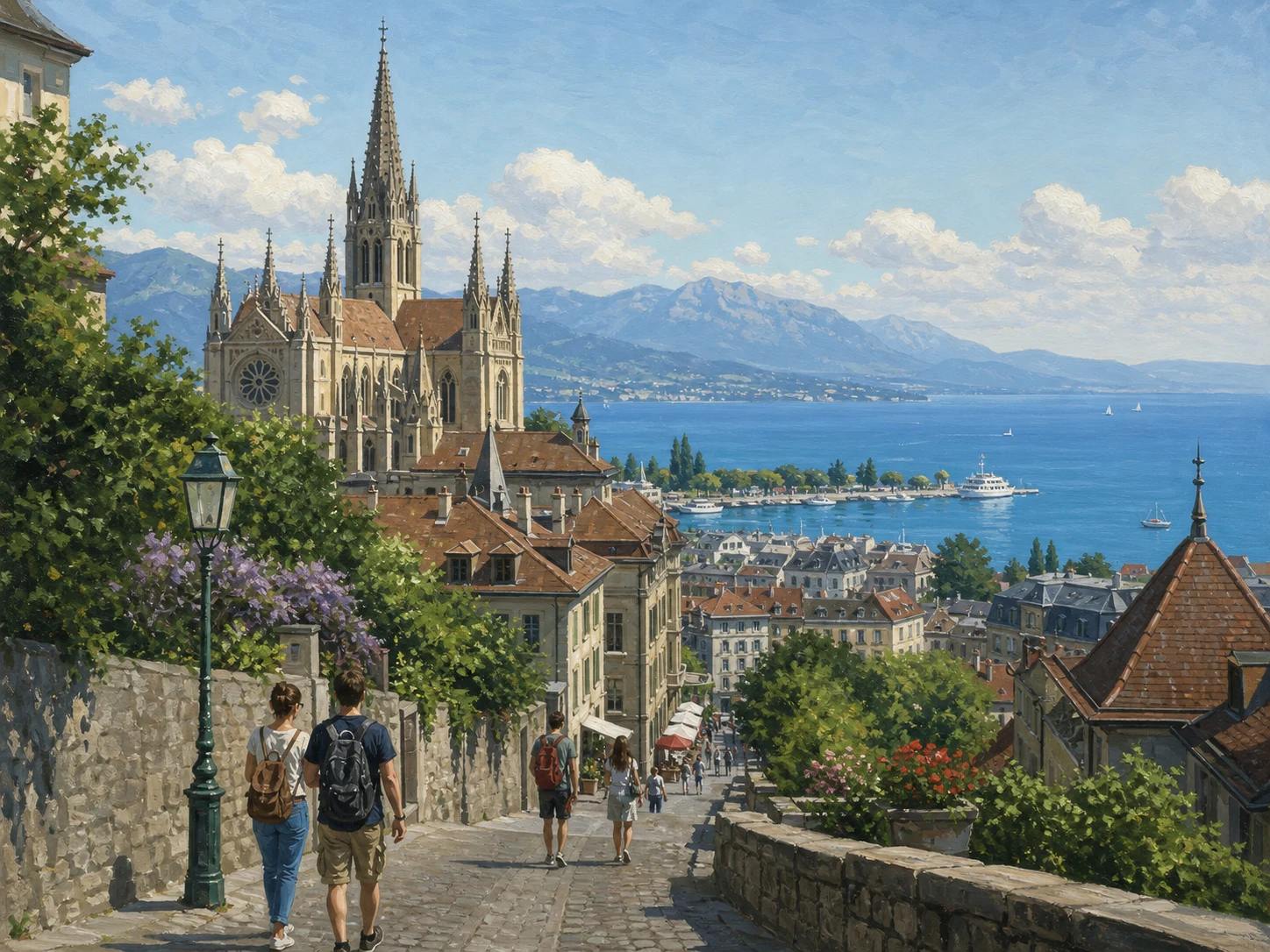
개별권Example before calculation · Unused · Geneva–Lausanne round trip and Lausanne metro
See the cathedral and old town, then take the metro down to the Ouchy lakeshore. The hill is steep, so save your energy by walking down and taking the metro back up.
Lausanne has been a transport hub on the northern shore of Lake Geneva since Roman times, and the medieval city grew around the cathedral on the hill. Down the steep lanes, the port of Ouchy preserves traces of steamships and the city’s Olympic history.
Take a direct SBB train from Geneva Cornavin to Lausanne. Use the M2 metro between Lausanne station, Flon, and Ouchy. Google Maps 길찾기
- Lausanne CathedralGoogle MapsThe highest point in the medieval old town.
- Place de la PaludGoogle MapsA reference point for a walk around the old-town market and town hall.
- OuchyGoogle MapsA port for a walk by Lake Geneva and a rest before your return.
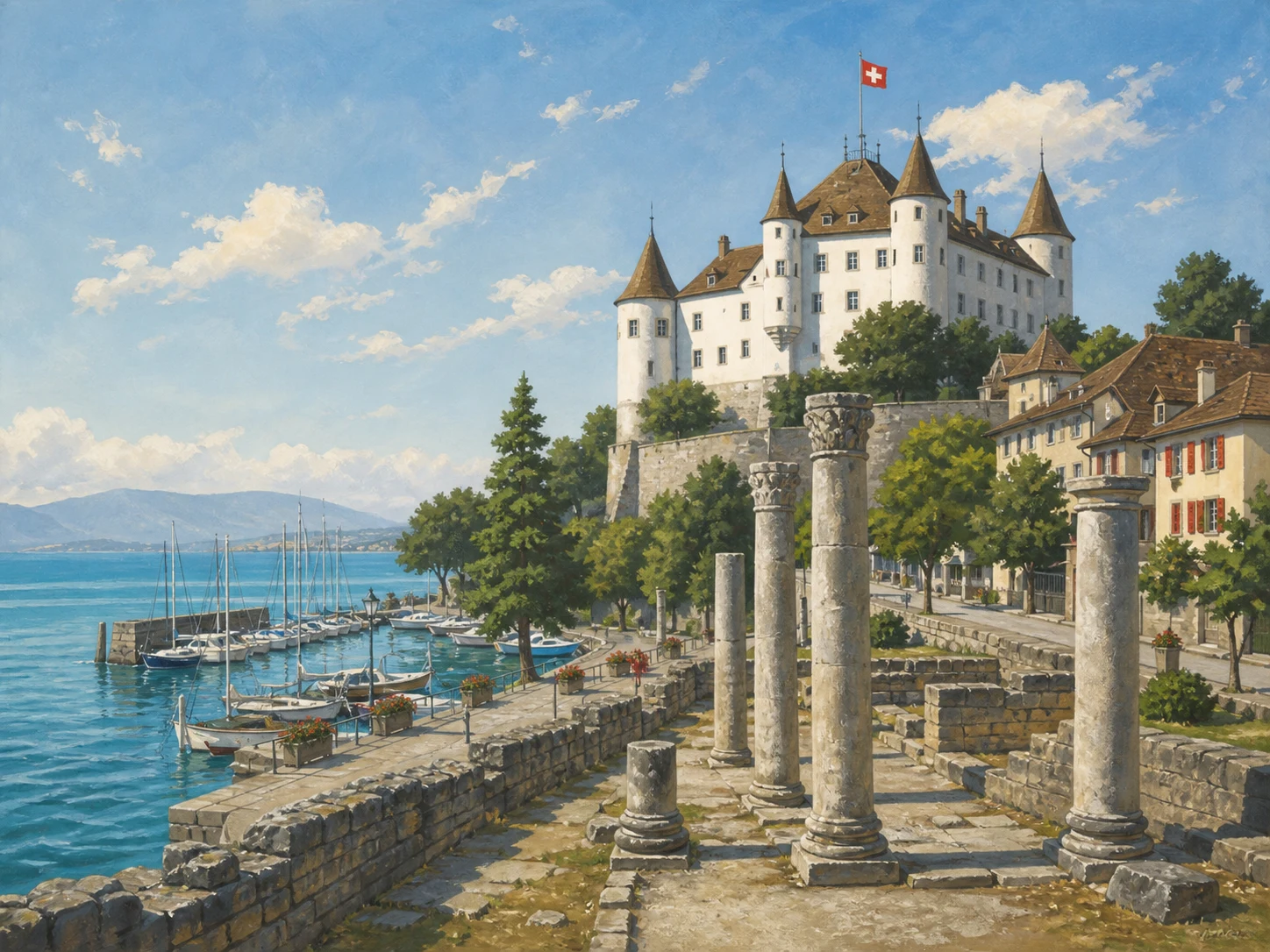
개별권Example before calculation · Unused · Geneva–Nyon round trip and Geneva local transport
In the morning, see Nyon Castle, the Roman remains, and the lakeshore. Return to Geneva after lunch. Use the afternoon for laundry and packing rather than forcing in another museum.
Nyon began as the Roman colony of Noviodunum. See the Roman remains below the castle alongside the lakeshore to understand why this small city between Geneva and Lausanne has long been a stopping point along the route.
Take an SBB train from Geneva Cornavin to Nyon. The castle and lakeshore are about a 10-minute walk from Nyon station. Google Maps 길찾기
- Nyon CastleGoogle MapsA small castle with views over the lake and old-town rooftops.
- Roman MuseumGoogle MapsLearn about Noviodunum’s remains and the city’s origins.
- Nyon lakeshoreGoogle MapsA flat walk before returning to Geneva.
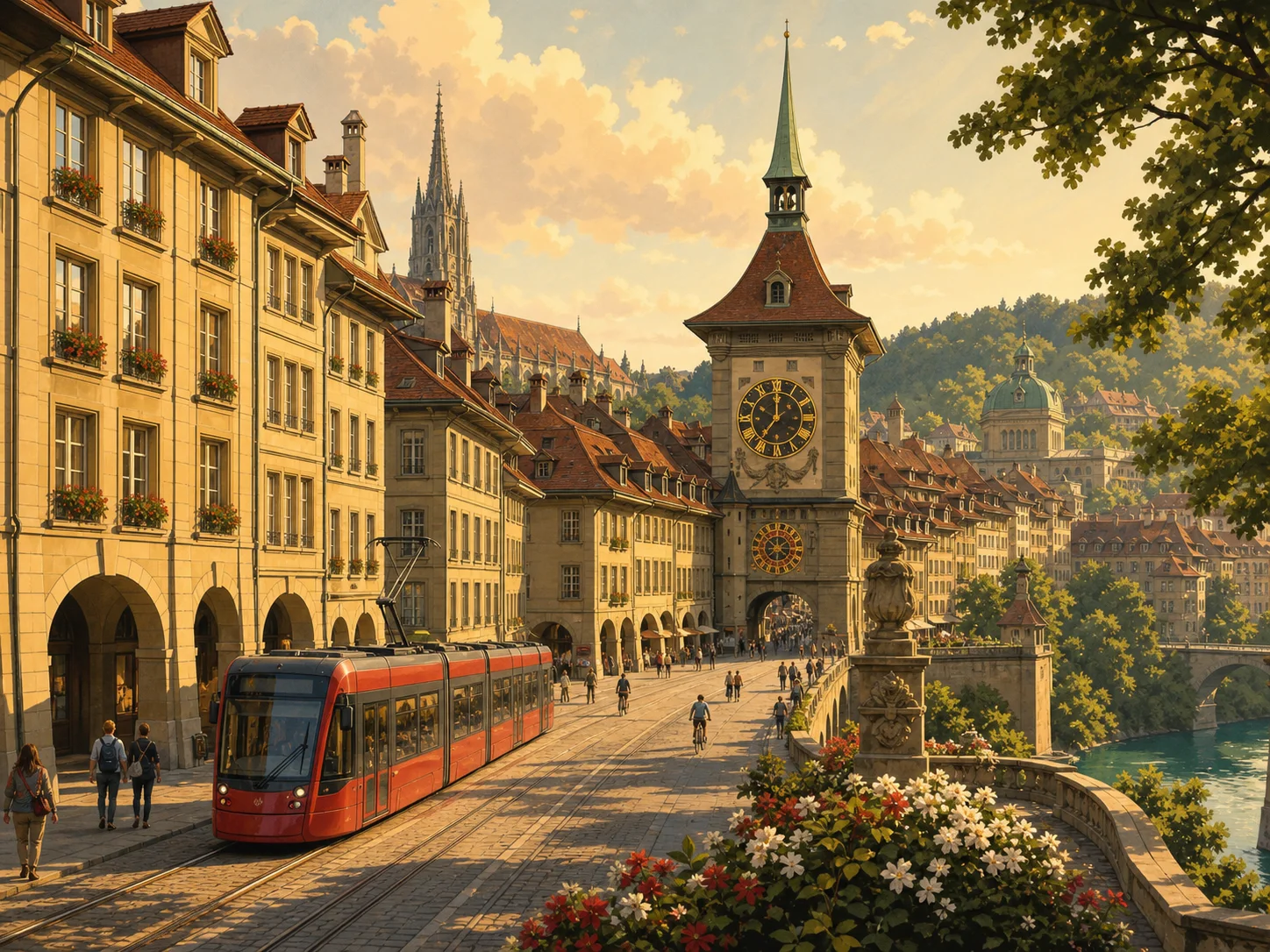
개별권Individual-ticket example before calculation · Save the actual Geneva → Bern fare for your visit date from SBB. If it saves more than local transport and museum discounts on Day 7, replace a smaller candidate use day, such as Day 7, and re-select your Flex active days. Check Bern Ticket local transport benefits separately after arrival.
After arriving in Bern, leave your luggage at your accommodation, then start with a view over the old town from the Rose Garden. Pass BearPark and Nydeggbrücke to enter the arcades, but don’t try to reach the Federal Palace on your first day.
Bern was founded in the 12th century on a hill surrounded by the Aare River. Its 15th-century arcades, 16th-century fountains, and Federal Palace, built after it became the federal city in 1848, all remain within the same street plan.
Take a direct IC from Geneva Cornavin to Bern. From Bern station, take tram 9 to the Guisanplatz Expo stop. Google Maps 길찾기
- Bern Rose GardenGoogle MapsA starting point with a sweeping view of the Aare and old-town rooftops.
- BearParkGoogle MapsAlong the riverside route into the old town.
- NydeggbrückeGoogle MapsA section of your first-day walk connecting the Aare with the old town.
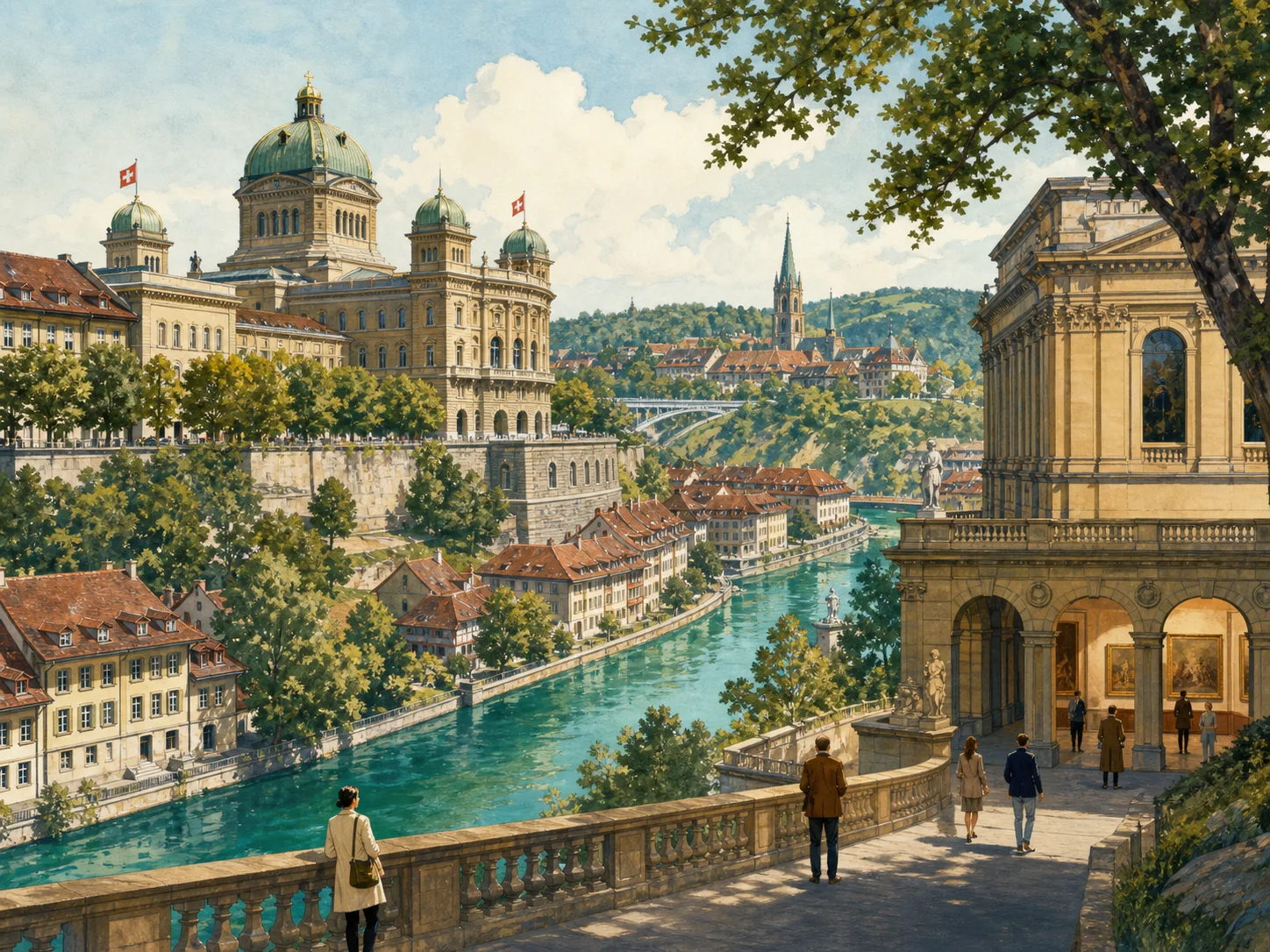
개별권Example before calculation · Unused · Bern Ticket local transport and museum
Walk past the Zytglogge and through the arcades to the Federal Palace. In the afternoon, choose either the Bern Historical Museum or an art museum and give it enough time. Finish on the cathedral terrace for views over the Aare.
Although Bern is the capital, its old town and museums are connected by walkable routes. See modern Swiss federal government at the Federal Palace, then choose either the Bern Historical Museum or an art museum to explore the city and country’s history in depth.
Take tram 9 from outside your accommodation to Bern station, then connect the old town on foot. If you need to get to a museum, use the Bern Ticket for trams and buses. Google Maps 길찾기
- ZytgloggeGoogle MapsCheck the astronomical clock around the hour to see it move.
- Federal PalaceGoogle MapsSee the center of Swiss federal politics and the terrace view.
- Bern Historical MuseumGoogle MapsChoose this if you want to explore the history of Bern and Switzerland in depth.
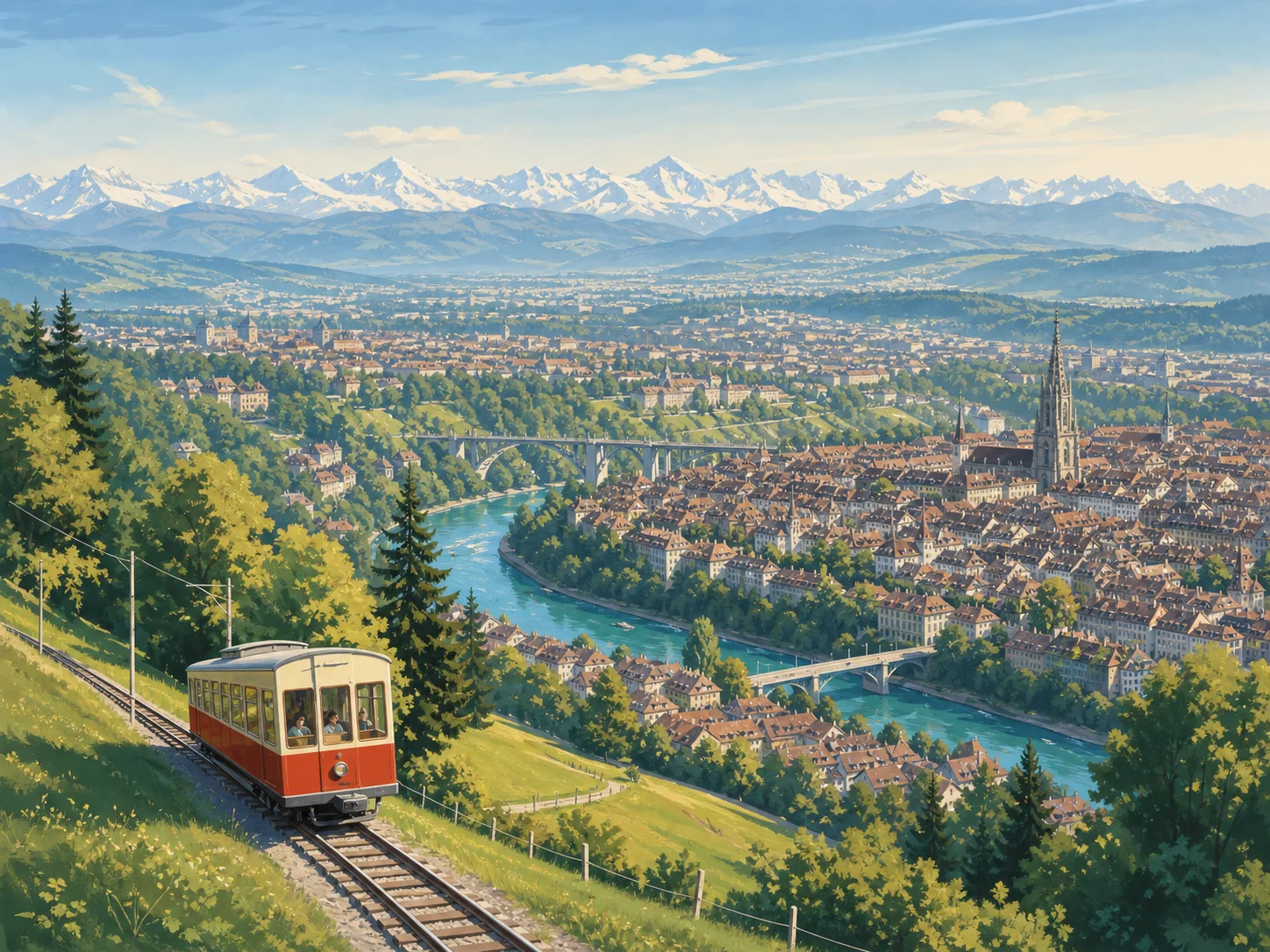
개별권Example before calculating · Unused · If your stay in Bern qualifies you for a Bern Ticket, it includes public transportation in the designated area and the Gurten funicular. Compare the cost of point-to-point tickets only if you do not have a Bern Ticket.
In the morning, take the funicular up Gurten for views over Bern and the Alps. In the afternoon, return to town for a walk along the Aare and through the Marzili district. Consider swimming only if local safety conditions are suitable and you’re a confident swimmer.
Gurten is the local mountain where Bern residents enjoy nearby nature. Take the funicular up for a clear view of the medieval old town encircled by a bend in the Aare, as well as the Bernese Alps—a good way to reflect on your trip so far.
Take the S-Bahn from Bern station to Wabern station, then walk to the Gurten funicular station. After coming back down, take a tram into the center. Google Maps 길찾기
- GurtenGoogle MapsA viewpoint for the Bern old town and Bernese Alps.
- Gurten funicularGoogle MapsA short ride from Wabern up to the summit area.
- MarziliGoogle MapsA flat riverside walk to see everyday life in Bern.
개별권Individual-ticket example before calculation · Save the actual Bern → Kloten fare for your visit date from SBB. If the savings are greater than those from a smaller local-transport or museum candidate, make this a Flex active day instead, then check that you still have 15 days in total.
Travel from Bern to Kloten and leave your luggage at accommodation near the airport. Spend the afternoon doing laundry and weighing your bags. Even if you have time, don’t go back into central Zurich.
Kloten changed from a rural village into an international gateway after Zurich Airport was built there. On the last day, spend time packing and walking around the neighborhood rather than sightseeing.
Travel from Bern station to Zurich main station, then take the S-Bahn to Kloten station. Walk from the station to your accommodation. Google Maps 길찾기
- Kloten Old TownGoogle MapsTake a short walk near your accommodation and find dinner nearby.
- Zurich Airport Observation Deck BGoogle MapsThis is a separate facility from the airport’s Airport Park. Choose it only if Observation Deck B’s operating hours fit your plans on your visit date and you still have the energy.
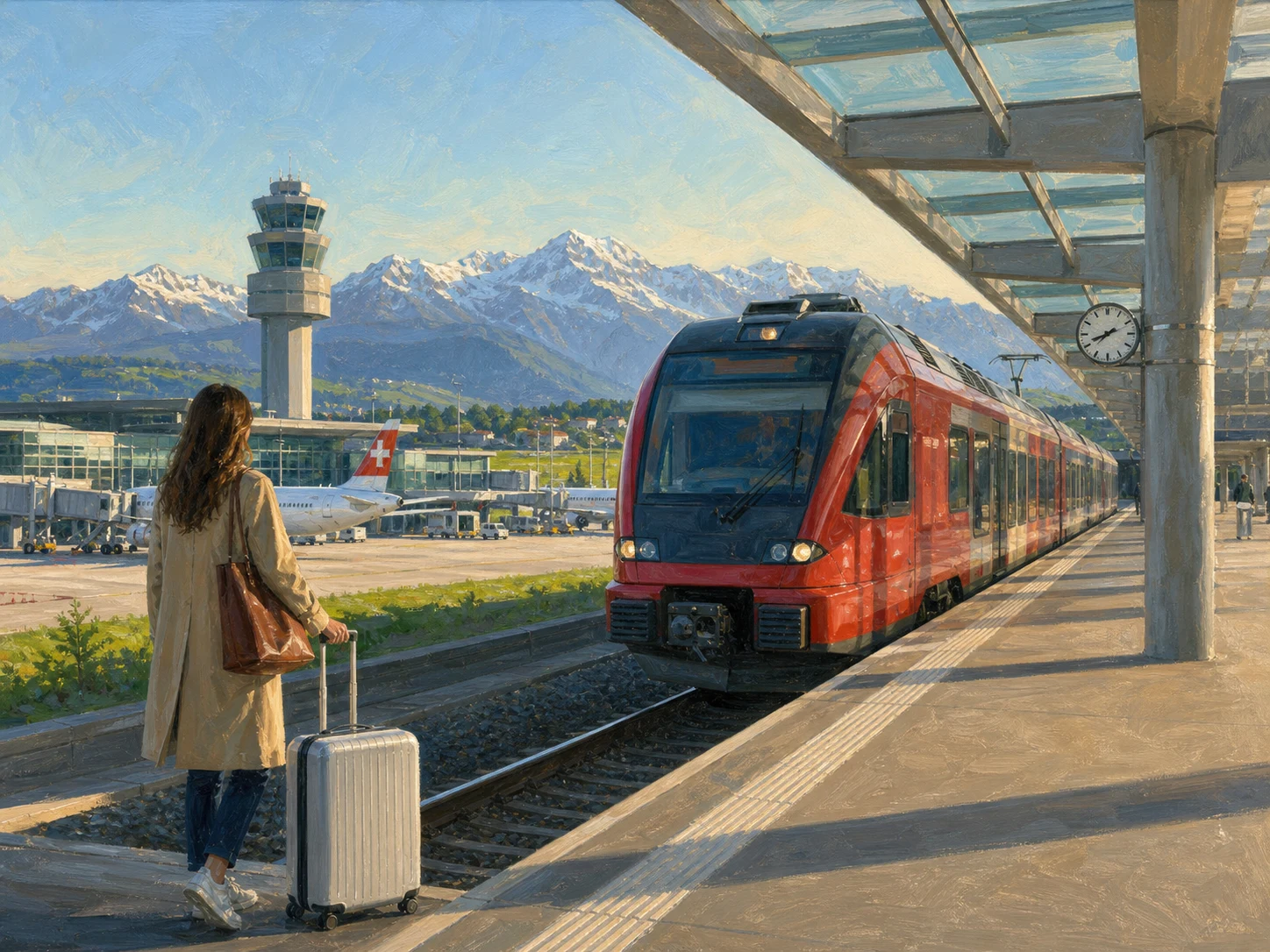
개별권Example before calculation · Unused · travel from Kloten to Zurich Airport
Plan to leave your accommodation so you arrive at the airport three hours before your flight. Before checking out, do a final check of your passport, wallet, charger, and luggage weight.
The railway connecting Zurich Airport with the main station is part of Switzerland’s long-distance transport network. The final trip to the airport is a chance to see again how the trains, buses, and boats you used over the month connect.
Check the actual travel time from your lodging to Kloten Bahnhof or a nearby bus stop. In the SBB app, enter Kloten Bahnhof → Zürich Flughafen to check whether there is a direct connection on your visit date, the transfer station, and the total travel time. If there is a more direct bus to the airport, compare its boarding stop, frequency, and terminal drop-off. The day before departure, recheck the departure terminal and any construction replacement services in the airline and SBB notices. Google Maps 길찾기
- Zurich AirportGoogle MapsCheck the route between the check-in area and the train arrival level in advance.
- Kloten stationGoogle MapsCheck departure times for trains and buses to the airport.
Meal prices are approximate per-person ranges for one meal; drinks may cost extra. These restaurant suggestions were chosen based on local character and that day’s route as of August 2026. Mountain huts and restaurants at boat piers are strongly affected by seasonal operations, so check Google Maps and official channels on the day for closures, kitchen hours, and reservations.
숙박비는 2인 1실 검색 범위입니다. 27 nights 평균은 Total accommodation cost above ÷ 27 nights · meals and transport not included이며, 실제 결제 전에는 총액, 도시세, 조식, 욕실 형태와 무료 취소 마감을 같은 조건으로 비교하세요.
일정 옆에 두는 여행 노트
보고, 이해하고, 쉬는 법
날짜별 일정에 이미 나온 내용을 다시 나열하지 않고, 여행 중 여러 번 꺼내 볼 기준만 모았습니다.
먼저 알고 가면 좋은 맥락
Switzerland’s network of trains, buses, and boats connects mountains and cities, but mountain routes have different fare, discount, and reservation rules from regular rail. On a long itinerary, getting into the habit of checking each day’s connections matters more than choosing a pass first.
Lake Lucerne and Lake Geneva make good settings for different kinds of rest days. Leave a day open in a lakeside city after seeing the Alps to reduce fatigue from mountain outings.
놓치지 말아야 할 장면
- Chapel Bridge지도
A starting point in Lucerne on your first day, where it’s easy to slow down before heading to the mountains.
- Lauterbrunnen Valley지도
A day of walking among waterfalls and cliffs. In bad weather, scale back to the valley and village connections instead of aiming for viewpoints.
- Jungfraujoch지도
A high-altitude day with significant costs. Include it only after checking visibility, service, and designated seats.
- Gornergrat지도
The classic rail route for Matterhorn views from Zermatt. Postpone it to the next day if there are strong winds or clouds.
- Chillon Castle지도
A Montreux-area option for an afternoon with a different feel from a mountain day in the Lake Geneva region.
먹고 쉬는 법
Booking a restaurant every day for 28 days can make your budget and route feel restrictive. Make breakfast, bakeries, and supermarket meals your defaults; one or two fondue or raclette dinners in Lucerne or Zermatt are enough.
Dinner service can end early in Zermatt and mountain villages. Check nearby opening hours and reservation requirements the day before you travel.
작은 팁You’ll change accommodation seven times. Keep the rest of the trip as days when you leave from and return to the same room to preserve some breathing room on a month-long journey.
How to fit it in
Judge the success of these 28 days by how often you went to the mountains on clear days and stayed in lakeside cities on cloudy ones, not by how many viewpoints you visited. Fewer accommodation moves mean you won’t need to redo your whole itinerary when the weather changes.
Reality check
Use SBB Mobile to check train, bus, tram, and boat connections for your actual dates, including replacement services during construction. Swiss Travel Pass coverage for regular public transport, museums, and mountain transport differs by product and route. Panoramic train seat reservations and surcharges, and some mountain transport, may be separate. Before boarding, check your QR code, the name in your passport, your battery, and whether your Flex travel day is active.
Allow at least half a day for a high-altitude viewpoint, including round-trip travel and time at the destination. Official Jungfraujoch information recommends allowing at least 5–6 hours including local transport. Don’t add another long hike on a day you’ve been to Gornergrat from Zermatt.
This 28-day example includes 27 nights of accommodation. Add the accommodation totals and tourist taxes for each base, then budget separately in CHF for meals, regular transport, mountain transport, admission, phone service, insurance, and emergencies. Convert to Korean won using the exchange rate on the payment date. Don’t present old lowest prices or ratings without a lookup date as current prices. Budget for groceries to prepare meals only if your room has cooking facilities.
At around 3,000 m, temperatures can fall below freezing even in midsummer, UV can be strong, and weather can change quickly. Bring a windproof jacket, closed shoes, a hat, gloves, and sunglasses. If you develop a headache, nausea, or severe fatigue, prioritize going down over taking photos.
If plans change
Don’t insist on doing both Jungfraujoch and First. Switch to Thun’s old town, lower-altitude trips around Lake Brienz or Lake Thun, and rest at your accommodation. Even if you skip one mountain day, you still have a weather buffer in Zermatt.
Don’t rush to buy a Gornergrat ticket; narrow your plans to the village, museums, and lower-altitude areas of Sunnegga. Before your Zermatt stay, check whether the forecast calls for cloudy weather all three nights. If you can change your accommodation, move the last night to Vevey and extend your Lake Geneva plans. If you have already completed all three nights in Zermatt, don’t change your accommodation or departure date; add more time for a Montreux visit during your planned stay in Vevey.
Instead of returning straight to Zurich from Bern, add a separate leg to Lugano or St. Moritz. Check eligibility, residence requirements, and validity for any additional long-term transport pass with the official seller, then calculate through to your airport transfer home.
Final check before departure
- Save the seven accommodation-transfer routes and your departure-day airport trip in SBB with the actual travel dates and times.
- Group the Google Maps spots from the 28-day itinerary into saved lists by day. For mountain routes, prioritize the operator’s official last departure over estimated travel times on a map.
- Check the Jungfrau Railway for designated seat reservations from May to October, service status, and return ticket conditions.
- Check visibility, wind, and temperature in the MeteoSwiss forecast and mountain facility webcams before paying for high-altitude travel.
- Check each accommodation’s check-in deadline, laundry availability, and luggage storage to make sure you can stay there for 3–4 nights.
- Check the official guidance for the visit days, Monday closures, and last admission times for the Swiss National Museum on Day 3 and the International Red Cross and Red Crescent Museum in Geneva on Day 21. If the National Museum is closed, swap it with the museum option on Day 2. Move the Red Cross Museum visit to another open day during your stay in Geneva.
Mountain railways, panoramic trains, and lake boats vary in service and booking conditions depending on the season, construction, weather, and seat availability. Use the day-by-day route in this guide as a framework for booking accommodation, then check SBB schedules and fares and each mountain operator’s notices again before departure. Travel passes and season tickets for Swiss residents may have different eligibility requirements and validity periods, so for a month-long stay, compare visitor options such as the Swiss Travel Pass, Swiss Half Fare Card, and regional passes first.
Information checked: 2026-10-01